In these extraordinary times, customer centricity continues to drive all our efforts: Shell India
08 Jun 2020
6 Min Read
CW Staff
Share
Shell is an energy giant multinational and has been associated with India for more than seven decades. Royal Dutch Shell, the parent company of Shell India, is ranked third on the Fortune Global 500 list for 2019. Shell is one of the most diversified international energy companies in India with over 8,500 employees and presence across upstream, integrated gas, downstream, renewable energy, with a retail presence across six states – Karnataka, Tamil Nadu, Telangana, Maharashtra, Gujarat and Assam. Further, it is expanding its network of fuel stations across the country. It has the entire lubricants end-to-end value chain in India – from conceptualisation and development to production and distribution. This includes a world-class lubricant oil blending plant with a capacity of more than 115 million litres, a distributor network of more than 185 and over 60,000 retailers across the country.
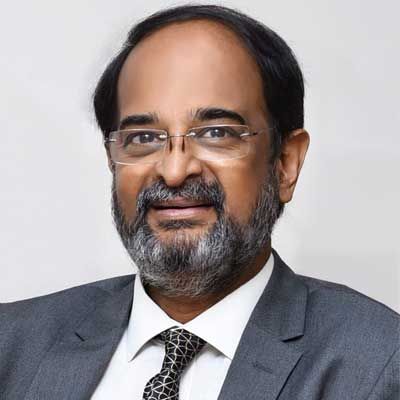
A seasoned business leader with over 23 years of experience, Raman Ojha is currently the Country General Manager of Shell Lubricants in the Indian subcontinent. Having joined Shell in 2005, during his 14 years with Shell, he has held a multitude of positions across all verticals of the company. He has also held board positions, most recently as a Vice Chairman/Director for Shell Foshan JV in China.
In an exclusive video interview hosted by CONSTRUCTION WORLD, Raman Ojha, Country General Manager, Shell Lubricants, discusses how the company is managing the COVID crisis, innovation and technology, and more...
Excerpts:
Managing the COVID crisis and the lockdown: These are unprecedented, difficult and tough times, and it took a lot of people by surprise. At this stage, Shell was clear and stuck to its core policy of care, respect, honesty to its employees, its customers and communities at large. Our biggest priority over the last couple of months has been to ensure that our staff, our customers, our distributors, continue to stay safe and protected. So that's where our focus has been brought up.
Impact on supply and production: Over the last 2.5 months, I don't think we have slipped on our supply promise to our customers, though the industry came down. Also, a lot of our customers such as big industrial companies started production because they came under essential services like oil and gas, etc. So, we have been able to maintain our supply consistently. We were one of the international oil companies who also had their new blending plant up and running even during this crisis. Such was our commitment. And we have received a lot of acknowledgements from our customers on how Shell has been able to ensure safe operations during this crisis.
Impact on labour and factory setup: So the first thing was the plant had to be shutdown because there was no movement of staff. But we slowly gained approvals from all relevant authorities to ensure that we can keep the plant running. Now when we were running the plant, the care of our staff is at the core of it. So the first question we asked ourselves was about the most critical stuff required to run the plant. And that's where our automation helps us. We had to take a lot of precautions in terms of sanitation, in terms of taking care of our staff, ensuring safe transportation, sanitation of the plant itself, social distancing, etc – these were all challenges new to us. But again, with the help of our global experience, we were able to adapt very quickly and bring in the best practices to start the plant quickly.
Speaking about transportation, both from the angle of bringing in raw material and also delivering finished goods to our customers, it initially was a challenge. But here again, the transporter community has been very helpful, not only for the customers, consumer, public at large in India, but they also helped us gather the right amount of trucks to enable us to deliver to our customers. And that's also what got us going to run COVID relief activities for our trucking community and we are still providing them with basic ration, sanitisation kits, etc.
Focus on R&D: Typically in a crisis, people look for technology or product innovation, but I think the needs of a consumer are very different at the moment. Innovation will happen in the industry. We will leverage technology, but in a different form. So if I look at my small consumer who has a car, the need is for hygiene, for convenience, for liquidity at the moment. The need is to feel safe. So the innovation we are currently working on for our automotive consumer is safe mobility. In the near future, people may not have the luxury to go out to pubs, bars, restaurants. And maybe a car could become the second home where they feel they can express themselves. So we have focused a lot on ensuring that we offer doorsteps services for sanitising and maintaining cars.
The other innovation is leveraging technology. People still need to run their plants. So, a massive effort from our part at Shell was to ensure we were able to share and impart knowledge to our customers, as well as do troubleshooting virtually by going into the plant and machinery. So we worked towards these kinds of technological innovations, which are going to make difference to the industry, the consumer, and the society at large.
Auto industry shaping up: If I look at a consumers’ perspective, concerns of safety, hygiene, convenience, would be an uptake on private mobility. So I think we would see this shift where people will move to private transportation. But speaking about private transportation again, the question that comes up is: Will it trigger demand for a new set of cars, or will there be a massive revival in the used car segment? My personal view is that there will probably be a surge in the used car segment, which means that from the reliability perspective, a consumer would be looking for peace of mind, so they will look for an end-to-end service – maintenance, sanitisation, hygiene, without any problems while the car is running. So in this area, we will see a lot of innovation coming up through a lot of different platforms – whether these are online aggregators or companies, I think people will join hands with OEMs to ensure they cater to emerging consumer needs.
Getting back on track: I think it’s anybody’s guess. But I think what we, as society, as consumers and as service providers, have to come to terms with the reality that variability is here to stay. We have to make choices keeping consumers at the heart of society.
Shell is an energy giant multinational and has been associated with India for more than seven decades. Royal Dutch Shell, the parent company of Shell India, is ranked third on the Fortune Global 500 list for 2019. Shell is one of the most diversified international energy companies in India with over 8,500 employees and presence across upstream, integrated gas, downstream, renewable energy, with a retail presence across six states – Karnataka, Tamil Nadu, Telangana, Maharashtra, Gujarat and Assam. Further, it is expanding its network of fuel stations across the country. It has the entire lubricants end-to-end value chain in India – from conceptualisation and development to production and distribution. This includes a world-class lubricant oil blending plant with a capacity of more than 115 million litres, a distributor network of more than 185 and over 60,000 retailers across the country.
A seasoned business leader with over 23 years of experience, Raman Ojha is currently the Country General Manager of Shell Lubricants in the Indian subcontinent. Having joined Shell in 2005, during his 14 years with Shell, he has held a multitude of positions across all verticals of the company. He has also held board positions, most recently as a Vice Chairman/Director for Shell Foshan JV in China.
In an exclusive video interview hosted by CONSTRUCTION WORLD, Raman Ojha, Country General Manager, Shell Lubricants, discusses how the company is managing the COVID crisis, innovation and technology, and more...
Excerpts:
Managing the COVID crisis and the lockdown: These are unprecedented, difficult and tough times, and it took a lot of people by surprise. At this stage, Shell was clear and stuck to its core policy of care, respect, honesty to its employees, its customers and communities at large. Our biggest priority over the last couple of months has been to ensure that our staff, our customers, our distributors, continue to stay safe and protected. So that's where our focus has been brought up.
Impact on supply and production: Over the last 2.5 months, I don't think we have slipped on our supply promise to our customers, though the industry came down. Also, a lot of our customers such as big industrial companies started production because they came under essential services like oil and gas, etc. So, we have been able to maintain our supply consistently. We were one of the international oil companies who also had their new blending plant up and running even during this crisis. Such was our commitment. And we have received a lot of acknowledgements from our customers on how Shell has been able to ensure safe operations during this crisis.
Impact on labour and factory setup: So the first thing was the plant had to be shutdown because there was no movement of staff. But we slowly gained approvals from all relevant authorities to ensure that we can keep the plant running. Now when we were running the plant, the care of our staff is at the core of it. So the first question we asked ourselves was about the most critical stuff required to run the plant. And that's where our automation helps us. We had to take a lot of precautions in terms of sanitation, in terms of taking care of our staff, ensuring safe transportation, sanitation of the plant itself, social distancing, etc – these were all challenges new to us. But again, with the help of our global experience, we were able to adapt very quickly and bring in the best practices to start the plant quickly.
Speaking about transportation, both from the angle of bringing in raw material and also delivering finished goods to our customers, it initially was a challenge. But here again, the transporter community has been very helpful, not only for the customers, consumer, public at large in India, but they also helped us gather the right amount of trucks to enable us to deliver to our customers. And that's also what got us going to run COVID relief activities for our trucking community and we are still providing them with basic ration, sanitisation kits, etc.
Focus on R&D: Typically in a crisis, people look for technology or product innovation, but I think the needs of a consumer are very different at the moment. Innovation will happen in the industry. We will leverage technology, but in a different form. So if I look at my small consumer who has a car, the need is for hygiene, for convenience, for liquidity at the moment. The need is to feel safe. So the innovation we are currently working on for our automotive consumer is safe mobility. In the near future, people may not have the luxury to go out to pubs, bars, restaurants. And maybe a car could become the second home where they feel they can express themselves. So we have focused a lot on ensuring that we offer doorsteps services for sanitising and maintaining cars.
The other innovation is leveraging technology. People still need to run their plants. So, a massive effort from our part at Shell was to ensure we were able to share and impart knowledge to our customers, as well as do troubleshooting virtually by going into the plant and machinery. So we worked towards these kinds of technological innovations, which are going to make difference to the industry, the consumer, and the society at large.
Auto industry shaping up: If I look at a consumers’ perspective, concerns of safety, hygiene, convenience, would be an uptake on private mobility. So I think we would see this shift where people will move to private transportation. But speaking about private transportation again, the question that comes up is: Will it trigger demand for a new set of cars, or will there be a massive revival in the used car segment? My personal view is that there will probably be a surge in the used car segment, which means that from the reliability perspective, a consumer would be looking for peace of mind, so they will look for an end-to-end service – maintenance, sanitisation, hygiene, without any problems while the car is running. So in this area, we will see a lot of innovation coming up through a lot of different platforms – whether these are online aggregators or companies, I think people will join hands with OEMs to ensure they cater to emerging consumer needs.
Getting back on track: I think it’s anybody’s guess. But I think what we, as society, as consumers and as service providers, have to come to terms with the reality that variability is here to stay. We have to make choices keeping consumers at the heart of society. Watch the full video for more on what Raman Ojha has to say.
Stay tuned for Construction World’s FREE webinars. View our complete webinar calendar and previous webinars here.
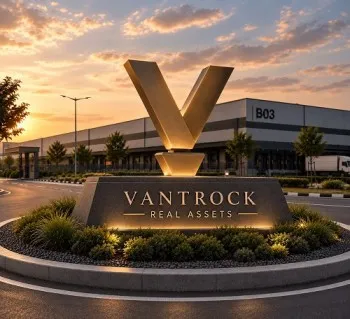
Anshul Singhal launches Vantrock with Rs 42 billion development plan
Real estate professional Anshul Singhal has launched Vantrock Real Assets Private Limited (VRAPL), a Mumbai-headquartered platform focused initially on warehousing, industrial and logistics parks. The company plans to develop approximately 11.5 million sq ft of assets, with an estimated gross development value (GDV) of Rs 42 billion (approximately USD 434 million) on completion.The first phase will cover around 3 million sq ft across the National Capital Region (NCR), Bengaluru and Pune, with an estimated development value of Rs 11 billion (approximately USD 113 million). Construction is sched..
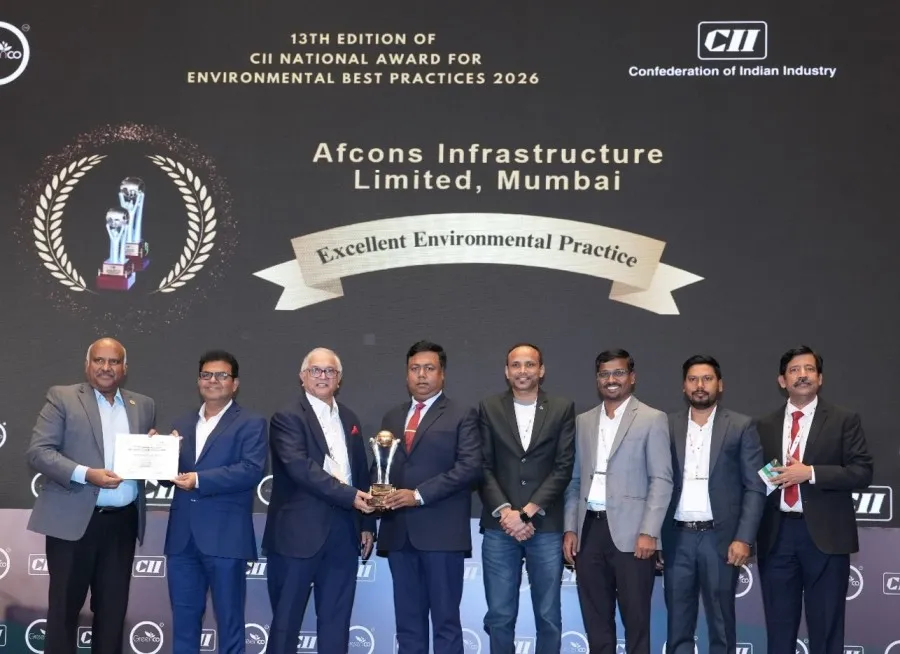
Afcons Infrastructure has received the Confederation of Indian Industry (CII) National Award for Environmental Best Practices 2026 in the Biodiversity Management category for its work on the Mumbai-Ahmedabad High Speed Rail Project’s C-2 package.The award was presented at a ceremony in Chennai on 9 October 2026. It was received by Mihir Mishra, Vice-President, CPE, and Sumon Paul, Assistant General Manager, HSE, along with the Afcons team.The project adopted several resource recovery and waste management practices. These included recycling concrete washout waste to recover sand, aggregates a..
Indian businesses lead globally in planned AI investment, says Autodesk
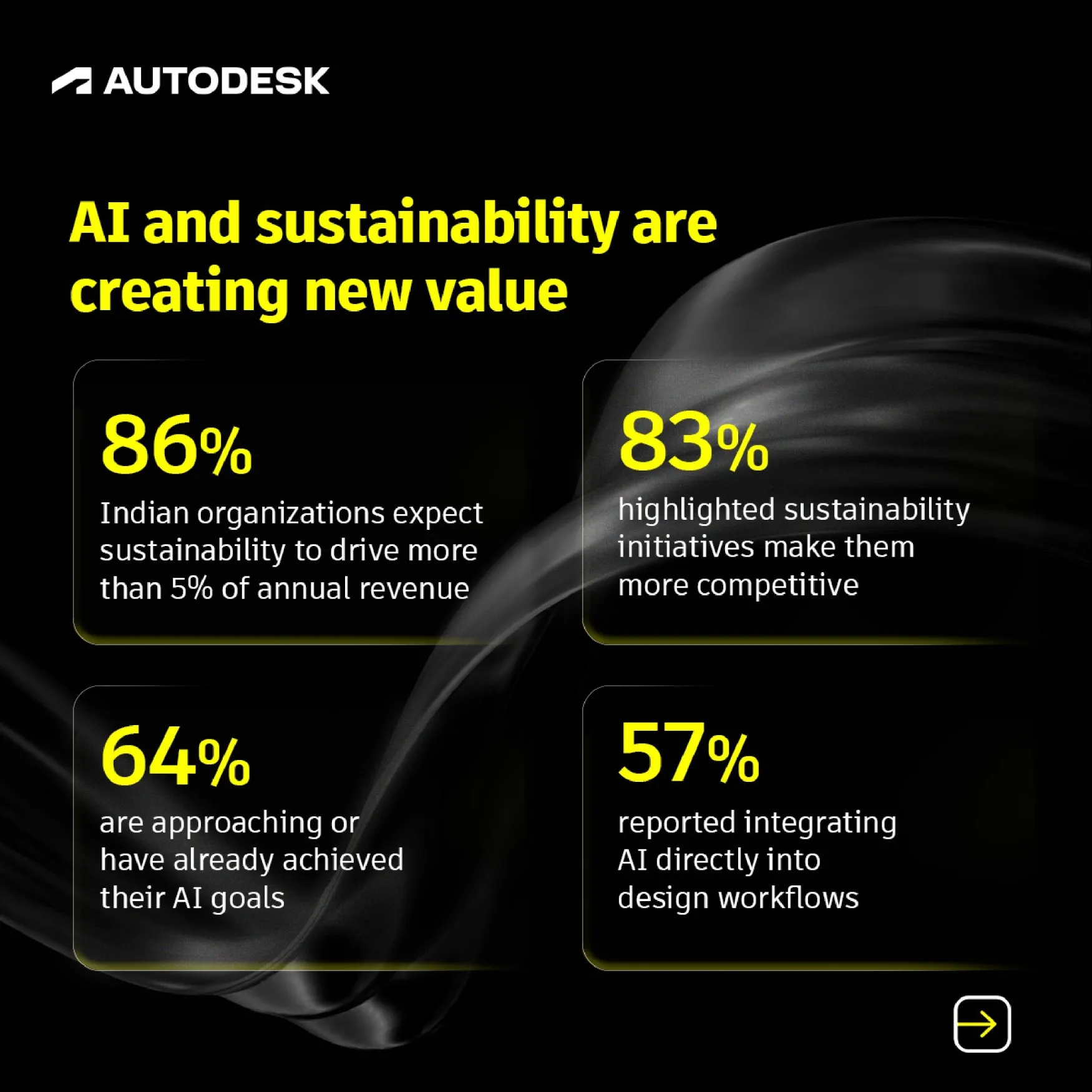
Indian organisations are moving towards deeper integration of artificial intelligence (AI), digital technologies and sustainability into business operations, according to Autodesk’s 2026 State of Design & Make report. The fourth edition of the annual study highlights growing AI adoption, measurable outcomes from digital transformation and the role of sustainability in long-term business growth.The report found that 64 per cent of Indian organisations are approaching or have achieved their current AI goals. While 88 per cent believe AI will enhance their industry, up from 78 per cent in 2..