



+
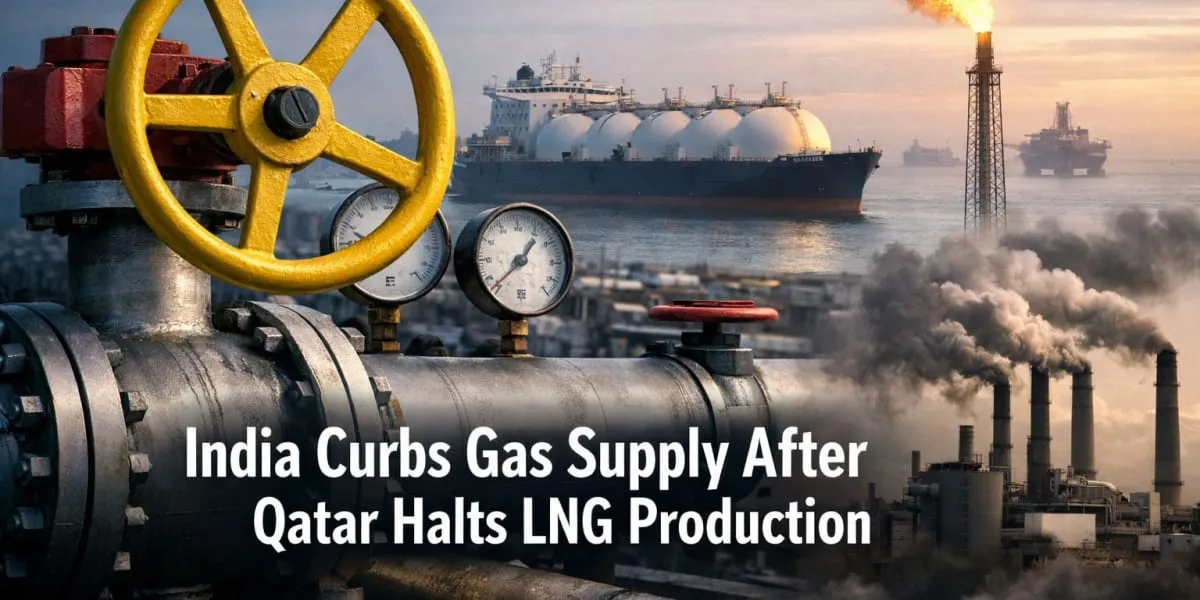
India Curbs Gas Supply After Qatar Halts LNG Production
OIL & GAS

India Curbs Gas Supply After Qatar Halts LNG Production

India has moved to curb gas supply to several industrial users after Qatar halted liquefied natural gas production amid heightened tensions in the Gulf. The measure is intended to preserve supplies for households and essential services while authorities assess the scale and duration of the disruption. Officials have signalled that allocations to energy intensive industries will be trimmed as part of an emergency supply management plan. The decision reflects concern over the country’s exposure to regional LNG disruptions.

Under the rules being implemented, priority for curtailed gas flows has been directed towards domestic consumption, power generation and the fertiliser sector to maintain critical services and food security. Industrial users have been asked to lower consumption and explore fuel switching where feasible. Gas distribution companies are coordinating with central and state agencies to allocate supplies and monitor compliance. Markets for alternate fuels and storage utilisation are being evaluated to cushion immediate shortages.

Analysts expect the curbs to affect production in sectors reliant on gas as a feedstock or source of thermal energy, including chemicals, glass and some metals manufacturing. Reduced availability may force temporary cutbacks and raise operating costs, with potential knock on effects for downstream supply chains and exports. Authorities are also watching price movements in domestic and international gas markets and assessing the fiscal implications of any prolonged disruption. Firms with longer term contracts and storage will be relatively better positioned to manage the shock.

The government has indicated it will engage with international partners and suppliers to explore alternative shipments and possible swaps while urging industries to conserve fuel and stagger production. Measures may include fast tracking approvals for additional imports and incentivising use of stored volumes, although the effectiveness will depend on global market availability. Regulators will maintain surveillance of critical industrial output and consumer supply to mitigate social and economic impacts. The situation remains fluid and will be reviewed as new information emerges.

India has moved to curb gas supply to several industrial users after Qatar halted liquefied natural gas production amid heightened tensions in the Gulf. The measure is intended to preserve supplies for households and essential services while authorities assess the scale and duration of the disruption. Officials have signalled that allocations to energy intensive industries will be trimmed as part of an emergency supply management plan. The decision reflects concern over the country’s exposure to regional LNG disruptions. Under the rules being implemented, priority for curtailed gas flows has been directed towards domestic consumption, power generation and the fertiliser sector to maintain critical services and food security. Industrial users have been asked to lower consumption and explore fuel switching where feasible. Gas distribution companies are coordinating with central and state agencies to allocate supplies and monitor compliance. Markets for alternate fuels and storage utilisation are being evaluated to cushion immediate shortages. Analysts expect the curbs to affect production in sectors reliant on gas as a feedstock or source of thermal energy, including chemicals, glass and some metals manufacturing. Reduced availability may force temporary cutbacks and raise operating costs, with potential knock on effects for downstream supply chains and exports. Authorities are also watching price movements in domestic and international gas markets and assessing the fiscal implications of any prolonged disruption. Firms with longer term contracts and storage will be relatively better positioned to manage the shock. The government has indicated it will engage with international partners and suppliers to explore alternative shipments and possible swaps while urging industries to conserve fuel and stagger production. Measures may include fast tracking approvals for additional imports and incentivising use of stored volumes, although the effectiveness will depend on global market availability. Regulators will maintain surveillance of critical industrial output and consumer supply to mitigate social and economic impacts. The situation remains fluid and will be reviewed as new information emerges.

Next Story
Infrastructure Urban

ABB to Invest Rs 6.25 Billion to Expand India Manufacturing

ABB recently announced plans to invest approximately Rs 6.25 billion ($75 million) in India during 2026 to expand its manufacturing footprint and research and development capabilities. The investment follows more than $35 million spent in 2025 and reflects the company’s continued focus on strengthening its ‘local-for-local’ strategy in the country.The investment will support ABB’s Electrification, Motion and Automation businesses and expand manufacturing capacity for infrastructure sectors such as renewable energy, metro rail, data centres and industrial applications. Approximately 300..

Next Story
Equipment

Six WOLFF Cranes Handle 60,000 m³ Concrete for German Hospital

Six WOLFF tower cranes are playing a key role in constructing a new hospital complex in Memmingen, Germany, supporting large-scale material handling for the project. The facility is being built on a 7.7-hectare site and will feature six floors, around 480 beds and a gross floor area exceeding 75,000 sq m.Building shell works began recently in February 2025. One WOLFF 6531.12 Cross crane supported early site preparation before being dismantled in autumn 2025, while five remaining cranes continue operations. Over an average deployment period of 16 months, the cranes are expected to move approxim..

Next Story
Equipment

REC Funds Rs 115.6 Million CSR Support for Bihar Eye Hospital

REC recently committed Rs 115.6 million under its Corporate Social Responsibility (CSR) programme for the procurement of clinical and non-clinical equipment at Sankara Eye Hospital in Saharsa, Bihar. The initiative aims to strengthen healthcare infrastructure and improve access to specialised eye care services in the region.A Memorandum of Agreement (MoA) was recently signed between Pradeep Fellows, Executive Director (CSR), REC Limited, and Wg Cdr V. Shankar (Retd), Trustee and Executive Director of Sankara Eye Hospital, at the REC office in the SCOPE Complex, New Delhi.The support is expecte..

Advertisement

Subscribe to Our Newsletter

Get daily newsletters around different themes from Construction world.

STAY CONNECTED

Advertisement

Advertisement

Advertisement