
+
India Oil Imports Driven By Price Says ONGC Chairman
OIL & GAS

India Oil Imports Driven By Price Says ONGC Chairman

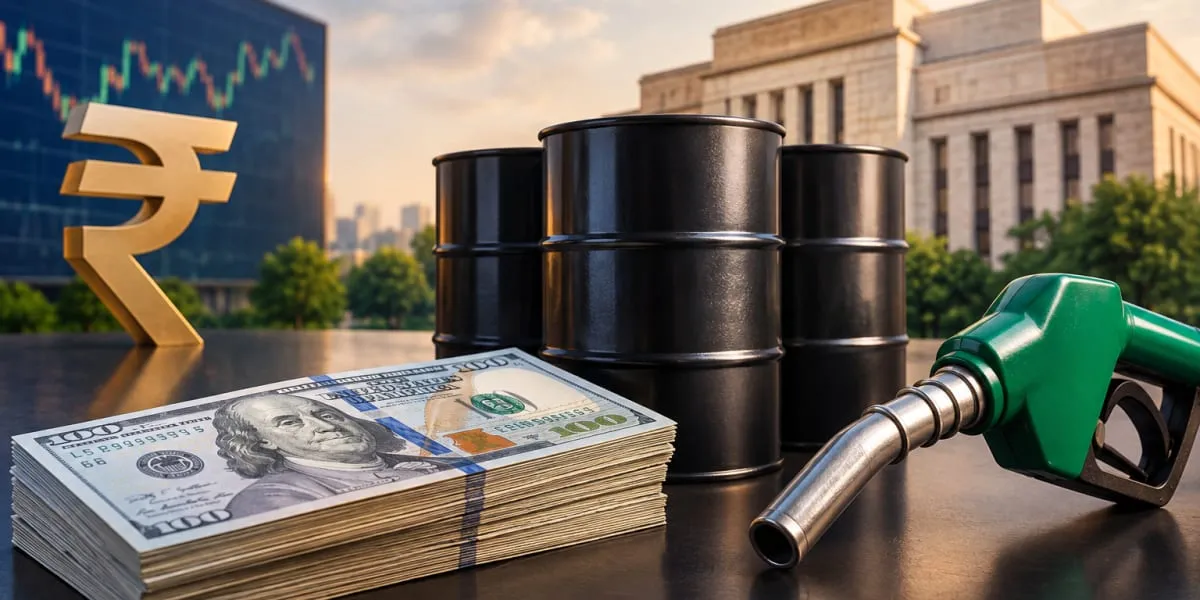
India's crude oil imports from countries such as the United States and Venezuela are largely determined by prevailing prices, with at least 60 per cent of imports linked to price in the month or the following two months, ONGC chairman Arun Kumar Singh said. He indicated that imports by Mangalore Refinery and Petrochemicals Limited are primarily driven by price apart from term crude contracts. Mr Singh noted that term crudes are gradually reducing while spot purchases are decided on a cargo-to-cargo basis.

He said that because spot decisions depend on price, exact import volumes cannot be predetermined, but that price dynamics account for a significant majority of sourcing decisions. Singh made the remarks after the company’s annual general meeting and in response to questions about the status of imports from the United States and Venezuela. MRPL, a subsidiary of the state-owned Oil and Natural Gas Corporation, was identified as procuring crude for its refinery operations.

Singh described ONGC as fairly balanced against price volatility owing to its integrated model, with 60 per cent constituting exploration and production and 40 per cent comprising non-E&P activities. He explained that one arm of the business can offset pressure on another, so downward movement in crude prices can be cushioned by other units. ONGC stated it was prepared for a dollar range of 60 to 90 per barrel.

He said that he did not foresee a situation in which crude would be unavailable to India and observed that, on a global basis, there was around seven million (mn) barrels a day more crude than required. Singh acknowledged that geopolitical disruptions could affect supplies temporarily but argued that economic considerations would ultimately prevail. He warned that the impact on India’s growth would depend on resultant price levels, noting an oil and gas import bill of roughly 200 billion (bn) dollars and an economy of about four trillion (tn) dollars.

India's crude oil imports from countries such as the United States and Venezuela are largely determined by prevailing prices, with at least 60 per cent of imports linked to price in the month or the following two months, ONGC chairman Arun Kumar Singh said. He indicated that imports by Mangalore Refinery and Petrochemicals Limited are primarily driven by price apart from term crude contracts. Mr Singh noted that term crudes are gradually reducing while spot purchases are decided on a cargo-to-cargo basis. He said that because spot decisions depend on price, exact import volumes cannot be predetermined, but that price dynamics account for a significant majority of sourcing decisions. Singh made the remarks after the company’s annual general meeting and in response to questions about the status of imports from the United States and Venezuela. MRPL, a subsidiary of the state-owned Oil and Natural Gas Corporation, was identified as procuring crude for its refinery operations. Singh described ONGC as fairly balanced against price volatility owing to its integrated model, with 60 per cent constituting exploration and production and 40 per cent comprising non-E&P activities. He explained that one arm of the business can offset pressure on another, so downward movement in crude prices can be cushioned by other units. ONGC stated it was prepared for a dollar range of 60 to 90 per barrel. He said that he did not foresee a situation in which crude would be unavailable to India and observed that, on a global basis, there was around seven million (mn) barrels a day more crude than required. Singh acknowledged that geopolitical disruptions could affect supplies temporarily but argued that economic considerations would ultimately prevail. He warned that the impact on India’s growth would depend on resultant price levels, noting an oil and gas import bill of roughly 200 billion (bn) dollars and an economy of about four trillion (tn) dollars.

Related Stories

Gold Stories

Next Story
Infrastructure Transport

Mumbai-Ahmedabad Bullet Train’s Surat-Vapi Section Set for 2027

The first section of the Mumbai-Ahmedabad Bullet Train corridor, linking Surat and Vapi, is targeted to begin services in 2027. Construction is expected to be completed by December 2026, while Railway Minister Ashwini Vaishnaw has indicated that an inauguration could take place around the middle of 2027. The National High Speed Rail Corporation (NHSRCL) said the train being manufactured in India is expected to reach the tracks around April or May 2027. The train will undergo extensive testing before the section is opened for passenger services. The project began construction in 2021 and includ..

Next Story
Infrastructure Transport

Indian Railways Approves Four Projects Worth Rs. 7.36 bn Across Four States

Indian Railways has approved four projects with a combined value of Rs. 7.36 bn across Uttar Pradesh, Maharashtra, Andhra Pradesh and Gujarat. The programme covers train protection, signalling, electric traction supply and a road overbridge, with each project assigned to a different railway zone. In Uttar Pradesh, Rs. 2.52 bn has been approved to extend the Kavach 4.0 automatic train protection system across 607.7 km in the Lucknow Division of North Eastern Railway. The system monitors train movements and can apply the brakes if a driver fails to observe a signal or exceeds a safe speed. The w..

Next Story
Infrastructure Urban

Chandru Raheja Sells 1.49% Stake in Mindspace REIT for Rs. 5 bn

Billionaire Chandru Lachmandas Raheja has sold a 1.49 per cent holding in Mindspace Business Parks REIT for Rs. 5 bn through a bulk deal on the BSE. The transaction involved 9.9 mn units and was executed at an average price of Rs. 505 per unit, according to exchange data. Following the sale, units of Mindspace Business Parks REIT were trading 0.18 per cent lower at Rs. 504.05 on Tuesday. Exchange data did not identify the buyers involved in the transaction. Raheja is the chairman of real estate company K Raheja Corp. The sale involved 99,00,990 units, representing 1.49 per cent of the Mumbai-b..

Advertisement

Subscribe to Our Newsletter

Get daily newsletters around different themes from Construction world.

STAY CONNECTED

Advertisement

SPECIAL OFFER
QR Code