



+
India Reduces Gas Supply To Industries After Qatar Outage
OIL & GAS

India Reduces Gas Supply To Industries After Qatar Outage

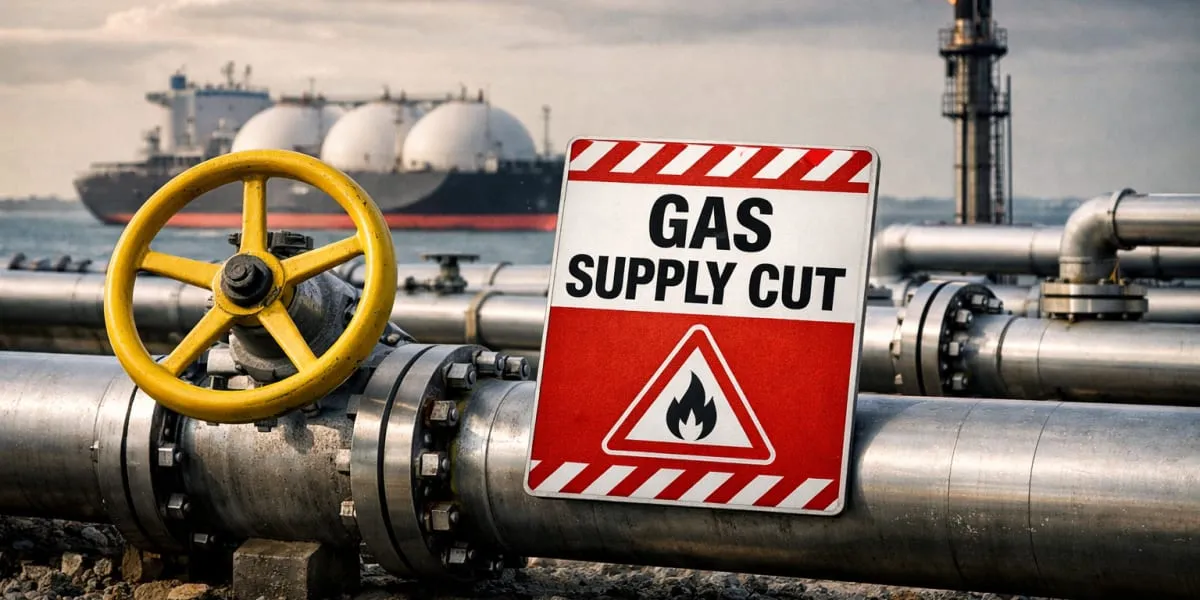
India has reduced natural gas supplies to industrial consumers after an outage in Qatar disrupted flows, sources said. Officials temporarily scaled back allocations to non-essential industries to protect supplies for households and critical systems. The move followed interruptions in liquefied natural gas (LNG) deliveries that constrained available volumes. The reduction was framed as a temporary measure pending restoration of regular cargo schedules.\n\nDistribution companies and pipeline operators implemented short-term curbs under guidance from authorities, sources added. The government directed that domestic and agricultural demand and city gas distribution networks be prioritised while emergency measures were in place. Liquefied natural gas (LNG) imports have been closely monitored as terminals adjusted scheduling to manage throughput. State regulators coordinated with pipeline companies to monitor pressure and flow across networks.\n\nIndustrial users typically reliant on piped gas were advised to modulate operations, with some facilities expected to reduce output to match lower allocations. Sectors with the greatest flexibility were asked to shift to alternate fuels where feasible. Traders and buyers monitored spot and term markets for signs of stabilisation in supply and pricing. Manufacturers with long-term supply agreements examined contractual remedies while assessing operational adjustments.\n\nEnergy planners and market participants said contingency steps included accelerating cargo diversions and assessing short-term contractual swaps to plug gaps. Authorities reviewed inventory and pipeline balancing options to limit disruption and ensure stable supplies to essential services. The episode highlighted dependency on external gas supplies and the need for diversified sources. Market intelligence teams tracked cargo arrivals and terminal inventories to guide short-term decisions.\n\nRestoration of normal supplies was contingent on repairs and resumption of shipments from the affected hub, industry analysts said. Policymakers were expected to continue engagement with suppliers and operators to restore volumes and reduce the risk of repeat disruptions. Observers noted the incident could accelerate plans to boost domestic production and storage capacity over the medium term.

India has reduced natural gas supplies to industrial consumers after an outage in Qatar disrupted flows, sources said. Officials temporarily scaled back allocations to non-essential industries to protect supplies for households and critical systems. The move followed interruptions in liquefied natural gas (LNG) deliveries that constrained available volumes. The reduction was framed as a temporary measure pending restoration of regular cargo schedules.\n\nDistribution companies and pipeline operators implemented short-term curbs under guidance from authorities, sources added. The government directed that domestic and agricultural demand and city gas distribution networks be prioritised while emergency measures were in place. Liquefied natural gas (LNG) imports have been closely monitored as terminals adjusted scheduling to manage throughput. State regulators coordinated with pipeline companies to monitor pressure and flow across networks.\n\nIndustrial users typically reliant on piped gas were advised to modulate operations, with some facilities expected to reduce output to match lower allocations. Sectors with the greatest flexibility were asked to shift to alternate fuels where feasible. Traders and buyers monitored spot and term markets for signs of stabilisation in supply and pricing. Manufacturers with long-term supply agreements examined contractual remedies while assessing operational adjustments.\n\nEnergy planners and market participants said contingency steps included accelerating cargo diversions and assessing short-term contractual swaps to plug gaps. Authorities reviewed inventory and pipeline balancing options to limit disruption and ensure stable supplies to essential services. The episode highlighted dependency on external gas supplies and the need for diversified sources. Market intelligence teams tracked cargo arrivals and terminal inventories to guide short-term decisions.\n\nRestoration of normal supplies was contingent on repairs and resumption of shipments from the affected hub, industry analysts said. Policymakers were expected to continue engagement with suppliers and operators to restore volumes and reduce the risk of repeat disruptions. Observers noted the incident could accelerate plans to boost domestic production and storage capacity over the medium term.

Next Story
Real Estate

Perceptive Ideas Designs Structure for Vanijya Bhawan

Perceptive Ideas Consulting Engineers has recently contributed to the structural design of Vanijya Bhawan, a major government office complex located at 16A Akbar Road on the C-Hexagon in New Delhi. The facility serves as the official office of the Ministry of Commerce, Government of India, and represents a blend of modern engineering design with architectural elements reflecting national heritage.The complex houses offices of the Minister of Commerce and Industry, the Secretary’s office and accommodates approximately 1,800–2,000 officers. The project highlights the firm’s capabilities in..

Next Story
Resources

Deepak Halder Appointed CEO Of Sarvottam India

Sarvottam India has appointed Deepak Halder as its Chief Executive Officer. With over 23 years of professional experience, including nearly two decades in the real estate sector, Halder brings extensive leadership and strategic expertise to the organisation. Halder began his career in real estate in 2007 and has held senior leadership roles with developers such as Bestech Group, Paras Buildtech, Hero Realty, ATS Infrastructure and Rajdarbar Group. During his career, he has been involved in strategic expansion, brand positioning, major project launches and revenue growth across residential and..

Next Story
Real Estate

India Drives APAC Office Leasing Growth in 2025: Colliers

Office demand across Asia Pacific’s 11 major markets reached 9.8 million sq m (105.5 million sq ft) in 2025, marking an 11 per cent year-on-year increase, according to Colliers’ Asia Pacific Office Market Insights February 2026 report. India, Mainland China and Japan accounted for over 90 per cent of the region’s total demand during the year, with India emerging as the dominant leasing market.India alone contributed nearly 68 per cent of total office leasing across the region and accounted for 55 per cent of new office supply among the top 11 APAC markets in 2025. The report highlights t..

Advertisement

Subscribe to Our Newsletter

Get daily newsletters around different themes from Construction world.

STAY CONNECTED

Advertisement

Advertisement

Advertisement

Open In App