



India Sends 38,000 Metric Tonnes Of Fuel To Sri Lanka
OIL & GAS

India Sends 38,000 Metric Tonnes Of Fuel To Sri Lanka

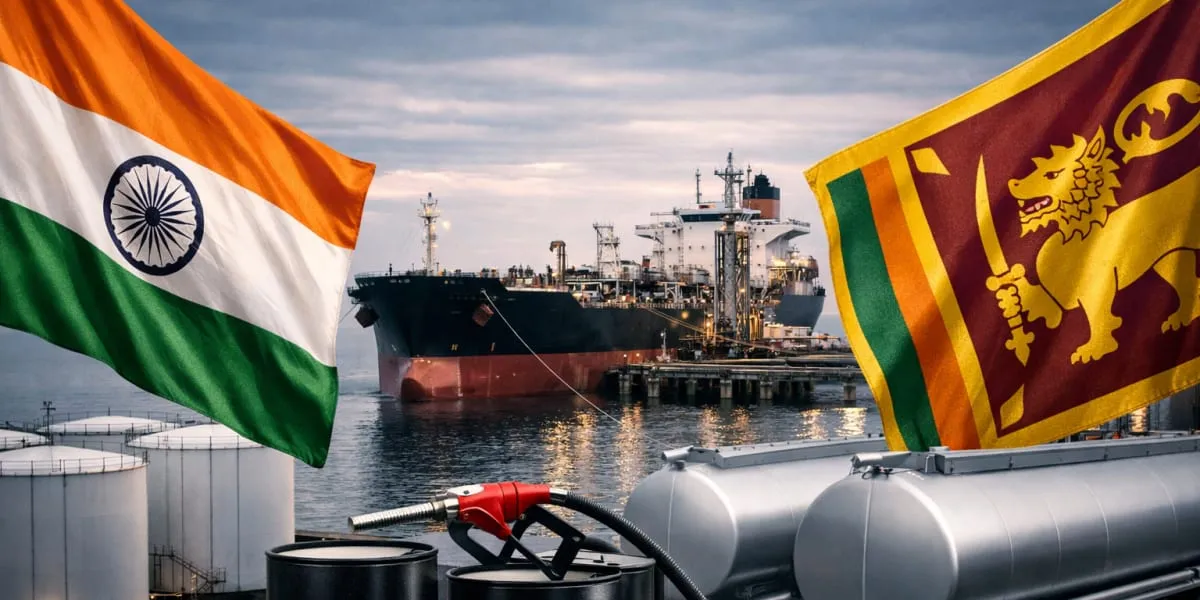
India has delivered 38,000 metric tonnes (t) of petroleum to Sri Lanka, comprising 20,000 t of diesel and 18,000 t of petrol, the Indian High Commission in Colombo said on Saturday. The supply was provided after a request to the Indian Oil Corporation Limited (IOCL) amid disruptions to regular shipments caused by the war in West Asia. The consignment is intended as rescue supplies to maintain continuity of fuel availability in Sri Lanka. The delivery was reported on March 28, 2026.

The development followed a telephone conversation between Prime Minister Narendra Modi and Sri Lankan President Anura Kumara Dissanayake that addressed the conflict and energy cooperation. The external affairs minister also spoke with his Sri Lankan counterpart on related issues, underlining diplomatic engagement to resolve supply challenges. Officials reported that some contracted suppliers invoked force majeure owing to vessel unavailability and supply disruptions. Diplomatic channels were used to coordinate immediate logistics and to monitor vessel availability.

The Government of India, through IOCL and Lanka IOC, moved to support Sri Lanka after the suppliers indicated inability to deliver products from West Asia and Singapore. Sri Lanka IOC had previously secured sources for March but faced cancellations and delays, prompting the request for rescue supplies. The intervention aims to prevent shortages and stabilise domestic fuel distribution in Colombo. The companies involved coordinated port schedules and tanker allocations to expedite the consignment.

Energy officials said the delivery is part of broader cooperation to mitigate impacts of global supply chain disturbances and to maintain essential services. Sri Lanka has responded to the market pressures by raising fuel prices by 25 per cent as the conflict affected imports. The shipment is expected to ensure short term continuity while longer term arrangements are pursued diplomatically. Authorities indicated that the consignment will be integrated into existing distribution networks to reduce pressure on retail outlets.

India has delivered 38,000 metric tonnes (t) of petroleum to Sri Lanka, comprising 20,000 t of diesel and 18,000 t of petrol, the Indian High Commission in Colombo said on Saturday. The supply was provided after a request to the Indian Oil Corporation Limited (IOCL) amid disruptions to regular shipments caused by the war in West Asia. The consignment is intended as rescue supplies to maintain continuity of fuel availability in Sri Lanka. The delivery was reported on March 28, 2026. The development followed a telephone conversation between Prime Minister Narendra Modi and Sri Lankan President Anura Kumara Dissanayake that addressed the conflict and energy cooperation. The external affairs minister also spoke with his Sri Lankan counterpart on related issues, underlining diplomatic engagement to resolve supply challenges. Officials reported that some contracted suppliers invoked force majeure owing to vessel unavailability and supply disruptions. Diplomatic channels were used to coordinate immediate logistics and to monitor vessel availability. The Government of India, through IOCL and Lanka IOC, moved to support Sri Lanka after the suppliers indicated inability to deliver products from West Asia and Singapore. Sri Lanka IOC had previously secured sources for March but faced cancellations and delays, prompting the request for rescue supplies. The intervention aims to prevent shortages and stabilise domestic fuel distribution in Colombo. The companies involved coordinated port schedules and tanker allocations to expedite the consignment. Energy officials said the delivery is part of broader cooperation to mitigate impacts of global supply chain disturbances and to maintain essential services. Sri Lanka has responded to the market pressures by raising fuel prices by 25 per cent as the conflict affected imports. The shipment is expected to ensure short term continuity while longer term arrangements are pursued diplomatically. Authorities indicated that the consignment will be integrated into existing distribution networks to reduce pressure on retail outlets.

Next Story
Infrastructure Transport

MMRDA Removes 1.14 lakh m of Metro Barricades

In a bid to ease congestion and improve urban mobility during monsoon, MMRDA has undertaken one of the largest coordinated barricade removal and monsoon preparedness drives across its ongoing metro and infrastructure projects.With substantial progress achieved in viaduct and structural works across multiple metro corridors, barricades from completed stretches beneath metro viaducts are being systematically removed, restoring maximum possible road space before the monsoon. Wider carriageways across key arterial roads are expected to improve traffic flow, reduce congestion, support better rainwa..

Next Story
Infrastructure Transport

Pune Division to Remove All Diamond Crossings by Year-End

The Pune railway division has announced plans to remove all 16 diamond crossings by the end of 2026 as part of a major yard remodelling project following the derailment of a Vande Bharat Express at Pune Junction on April 27. Railway authorities said the replacements aim to improve safety and streamline train operations across the busy station. The decision followed a Central Railway finding that the accident involved a non-standard diamond crossing and highlighted the need for replacement. Regular maintenance of existing crossings will continue until the replacement work is completed. Official..

Next Story
Infrastructure Urban

Goa Declares 80 Million Square Metres No Development Zone

The Goa state government has declared 80 million square metres (mn) of land a no development zone, designating the area as protected from new construction. The notification reclassifies tracts across the state under a no development category for planning and regulatory purposes. The declaration signals a formal halt to new building permits within the defined zone. Authorities indicated that maps will be issued to show broad boundaries while detailed surveys will refine precise limits. The move transfers responsibility for enforcement to local planning authorities and relevant departments, whic..

Advertisement

Subscribe to Our Newsletter

Get daily newsletters around different themes from Construction world.

STAY CONNECTED

Advertisement

Advertisement

Advertisement