+
India Steps on the Gas as Refiners Raise LPG Output
OIL & GAS

India Steps on the Gas as Refiners Raise LPG Output

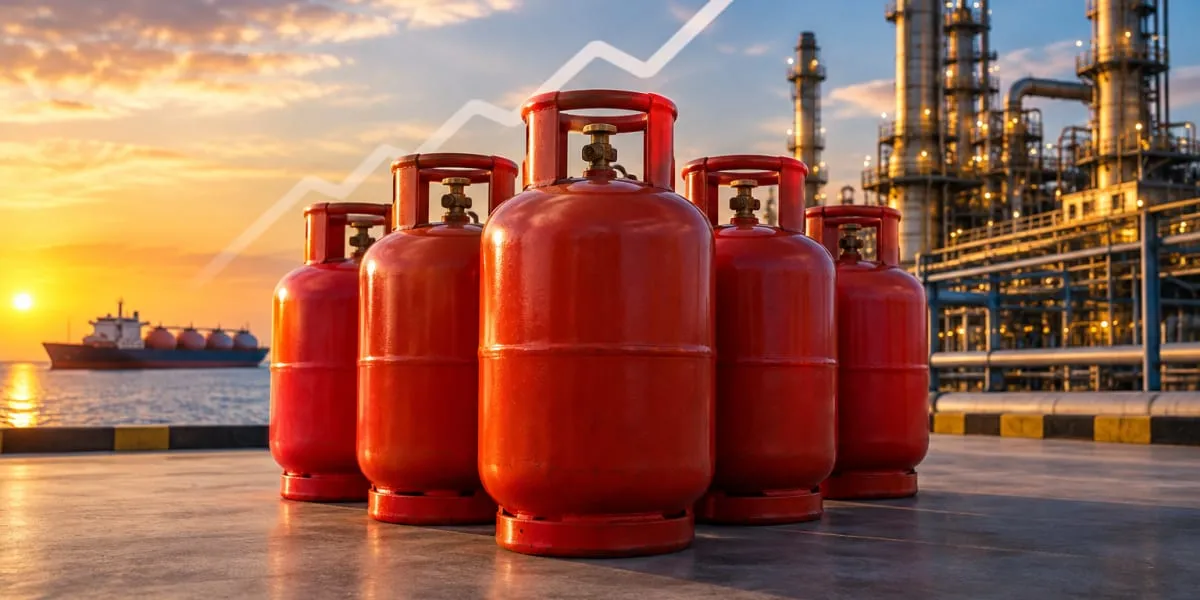
Indian state-owned refiners have increased liquefied petroleum gas (LPG) production as the festive season lifts demand for cooking fuel while conflict in the Persian Gulf disrupts contracted supplies. Domestic output has reached about 44,000 t a day, according to a Bloomberg report, nearly 20 per cent above the August average.

India, the world’s second-largest LPG importer, previously sourced most of its supplies from the Persian Gulf. That concentration left the country vulnerable to conflict and trade disruptions, prompting the government and refiners to seek alternative cargoes and increase domestic production.

Refiners had reduced output from wartime highs after shipments from the US and Africa began arriving during the summer. Abu Dhabi National Oil Company (ADNOC) also started supplying cargoes through Oman’s Sohar port, allowing refiners to ease domestic production before output rose again in response to changing demand conditions.

Consumption is being supported by the easing of measures introduced to manage supply. Rural households were told last month that they could refill cylinders after 25 days, compared with the emergency 45-day interval imposed in March. Officials attributed the change to improved availability and reduced backlogs.

Festive demand is expected to continue through Diwali in November, while winter conditions generally provide an additional boost to LPG consumption. Demand is still projected to remain 10 per cent below the same period last year because industrial consumption curtailed during the conflict has not fully recovered. Supply pressure has also increased after one September cargo for Bharat Petroleum (BPCL) and two for Indian Oil could not be collected from ADNOC. The producer has indicated that it will provide committed October volumes, including five cargoes for Indian Oil and three each for BPCL and Hindustan Petroleum, supporting India’s efforts to maintain energy security.

Indian state-owned refiners have increased liquefied petroleum gas (LPG) production as the festive season lifts demand for cooking fuel while conflict in the Persian Gulf disrupts contracted supplies. Domestic output has reached about 44,000 t a day, according to a Bloomberg report, nearly 20 per cent above the August average. India, the world’s second-largest LPG importer, previously sourced most of its supplies from the Persian Gulf. That concentration left the country vulnerable to conflict and trade disruptions, prompting the government and refiners to seek alternative cargoes and increase domestic production. Refiners had reduced output from wartime highs after shipments from the US and Africa began arriving during the summer. Abu Dhabi National Oil Company (ADNOC) also started supplying cargoes through Oman’s Sohar port, allowing refiners to ease domestic production before output rose again in response to changing demand conditions. Consumption is being supported by the easing of measures introduced to manage supply. Rural households were told last month that they could refill cylinders after 25 days, compared with the emergency 45-day interval imposed in March. Officials attributed the change to improved availability and reduced backlogs. Festive demand is expected to continue through Diwali in November, while winter conditions generally provide an additional boost to LPG consumption. Demand is still projected to remain 10 per cent below the same period last year because industrial consumption curtailed during the conflict has not fully recovered. Supply pressure has also increased after one September cargo for Bharat Petroleum (BPCL) and two for Indian Oil could not be collected from ADNOC. The producer has indicated that it will provide committed October volumes, including five cargoes for Indian Oil and three each for BPCL and Hindustan Petroleum, supporting India’s efforts to maintain energy security.

Related Stories

Gold Stories
Next Story
Infrastructure Transport

Mumbai-Ahmedabad Bullet Train’s Surat-Vapi Section Set for 2027

The first section of the Mumbai-Ahmedabad Bullet Train corridor, linking Surat and Vapi, is targeted to begin services in 2027. Construction is expected to be completed by December 2026, while Railway Minister Ashwini Vaishnaw has indicated that an inauguration could take place around the middle of 2027. The National High Speed Rail Corporation (NHSRCL) said the train being manufactured in India is expected to reach the tracks around April or May 2027. The train will undergo extensive testing before the section is opened for passenger services. The project began construction in 2021 and includ..

Next Story
Infrastructure Transport

Indian Railways Approves Four Projects Worth Rs. 7.36 bn Across Four States

Indian Railways has approved four projects with a combined value of Rs. 7.36 bn across Uttar Pradesh, Maharashtra, Andhra Pradesh and Gujarat. The programme covers train protection, signalling, electric traction supply and a road overbridge, with each project assigned to a different railway zone. In Uttar Pradesh, Rs. 2.52 bn has been approved to extend the Kavach 4.0 automatic train protection system across 607.7 km in the Lucknow Division of North Eastern Railway. The system monitors train movements and can apply the brakes if a driver fails to observe a signal or exceeds a safe speed. The w..

Next Story
Infrastructure Urban

Chandru Raheja Sells 1.49% Stake in Mindspace REIT for Rs. 5 bn

Billionaire Chandru Lachmandas Raheja has sold a 1.49 per cent holding in Mindspace Business Parks REIT for Rs. 5 bn through a bulk deal on the BSE. The transaction involved 9.9 mn units and was executed at an average price of Rs. 505 per unit, according to exchange data. Following the sale, units of Mindspace Business Parks REIT were trading 0.18 per cent lower at Rs. 504.05 on Tuesday. Exchange data did not identify the buyers involved in the transaction. Raheja is the chairman of real estate company K Raheja Corp. The sale involved 99,00,990 units, representing 1.49 per cent of the Mumbai-b..

Advertisement

Subscribe to Our Newsletter

Get daily newsletters around different themes from Construction world.

STAY CONNECTED

Advertisement

SPECIAL OFFER
QR Code