


+
Indian Refiners Shift Crude Imports Away from Russia
OIL & GAS

Indian Refiners Shift Crude Imports Away from Russia

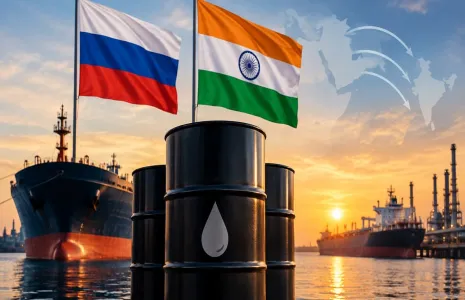
Indian refiners are reshaping their crude import strategies by reducing dependence on Russia and increasing purchases from the Middle East, a shift that could support New Delhi’s efforts to secure a trade agreement with the United States and ease tariff barriers.

India emerged as the largest buyer of discounted Russian seaborne crude after the outbreak of the Ukraine conflict in 2022. However, the trade attracted criticism from Western nations, which argued that Russia’s oil revenues were helping to finance the war. The current shift comes as Middle Eastern producers, backed by higher production quotas from the Organization of the Petroleum Exporting Countries, maintain ample global supply, limiting the impact on international oil prices.

Indian refiners have begun scaling back Russian oil purchases following discussions at a government meeting aimed at accelerating a US–India trade deal, according to industry sources. The Petroleum Planning and Analysis Cell under the oil ministry is monitoring weekly data on crude purchases from Russia and the United States to assess evolving procurement patterns.

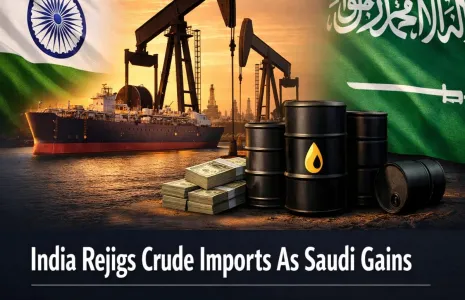
In a recent development, state-run Bharat Petroleum Corporation Limited awarded one-year tenders to procure Iraqi Basrah and Omani crude to Trafigura and has also entered the market to purchase Murban crude from the United Arab Emirates under a separate tender. From April, Trafigura is expected to supply four cargoes of Oman crude each quarter at a discount of 75 cents per barrel below Dubai benchmarks, along with one cargo of Basrah Medium at a discount of 40 cents per barrel to its official selling price.

The recalibration of crude sourcing reflects India’s broader effort to balance geopolitical considerations, trade negotiations and energy security while maintaining cost-efficient imports. With Middle Eastern producers increasing output and diversifying supply routes, Indian refiners are positioning themselves to manage price volatility and strengthen strategic partnerships in global energy markets.

Indian refiners are reshaping their crude import strategies by reducing dependence on Russia and increasing purchases from the Middle East, a shift that could support New Delhi’s efforts to secure a trade agreement with the United States and ease tariff barriers. India emerged as the largest buyer of discounted Russian seaborne crude after the outbreak of the Ukraine conflict in 2022. However, the trade attracted criticism from Western nations, which argued that Russia’s oil revenues were helping to finance the war. The current shift comes as Middle Eastern producers, backed by higher production quotas from the Organization of the Petroleum Exporting Countries, maintain ample global supply, limiting the impact on international oil prices. Indian refiners have begun scaling back Russian oil purchases following discussions at a government meeting aimed at accelerating a US–India trade deal, according to industry sources. The Petroleum Planning and Analysis Cell under the oil ministry is monitoring weekly data on crude purchases from Russia and the United States to assess evolving procurement patterns. In a recent development, state-run Bharat Petroleum Corporation Limited awarded one-year tenders to procure Iraqi Basrah and Omani crude to Trafigura and has also entered the market to purchase Murban crude from the United Arab Emirates under a separate tender. From April, Trafigura is expected to supply four cargoes of Oman crude each quarter at a discount of 75 cents per barrel below Dubai benchmarks, along with one cargo of Basrah Medium at a discount of 40 cents per barrel to its official selling price. The recalibration of crude sourcing reflects India’s broader effort to balance geopolitical considerations, trade negotiations and energy security while maintaining cost-efficient imports. With Middle Eastern producers increasing output and diversifying supply routes, Indian refiners are positioning themselves to manage price volatility and strengthen strategic partnerships in global energy markets.

Next Story
Real Estate

Supreme Court Clears NBCC to Complete 16 Stalled Supertech Projects

In a significant relief to thousands of homebuyers, the Supreme Court of India has upheld the order of the National Company Law Appellate Tribunal (NCLAT) directing NBCC to complete 16 stalled residential projects of debt-ridden Supertech Ltd.The apex court, in its final order delivered on February 5, 2026, restrained all courts and tribunals from passing any directions that could stall or obstruct the execution of the NBCC-led completion plan. The decision impacts nearly 51,000 homebuyers who have been awaiting possession of their flats for over a decade.Years of delaySupertech launched and p..

Next Story
Infrastructure Urban

Telecom Underpins India's AI Revolution, MoS Says

At the India AI Impact Summit, the Minister of State for Communications and Rural Development said that telecom infrastructure constitutes the foundational layer of the country's artificial intelligence ecosystem and described connectivity as a form of sovereignty. He argued that inclusive digital connectivity is central to India's technological leadership and the empowerment of citizens. The address framed telecom as essential not merely for communication but for enabling AI-driven opportunities across sectors. He noted that broadband subscribers rose from 60 million (60 mn) in 2014 to one bi..

Next Story
Infrastructure Urban

India and Ireland Deepen Digital and Telecom Cooperation

India and Ireland held a bilateral meeting in New Delhi in which the Union Minister for Communications, Jyotiraditya Scindia, led the Indian delegation and Jack Chambers led the Irish delegation. The meeting at Sanchar Bhawan sought to deepen cooperation in telecommunications, digital infrastructure, emerging technologies and regulatory collaboration. Senior officials from the Department of Telecommunications and Ireland's Commission for Communications Regulation attended to chart a roadmap for future networks. Both sides noted complementarities between India's scale and rapid deployment capab..

Advertisement

Subscribe to Our Newsletter

Get daily newsletters around different themes from Construction world.

STAY CONNECTED

Advertisement

Advertisement

Advertisement

Open In App