+
India’s Russian Oil Imports Hold Near 1.8 mn bpd as Middle East Fills Gaps
OIL & GAS

India’s Russian Oil Imports Hold Near 1.8 mn bpd as Middle East Fills Gaps

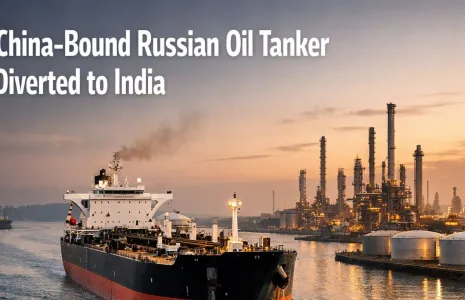
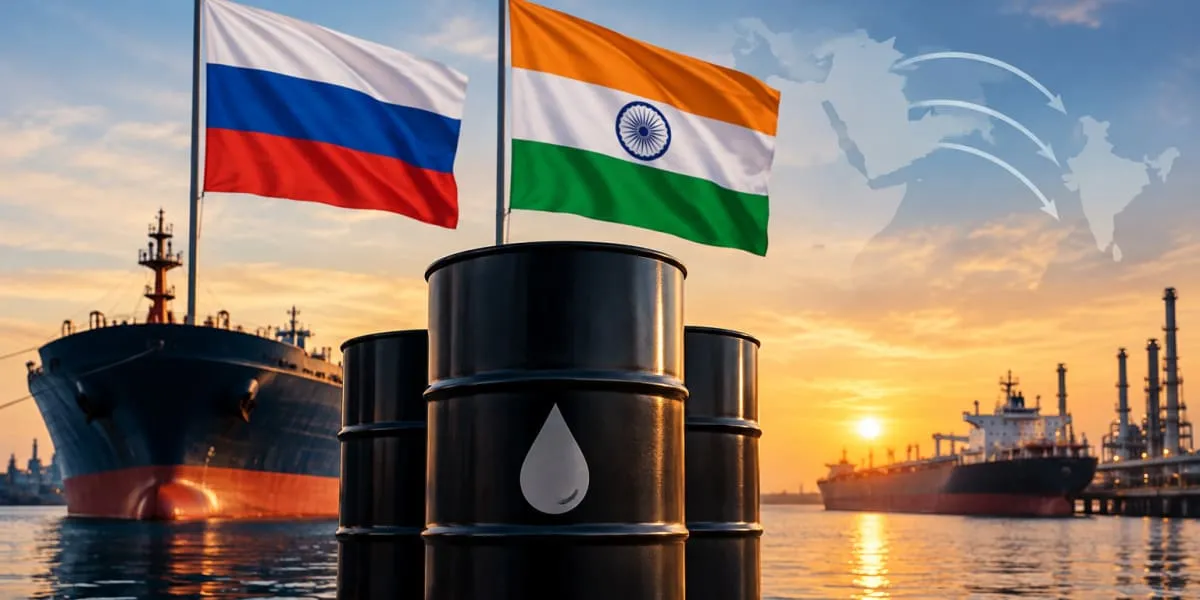
India’s imports of Russian crude are running at around 1.8 mn barrels per day (bpd) in September, broadly steady from August but below July levels. Refinery maintenance, stronger Chinese buying and disruptions to Russian export infrastructure have contributed to the decline, while Middle Eastern suppliers have supplied replacement volumes.

India imported 2.82 mn bpd of Russian crude in July, with the volume falling to 2.08 mn bpd in August, according to data from global commodities data and analytics firm Kpler. Kpler said Russian flows in September were being supported by the wider adjustment in India’s crude supply mix, rather than a complete shift away from Russian barrels.

Iraq supplied about 505,000 bpd of crude to India in September, compared with 163,000 bpd in August. Saudi Arabia’s supplies rose to 576,000 bpd from 347,000 bpd, while the UAE provided 522,000 bpd, largely unchanged from 546,000 bpd in August. The figures show that Middle Eastern producers have absorbed much of the recent shortfall in Russian supplies.

The outlook for Russian crude could become more complicated if the Lindsey O. Graham Sanctioning Russia and Iran Act of 2026 leads to tougher restrictions on countries continuing to buy Russian oil. India has consistently prioritised energy security, and a substantial reduction in Russian purchases is unlikely in the near term while the physical oil market remains tight, according to Kpler analyst Nikhil Dubey.

India became a major buyer of Russian crude after Moscow’s invasion of Ukraine in 2022, when Western sanctions and a price cap redirected Russian oil towards Asian markets. Although Indian refiners can technically replace the barrels, doing so would increase competition for medium-grade crude from traditional Middle Eastern suppliers. The resulting pressure on crude differentials and freight rates could raise procurement costs and potentially support global oil prices. For now, the market is adjusting through higher Middle Eastern supplies rather than undergoing a wholesale change in sourcing.

India’s imports of Russian crude are running at around 1.8 mn barrels per day (bpd) in September, broadly steady from August but below July levels. Refinery maintenance, stronger Chinese buying and disruptions to Russian export infrastructure have contributed to the decline, while Middle Eastern suppliers have supplied replacement volumes. India imported 2.82 mn bpd of Russian crude in July, with the volume falling to 2.08 mn bpd in August, according to data from global commodities data and analytics firm Kpler. Kpler said Russian flows in September were being supported by the wider adjustment in India’s crude supply mix, rather than a complete shift away from Russian barrels. Iraq supplied about 505,000 bpd of crude to India in September, compared with 163,000 bpd in August. Saudi Arabia’s supplies rose to 576,000 bpd from 347,000 bpd, while the UAE provided 522,000 bpd, largely unchanged from 546,000 bpd in August. The figures show that Middle Eastern producers have absorbed much of the recent shortfall in Russian supplies. The outlook for Russian crude could become more complicated if the Lindsey O. Graham Sanctioning Russia and Iran Act of 2026 leads to tougher restrictions on countries continuing to buy Russian oil. India has consistently prioritised energy security, and a substantial reduction in Russian purchases is unlikely in the near term while the physical oil market remains tight, according to Kpler analyst Nikhil Dubey. India became a major buyer of Russian crude after Moscow’s invasion of Ukraine in 2022, when Western sanctions and a price cap redirected Russian oil towards Asian markets. Although Indian refiners can technically replace the barrels, doing so would increase competition for medium-grade crude from traditional Middle Eastern suppliers. The resulting pressure on crude differentials and freight rates could raise procurement costs and potentially support global oil prices. For now, the market is adjusting through higher Middle Eastern supplies rather than undergoing a wholesale change in sourcing.

Related Stories

Gold Stories

Next Story
Real Estate

Ajyal Holding Acquires 25% Stake in Sterling Ark

Sterling Ark, an independent integrated real estate advisory and project delivery firm, has announced a strategic alliance with Abu Dhabi-headquartered Ajyal Holding. Under the agreement, Ajyal Holding has acquired a 25 per cent stake in Sterling Ark.The alliance is expected to provide Sterling Ark with a broader platform to pursue opportunities and expand its presence across the region. Ajyal Holding operates across real estate, contracting, fit-out, building materials and technology, among other sectors.Sterling Ark provides end-to-end advisory and project delivery capabilities across real e..

Next Story
Infrastructure Urban

YEIDA Allots Land for Five Projects Worth Rs 4.69 bn

A significant step towards converting industrial investment proposals into on-ground projects was taken at the inauguration of the Uttar Pradesh International Trade Show (UPITS) 2026. Union Home and Cooperation Minister Amit Shah presented Letters of Allotment to representatives of five companies investing in the Yamuna Expressway Industrial Development Authority (YEIDA) region.The five projects have been allotted a total of 71,190 sq m of land and involve a proposed investment of Rs 4.69 bn, with the potential to generate 4,625 employment opportunities.C&R Textiles Private Limited has bee..

Next Story
Infrastructure Energy

Hindustan Zinc Restores 1,105 Hectares of Land

Hindustan Zinc Limited has restored 1,105 hectares of land as part of its efforts to integrate ecological restoration with responsible mining. The rehabilitated area, equivalent to more than 1,500 football fields, covers mining and operational landscapes restored through reclamation, plantation, biodiversity enhancement and sustainable land-use practices.The initiatives form part of Hindustan Zinc’s Sustainability Goals 2030 and its broader focus on creating long-term ecological value alongside business growth.Amarendu Prakash, CEO, Hindustan Zinc, said: “The future of mining will increasi..

Advertisement

Subscribe to Our Newsletter

Get daily newsletters around different themes from Construction world.

STAY CONNECTED

Advertisement

SPECIAL OFFER
QR Code