+
IOC, BPCL, HPCL witnesses Rs 690 bn net profit from Apr-Dec
OIL & GAS

IOC, BPCL, HPCL witnesses Rs 690 bn net profit from Apr-Dec

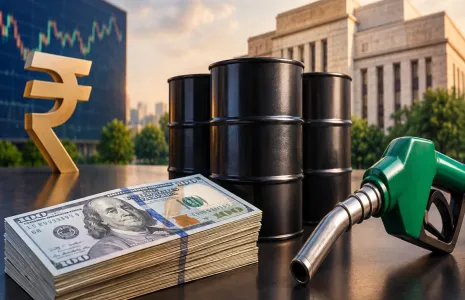
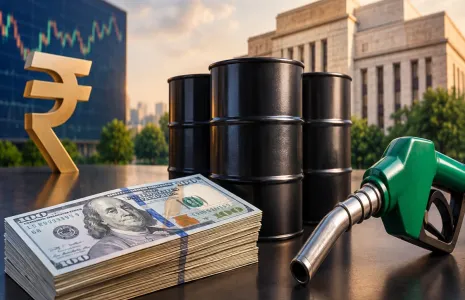
State-owned fuel retailers Indian Oil Corporation, Bharat Petroleum Corporation, and Hindustan Petroleum Corporation reported a bumper profit totalling over Rs 690 billion in the first nine months of the current fiscal, exceeding their annual earnings in pre-oil crisis years. The combined net profit of IOC, BPCL, and HPCL in April-December FY24 surpassed their annual earnings of Rs 393.56 billion in the pre-oil crisis year.

The retailers have resisted calls to revert to daily price revision and pass on the softening in rates to consumers. They argue that prices continue to be extremely volatile, rising on one day and falling on the other, and that their past losses have not been fully recouped.

The three companies, which control roughly 90 percent of India's fuel market, have 'voluntarily' refrained from changing petrol, diesel, and cooking gas (LPG) prices for almost two years now, resulting in losses when input costs were higher and profits when raw material prices were lower.

During April-September 2022, they posted a combined net loss of Rs 212.01 billion despite accounting for a Rs 220 billion announced but not paid LPG subsidy for the previous two years.

Subsequent softening of international prices and the government giving out LPG subsidy helped IOC and BPCL post an annualized profit for 2022-23. However, HPCL was in the red.

This fiscal year, things have changed dramatically. The three firms posted record earnings in the first two quarters (April-June and July-September) when international oil prices, against which domestic rates are benchmarked, almost halved to USD 72 a barrel from a year ago.

International prices rose again in the subsequent quarter to USD 90, leading to moderation of their earnings. But, on a yearly basis, they had rich profits. According to IOC's regulatory filing, in the first nine months of the current fiscal (April-December 2023), the company posted a standalone net profit of Rs 347.81 billion.

State-owned fuel retailers Indian Oil Corporation, Bharat Petroleum Corporation, and Hindustan Petroleum Corporation reported a bumper profit totalling over Rs 690 billion in the first nine months of the current fiscal, exceeding their annual earnings in pre-oil crisis years. The combined net profit of IOC, BPCL, and HPCL in April-December FY24 surpassed their annual earnings of Rs 393.56 billion in the pre-oil crisis year. The retailers have resisted calls to revert to daily price revision and pass on the softening in rates to consumers. They argue that prices continue to be extremely volatile, rising on one day and falling on the other, and that their past losses have not been fully recouped. The three companies, which control roughly 90 percent of India's fuel market, have 'voluntarily' refrained from changing petrol, diesel, and cooking gas (LPG) prices for almost two years now, resulting in losses when input costs were higher and profits when raw material prices were lower. During April-September 2022, they posted a combined net loss of Rs 212.01 billion despite accounting for a Rs 220 billion announced but not paid LPG subsidy for the previous two years. Subsequent softening of international prices and the government giving out LPG subsidy helped IOC and BPCL post an annualized profit for 2022-23. However, HPCL was in the red. This fiscal year, things have changed dramatically. The three firms posted record earnings in the first two quarters (April-June and July-September) when international oil prices, against which domestic rates are benchmarked, almost halved to USD 72 a barrel from a year ago. International prices rose again in the subsequent quarter to USD 90, leading to moderation of their earnings. But, on a yearly basis, they had rich profits. According to IOC's regulatory filing, in the first nine months of the current fiscal (April-December 2023), the company posted a standalone net profit of Rs 347.81 billion.

Related Stories

Gold Stories

Next Story
Infrastructure Transport

Mumbai-Ahmedabad Bullet Train’s Surat-Vapi Section Set for 2027

The first section of the Mumbai-Ahmedabad Bullet Train corridor, linking Surat and Vapi, is targeted to begin services in 2027. Construction is expected to be completed by December 2026, while Railway Minister Ashwini Vaishnaw has indicated that an inauguration could take place around the middle of 2027. The National High Speed Rail Corporation (NHSRCL) said the train being manufactured in India is expected to reach the tracks around April or May 2027. The train will undergo extensive testing before the section is opened for passenger services. The project began construction in 2021 and includ..

Next Story
Infrastructure Transport

Indian Railways Approves Four Projects Worth Rs. 7.36 bn Across Four States

Indian Railways has approved four projects with a combined value of Rs. 7.36 bn across Uttar Pradesh, Maharashtra, Andhra Pradesh and Gujarat. The programme covers train protection, signalling, electric traction supply and a road overbridge, with each project assigned to a different railway zone. In Uttar Pradesh, Rs. 2.52 bn has been approved to extend the Kavach 4.0 automatic train protection system across 607.7 km in the Lucknow Division of North Eastern Railway. The system monitors train movements and can apply the brakes if a driver fails to observe a signal or exceeds a safe speed. The w..

Next Story
Infrastructure Urban

Chandru Raheja Sells 1.49% Stake in Mindspace REIT for Rs. 5 bn

Billionaire Chandru Lachmandas Raheja has sold a 1.49 per cent holding in Mindspace Business Parks REIT for Rs. 5 bn through a bulk deal on the BSE. The transaction involved 9.9 mn units and was executed at an average price of Rs. 505 per unit, according to exchange data. Following the sale, units of Mindspace Business Parks REIT were trading 0.18 per cent lower at Rs. 504.05 on Tuesday. Exchange data did not identify the buyers involved in the transaction. Raheja is the chairman of real estate company K Raheja Corp. The sale involved 99,00,990 units, representing 1.49 per cent of the Mumbai-b..

Advertisement

Subscribe to Our Newsletter

Get daily newsletters around different themes from Construction world.

STAY CONNECTED

Advertisement

SPECIAL OFFER
QR Code