+
Petroleum regulator nods 33,764 km natural gas pipeline network
OIL & GAS

Petroleum regulator nods 33,764 km natural gas pipeline network

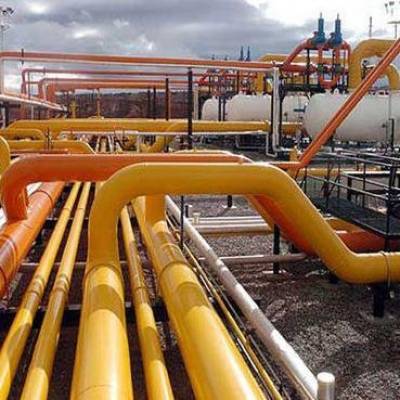
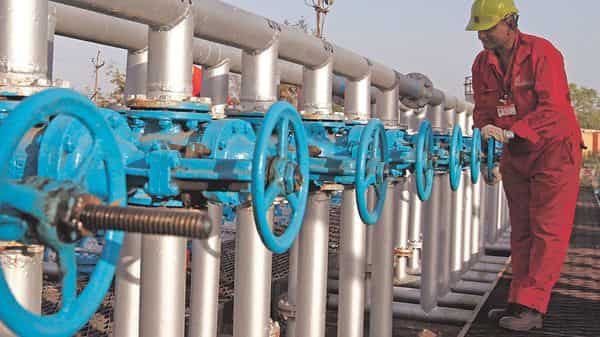
Petroleum and Natural Gas Regulatory Board (PNGRB) has authorised a 33,764 Km natural gas pipeline network intending to create a national gas grid and increase the availability of natural gas across the country.

As per the provision of the regulations, the authorised Natural Gas pipeline entity is entitled to lay spur lines.

As much as 19,998 km of natural gas pipelines are operational, and 15,369 km of natural gas pipelines are under construction. The present and forthcoming pipelines will form the national gas grid base in the country. However, expansion of pipeline infrastructure is a constant work based on gas demand assessment of different areas.

The government has decided to develop City Gas Distribution (CGD) networks that support the availability and accessibility of natural gas in the form of Piped Natural Gas (PNG) to households, industrial uses, and Compressed Natural Gas (CNG) for transportation purposes.

As per the PNGRB Act, 2006, PNGRB awards authorisation to the entities for forming of CGD network in geographical areas (GAs).

On 2 December 2020, PNGRB granted authorisation to Indian Gas Exchange Ltd (IGX) to set up and operate a gas exchange to promote and sustain efficient gas trading in the country.

Furthermore, on 23 November 2020, PNGRB has notified unified tariff regulations by way of Petroleum and Natural Gas Regulatory Board second amendment Regulations, 2020 to make natural gas affordable in far-flung areas.

PNGRB has allowed any entity to establish and operate liquefied natural gas (LNG) Stations in any GA for dispensing LNG in a liquid state, only to the transport sector to reduce fuel emissions, further promoting the usage of cleaner fuels.

PNGRB has notified guiding principles for declaring city or local natural gas distribution networks as a common carrier to provide non-discriminatory open access to third-party entities and to increase competition in CGD areas.

Image Source


Also read: Bengal now a part of national gas grid

Petroleum and Natural Gas Regulatory Board (PNGRB) has authorised a 33,764 Km natural gas pipeline network intending to create a national gas grid and increase the availability of natural gas across the country. As per the provision of the regulations, the authorised Natural Gas pipeline entity is entitled to lay spur lines. As much as 19,998 km of natural gas pipelines are operational, and 15,369 km of natural gas pipelines are under construction. The present and forthcoming pipelines will form the national gas grid base in the country. However, expansion of pipeline infrastructure is a constant work based on gas demand assessment of different areas. The government has decided to develop City Gas Distribution (CGD) networks that support the availability and accessibility of natural gas in the form of Piped Natural Gas (PNG) to households, industrial uses, and Compressed Natural Gas (CNG) for transportation purposes. As per the PNGRB Act, 2006, PNGRB awards authorisation to the entities for forming of CGD network in geographical areas (GAs). On 2 December 2020, PNGRB granted authorisation to Indian Gas Exchange Ltd (IGX) to set up and operate a gas exchange to promote and sustain efficient gas trading in the country. Furthermore, on 23 November 2020, PNGRB has notified unified tariff regulations by way of Petroleum and Natural Gas Regulatory Board second amendment Regulations, 2020 to make natural gas affordable in far-flung areas. PNGRB has allowed any entity to establish and operate liquefied natural gas (LNG) Stations in any GA for dispensing LNG in a liquid state, only to the transport sector to reduce fuel emissions, further promoting the usage of cleaner fuels. PNGRB has notified guiding principles for declaring city or local natural gas distribution networks as a common carrier to provide non-discriminatory open access to third-party entities and to increase competition in CGD areas. Image Source Also read: Bengal now a part of national gas grid

Related Stories

Gold Stories

Next Story
Infrastructure Urban

Infrastructure Opportunity Outlook by IMPACCT.Info

India’s infrastructure pipeline is witnessing dynamic activity across stages — from immediate bidding to future planning. IMPACCT segments these into three categories: Immediate, 3–6 Month, and Future Opportunities, enabling businesses to identify, prepare, and participate in high-value tenders and projects across sectors.To read full article Click Here ..

Next Story
Real Estate

Glass, Reframed!

Glass façades, quintessential aesthetic building envelopes globally, have been widely adopted in India as well. But when the focus is high-performance building systems that deliver energy efficiency, comfort and architectural identity, glass isn’t the only preference. Combination solutions, involving glass and some other material, improve façade outcomes. Some combinations come at comparable prices, some at a higher price. Here is a selection of performance-oriented solutions...To read the full story Click Here ..

Next Story
Infrastructure Urban

Beyond Building Faster

India’s cities are expanding at an unprecedented pace, bringing new infrastructure and development opportunities while also intensifying challenges around mobility, public spaces, liveability and supporting infrastructure. The question, therefore, is not simply whether India can build faster, but whether it can build cities that work better.At a CW webinar, Are We Designing Better Cities – or Just Building Faster?, moderator Ar. Samir Shaikh, Founding Principal, AR&UD Studio, brought together perspectives from design, development, master planning and technology...To read the full artic..

Advertisement

Subscribe to Our Newsletter

Get daily newsletters around different themes from Construction world.

STAY CONNECTED

Advertisement

SPECIAL OFFER
QR Code