+
 BHEL invites bids to supply solar modules for 100 MW solar plant
POWER & RENEWABLE ENERGY

BHEL invites bids to supply solar modules for 100 MW solar plant

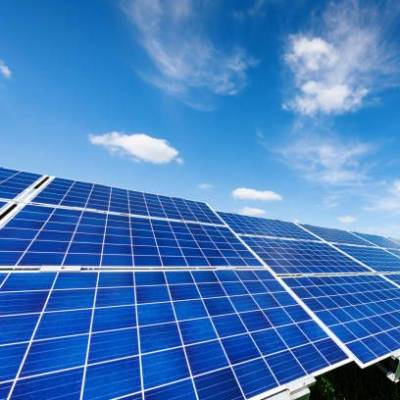
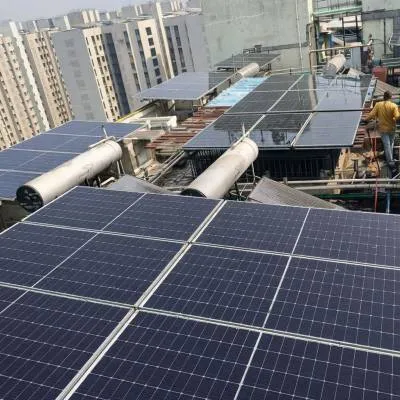
Bharat Heavy Electricals Limited (BHEL) has invited an expression of interest (EoI) for the supply of mono or multi-crystalline solar modules for a 100 MW solar plant of the Gujarat State Electricity Corporation Limited (GSECL) at Raghanesda solar park in Gujarat.

The modules must be 330 W and above in 5 W band only. Modules must be developed from 72 cells in a 12*6 configuration or 144-cell (half-cut) in a 24x6 configuration.

The deadline to present the tenders is November 25 this year. Tenders will be opened on the same day.

Bidders do not have to provide any earnest money deposit for this bid.

Bidders must have a module production capacity of 150 MW yearly to engage in the competitive bidding process. Bidders should have provided crystalline silicon modules with 300 W and above for a minimum capacity of 100 MW in India.

Of this, above 10 MW or more modules should have been provided for one solar plant with a minimum capacity of 10 MW.

In the last three financial years, the bidder’s yearly average turnover should be more than Rs 660 million.

The successful bidder has to render a ten years warranty for solar modules with a peak production capacity of not less than 90% at the end of 10 years and 80% at the end of 25 years. The successful bidder must render a bank guarantee of Rs 1 million per MW of module capacity. The bank guarantee should be valid for 25 years and 90 days.

The modules should have a minimum efficiency of 15% and a minimum fill factor of 0.75%. Modules must operate satisfactorily with temperatures between -40° C and 85° C and humidity up to 85% and must withstand unfavourable climate conditions.

BHEL has fixed 25% of the offered quantity for micro and small enterprise (MSE) suppliers. Of the 25% fixed for MSE suppliers, 6.25% has been allocated for acquisition by MSEs held by Scheduled Caste and Scheduled Tribe entrepreneurs, and 3% for women-owned MSEs.

Earlier this month, BHEL floated tenders to provide 7.361 million monocrystalline passivated emitter and rear (PERC) solar cells with a wattage output of 5.38 W.

It had additionally issued expressions of interest from global manufacturers of solar photovoltaic (PV) modules to provide poly or monocrystalline PERC solar modules of 330 W or above, in 5 W band only.

Image Source

Also read: BHEL floats O&M tender for 1.1 MW rooftop solar project

Bharat Heavy Electricals Limited (BHEL) has invited an expression of interest (EoI) for the supply of mono or multi-crystalline solar modules for a 100 MW solar plant of the Gujarat State Electricity Corporation Limited (GSECL) at Raghanesda solar park in Gujarat. The modules must be 330 W and above in 5 W band only. Modules must be developed from 72 cells in a 12*6 configuration or 144-cell (half-cut) in a 24x6 configuration. The deadline to present the tenders is November 25 this year. Tenders will be opened on the same day. Bidders do not have to provide any earnest money deposit for this bid. Bidders must have a module production capacity of 150 MW yearly to engage in the competitive bidding process. Bidders should have provided crystalline silicon modules with 300 W and above for a minimum capacity of 100 MW in India. Of this, above 10 MW or more modules should have been provided for one solar plant with a minimum capacity of 10 MW. In the last three financial years, the bidder’s yearly average turnover should be more than Rs 660 million. The successful bidder has to render a ten years warranty for solar modules with a peak production capacity of not less than 90% at the end of 10 years and 80% at the end of 25 years. The successful bidder must render a bank guarantee of Rs 1 million per MW of module capacity. The bank guarantee should be valid for 25 years and 90 days. The modules should have a minimum efficiency of 15% and a minimum fill factor of 0.75%. Modules must operate satisfactorily with temperatures between -40° C and 85° C and humidity up to 85% and must withstand unfavourable climate conditions. BHEL has fixed 25% of the offered quantity for micro and small enterprise (MSE) suppliers. Of the 25% fixed for MSE suppliers, 6.25% has been allocated for acquisition by MSEs held by Scheduled Caste and Scheduled Tribe entrepreneurs, and 3% for women-owned MSEs. Earlier this month, BHEL floated tenders to provide 7.361 million monocrystalline passivated emitter and rear (PERC) solar cells with a wattage output of 5.38 W. It had additionally issued expressions of interest from global manufacturers of solar photovoltaic (PV) modules to provide poly or monocrystalline PERC solar modules of 330 W or above, in 5 W band only. Image Source Also read: BHEL floats O&M tender for 1.1 MW rooftop solar project

Related Stories

Gold Stories

Next Story
Infrastructure Urban

Infrastructure Opportunity Outlook by IMPACCT.Info

India’s infrastructure pipeline is witnessing dynamic activity across stages — from immediate bidding to future planning. IMPACCT segments these into three categories: Immediate, 3–6 Month, and Future Opportunities, enabling businesses to identify, prepare, and participate in high-value tenders and projects across sectors.To read full article Click Here ..

Next Story
Real Estate

Glass, Reframed!

Glass façades, quintessential aesthetic building envelopes globally, have been widely adopted in India as well. But when the focus is high-performance building systems that deliver energy efficiency, comfort and architectural identity, glass isn’t the only preference. Combination solutions, involving glass and some other material, improve façade outcomes. Some combinations come at comparable prices, some at a higher price. Here is a selection of performance-oriented solutions...To read the full story Click Here ..

Next Story
Infrastructure Urban

Beyond Building Faster

India’s cities are expanding at an unprecedented pace, bringing new infrastructure and development opportunities while also intensifying challenges around mobility, public spaces, liveability and supporting infrastructure. The question, therefore, is not simply whether India can build faster, but whether it can build cities that work better.At a CW webinar, Are We Designing Better Cities – or Just Building Faster?, moderator Ar. Samir Shaikh, Founding Principal, AR&UD Studio, brought together perspectives from design, development, master planning and technology...To read the full artic..

Advertisement

Subscribe to Our Newsletter

Get daily newsletters around different themes from Construction world.

STAY CONNECTED

Advertisement

SPECIAL OFFER
QR Code