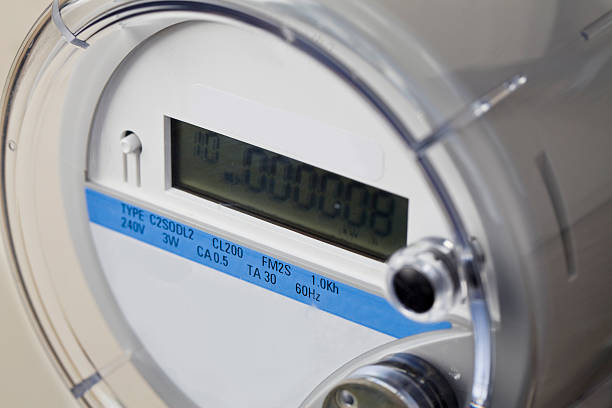
Tata Power launches smart meters  in Delhi on Reliance-Jio’s NB-IoT
POWER & RENEWABLE ENERGY

Tata Power launches smart meters in Delhi on Reliance-Jio’s NB-IoT

Tata Power Delhi Distribution (Tata Power-DDL), the Delhi government and Tata Power joint venture which supplies electricity to north Delhi, has launched Narrow Band-Internet of Things (NB-IoT) for smart meters installed in its service areas.

TPDDL had launched 2.3 lakh smart meters on radio frequency technology in Delhi. The newly launched NB-IoT system is a low power, wide area network radio technology standard developed by 3GPP, a standards organisation, to enable a wide range of cellular devices and services.

Smart meters require a two-way communication network, control centre equipment, and software applications for near real-time gathering and transfer of energy usage information.

This comes in the backdrop of the world's largest electricity smart metering programme underway in India, aimed at cutting distribution losses. The smart meter programme aims to replace 250 million conventional meters to help raise the annual revenues of debt-laden electricity discoms to Rs 1.38 lakh crore.

TPDDL said in a statement that the technology integration has been done involving meter manufacturers and the NB-IoT service of Reliance-Jio Network.

Reliance Industries Ltd (RIL) had been eyeing the smart electricity meter segment and intended to leverage its Jio business to offer meter data collection, communication cards, telecom and cloud hosting services to discoms.

The TPDDL statement further said the NB-IoT is a new and cost-effective technology in the 4G and 5G spectrum with fast deployment quality.

According to the company, with the new technology, the interference and obstruction arising due to public network congestion will not hamper smart meter performance anymore as data will smoothly flow through a dedicated channel. It will also enable more number of remote meter readings possible, thereby ensuring the safety of the consumers during the Covid-19 pandemic, the statement said.

Image Source


Tata Power Delhi Distribution (Tata Power-DDL), the Delhi government and Tata Power joint venture which supplies electricity to north Delhi, has launched Narrow Band-Internet of Things (NB-IoT) for smart meters installed in its service areas. TPDDL had launched 2.3 lakh smart meters on radio frequency technology in Delhi. The newly launched NB-IoT system is a low power, wide area network radio technology standard developed by 3GPP, a standards organisation, to enable a wide range of cellular devices and services. Smart meters require a two-way communication network, control centre equipment, and software applications for near real-time gathering and transfer of energy usage information. This comes in the backdrop of the world's largest electricity smart metering programme underway in India, aimed at cutting distribution losses. The smart meter programme aims to replace 250 million conventional meters to help raise the annual revenues of debt-laden electricity discoms to Rs 1.38 lakh crore. TPDDL said in a statement that the technology integration has been done involving meter manufacturers and the NB-IoT service of Reliance-Jio Network. Reliance Industries Ltd (RIL) had been eyeing the smart electricity meter segment and intended to leverage its Jio business to offer meter data collection, communication cards, telecom and cloud hosting services to discoms. The TPDDL statement further said the NB-IoT is a new and cost-effective technology in the 4G and 5G spectrum with fast deployment quality. According to the company, with the new technology, the interference and obstruction arising due to public network congestion will not hamper smart meter performance anymore as data will smoothly flow through a dedicated channel. It will also enable more number of remote meter readings possible, thereby ensuring the safety of the consumers during the Covid-19 pandemic, the statement said. Image Source

Related Stories

Gold Stories

Next Story
Resources

Schindler named among Forbes’ World’s Best Employers 2026

Schindler has been named among Forbes’ World’s Best Employers 2026, a global ranking recognising companies for their workplace environments.Compiled by Forbes in partnership with Statista, the ranking is based on independent employee feedback, including whether employees would recommend their organisation to friends and family.The company said the recognition reflected its focus on creating a workplace where employees can develop their expertise and build careers. ..

Next Story
Infrastructure Urban

India needs an export-execution mindset: Vishesh Jain

Interview with Vishesh Jain, Founder & CEO, EximpleWhat gaps in India’s global trade ecosystem led you to build Eximple, and what problem did you see businesses struggling with most?Eximple came out of a problem that all three founders had seen from different choke points in the trade ecosystem. India has millions of MSMEs and manufacturers, and many of them can make products that are genuinely competitive on quality. Yet only a small fraction is able to build meaningful international businesses. In our experience, the gap is usually not manufacturing capability; it is the ability to exe..

Next Story
Building Material

Nuvoco reports 13.5% revenue growth in Q2 FY27

Nuvoco Vistas Corp. Ltd. reported consolidated revenue of Rs 27.9 billion for Q2 FY27, up 13.5% year on year. Cement sales volume rose 9% to 4.7 million tonnes (MMT), while EBITDA increased 11% to Rs 4.11 billion.The company said it began its cement operations in 2014 with a 2.3 MMT per annum (MMTPA) operation at Nimbol. It now aims to reach 35 MMTPA of cement capacity by FY28, nearly 15 times its initial capacity. Its portfolio spans cement, ready-mix concrete and modern building materials.On sustainability and cost efficiency, Nuvoco partnered with CleanMax for a 46.4 MW wind-solar hybrid re..

Advertisement

Subscribe to Our Newsletter

Get daily newsletters around different themes from Construction world.

STAY CONNECTED

Advertisement

SPECIAL OFFER
QR Code