Adani Power, NTPC, JSW Energy Compete for Sinnar Thermal Project
POWER & RENEWABLE ENERGY

Adani Power, NTPC, JSW Energy Compete for Sinnar Thermal Project

Some of India's largest power producers, including Adani Power, JSW Energy, Jindal Power, Vedanta Group, Torrent Power, and the state-owned NTPC, are among the 15 companies that have submitted formal expressions of interest (EOIs) to provide a resolution plan for taking over the debt-laden Sinnar Thermal Power near Nashik in Maharashtra.

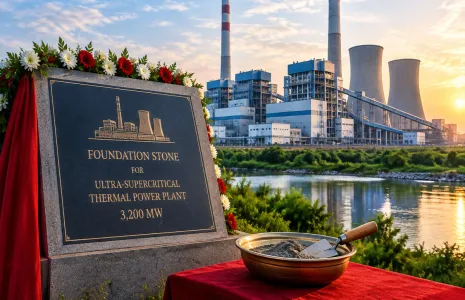
The 1,350 MW power plant, a subsidiary of RattanIndia Power, was initially developed by Indiabulls Power. It is one of the few readily available power producers in India, where building a greenfield project is both time-consuming and costly.

Bidders have until later this month to submit an initial resolution plan, which will include a Rs 100 million deposit, according to people familiar with the matter.

A person familiar with the plant noted the project's attractiveness, highlighting that it includes 1,600 acre of land, with only 110 acre yet to be acquired, allowing any company buying it to potentially double its capacity by adding another 1,350 MW. However, they also mentioned that coal supply has been and remains a significant issue for the prospective buyer. In December 2022, the government-owned South Eastern Coalfields cancelled the coal supply contract with Sinnar, citing the non-availability of a power purchase agreement (PPA) and the non-commissioning of most units of the plant. Sinnar's PPA with Maharashtra State Electricity Distribution Company (MSEDCL) was cancelled a few years ago.

The person further explained that coal supply is a major challenge, and only one unit of 270 MW has achieved commercial operations. The remaining four units have only operated at full load for three to seven hours, indicating that significant work is needed. Additionally, there could be potential litigation regarding the acquired land. On the positive side, the company possesses good equipment from companies like BHEL, Kirloskar, and L&T.

Sinnar was admitted to insolvency after the bankruptcy appellate court vacated a stay to initiate corporate insolvency against the company. The plea for recovery had been filed by Shapoorji Pallonji & Co. for non-payment of dues after constructing part of the plant.

Some of India's largest power producers, including Adani Power, JSW Energy, Jindal Power, Vedanta Group, Torrent Power, and the state-owned NTPC, are among the 15 companies that have submitted formal expressions of interest (EOIs) to provide a resolution plan for taking over the debt-laden Sinnar Thermal Power near Nashik in Maharashtra. The 1,350 MW power plant, a subsidiary of RattanIndia Power, was initially developed by Indiabulls Power. It is one of the few readily available power producers in India, where building a greenfield project is both time-consuming and costly. Bidders have until later this month to submit an initial resolution plan, which will include a Rs 100 million deposit, according to people familiar with the matter. A person familiar with the plant noted the project's attractiveness, highlighting that it includes 1,600 acre of land, with only 110 acre yet to be acquired, allowing any company buying it to potentially double its capacity by adding another 1,350 MW. However, they also mentioned that coal supply has been and remains a significant issue for the prospective buyer. In December 2022, the government-owned South Eastern Coalfields cancelled the coal supply contract with Sinnar, citing the non-availability of a power purchase agreement (PPA) and the non-commissioning of most units of the plant. Sinnar's PPA with Maharashtra State Electricity Distribution Company (MSEDCL) was cancelled a few years ago. The person further explained that coal supply is a major challenge, and only one unit of 270 MW has achieved commercial operations. The remaining four units have only operated at full load for three to seven hours, indicating that significant work is needed. Additionally, there could be potential litigation regarding the acquired land. On the positive side, the company possesses good equipment from companies like BHEL, Kirloskar, and L&T. Sinnar was admitted to insolvency after the bankruptcy appellate court vacated a stay to initiate corporate insolvency against the company. The plea for recovery had been filed by Shapoorji Pallonji & Co. for non-payment of dues after constructing part of the plant.

Next Story
Infrastructure Energy

Hexa Climate Signs 100 MW Wind Solar PPA With CESC

Hexa Climate has signed a power purchase agreement with CESC Limited for the supply of 100 megawatt (MW) of Interstate Transmission System (ISTS) connected wind-solar hybrid power, at a tariff of Rs three point seven five per kWh fixed for 25 years. The contracted capacity is 100 MW while the installation will include 50 MW of solar and 100 MW of wind to enable hybrid generation from a site in Mandsaur, Madhya Pradesh. The tariff has been adopted by the West Bengal Electricity Regulatory Commission, providing regulatory assent for the long term arrangement. The agreement was secured through CE..

Next Story
Infrastructure Energy

JUWI Tops One GW Under Construction As Solar Portfolio Exceeds 900 MW

Renewable energy developer JUWI has reached a milestone of one gigawatt (GW) of renewable capacity under simultaneous construction across its global portfolio, reflecting expansion in solar and wind sectors. The firm said it is installing around 1.3 million (mn) solar modules across 12 photovoltaic (PV) projects and is constructing 46 wind turbines with a combined capacity of about 270 megawatt (MW). Overall, nearly one GW of additional capacity is expected to be commissioned in the coming months. Module installation has begun at the Trifylli solar park in northern Greece, part of the 156 MW C..

Next Story
Infrastructure Energy

MNRE Clarifies ALMM List-II Rules For Government Rooftop Solar

The Ministry of New and Renewable Energy issued a memorandum dated 6 July 2026 clarifying implementation of the Approved List of Models and Manufacturers (ALMM) List-II requirements for solar photovoltaic (PV) cells in rooftop solar projects on government buildings. The clarification restated that ALMM List-I covers solar PV modules while ALMM List-II applies to solar PV cells and that the framework seeks to promote the use of domestically manufactured equipment. The mandatory application of List-II had been scheduled from 1 June 2026, but industry representations prompted the ministry to spec..

Advertisement

Subscribe to Our Newsletter

Get daily newsletters around different themes from Construction world.

STAY CONNECTED

Advertisement

Advertisement

Advertisement