+
AI Can Help Manage Power Sector Complexity As Renewables Grow
POWER & RENEWABLE ENERGY

AI Can Help Manage Power Sector Complexity As Renewables Grow

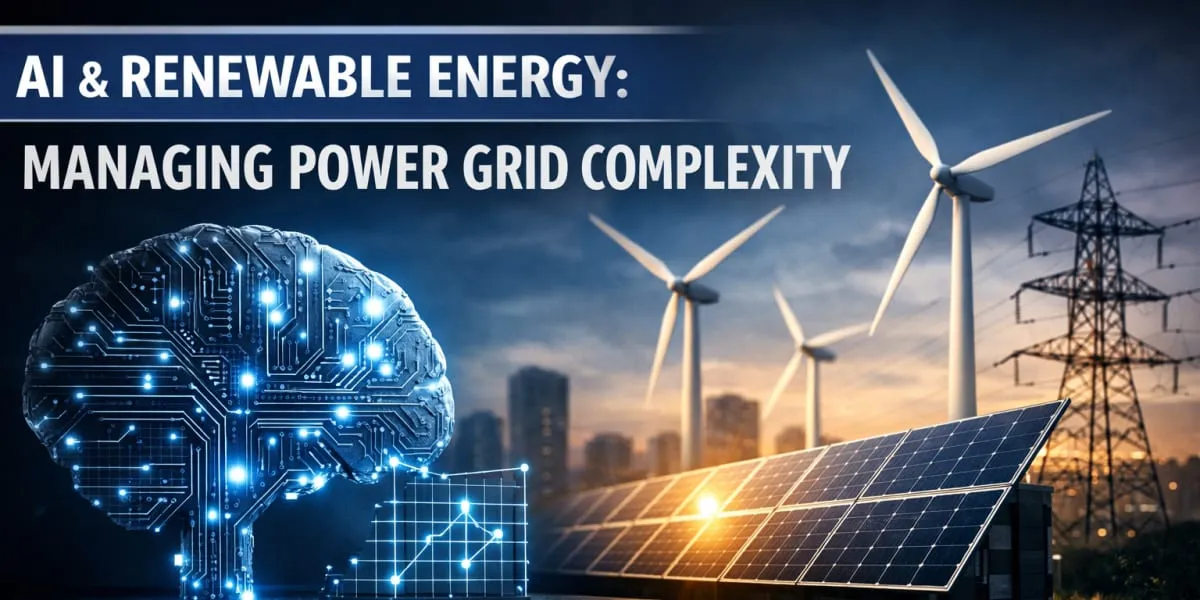
An expert from the International Energy Agency said integration of artificial intelligence can help manage increasing complexity in electricity systems as the share of renewable energy expands, and he spoke at the AI Impact Summit in New Delhi. He noted that rising electrification and greater end use of electricity compared with other fuels are contributing to that complexity and altering demand patterns across sectors. The expert also observed that system operation is becoming more dynamic and that conventional assumptions about stability no longer hold.

There is an increasing share of variable renewable generation such as solar and wind, which changes grid behaviour because these sources are weather dependent and do not provide constant output. The expert said that by the end of the decade the contribution from variable renewables is expected to be sizeable, representing a massive shift in how electricity is produced and balanced. He added that battery storage and flexible resources will be required to manage variability and that new market designs are emerging to accommodate these changes.

For India the expert highlighted forecasting as a critical capability, saying improved prediction of variable generation can reduce uncertainty and aid integration at scale. He emphasised that solar and wind production require minute-by-minute tracking and refined understanding of cloud cover and local weather to support dispatch and grid stability. The discussion noted that these technical solutions must be coupled with operational automation and data platforms to deliver timely decisions for system operators.

The panel contribution suggested policymakers and industry should accelerate deployment of artificial intelligence tools for forecasting, optimisation and market operation while ensuring interoperability and data governance. It was observed that aligning long term planning with automated tools will help meet reliability and decarbonisation objectives and that investment in human capability will remain important to interpret model outputs. The summit context underscored the urgency of integrating advanced analytics into clean energy transitions across systems.

An expert from the International Energy Agency said integration of artificial intelligence can help manage increasing complexity in electricity systems as the share of renewable energy expands, and he spoke at the AI Impact Summit in New Delhi. He noted that rising electrification and greater end use of electricity compared with other fuels are contributing to that complexity and altering demand patterns across sectors. The expert also observed that system operation is becoming more dynamic and that conventional assumptions about stability no longer hold. There is an increasing share of variable renewable generation such as solar and wind, which changes grid behaviour because these sources are weather dependent and do not provide constant output. The expert said that by the end of the decade the contribution from variable renewables is expected to be sizeable, representing a massive shift in how electricity is produced and balanced. He added that battery storage and flexible resources will be required to manage variability and that new market designs are emerging to accommodate these changes. For India the expert highlighted forecasting as a critical capability, saying improved prediction of variable generation can reduce uncertainty and aid integration at scale. He emphasised that solar and wind production require minute-by-minute tracking and refined understanding of cloud cover and local weather to support dispatch and grid stability. The discussion noted that these technical solutions must be coupled with operational automation and data platforms to deliver timely decisions for system operators. The panel contribution suggested policymakers and industry should accelerate deployment of artificial intelligence tools for forecasting, optimisation and market operation while ensuring interoperability and data governance. It was observed that aligning long term planning with automated tools will help meet reliability and decarbonisation objectives and that investment in human capability will remain important to interpret model outputs. The summit context underscored the urgency of integrating advanced analytics into clean energy transitions across systems.

Next Story
Equipment

Kabelschlepp India Installs Robotic VMC in Bengaluru

Kabelschlepp India, part of the Tsubaki Group, has installed a state-of-the-art Vertical Machining Center (VMC) integrated with robotic automation at its Bengaluru facility. The inauguration was held in the presence of Henning Preis, President & CEO, Kabelschlepp Group, Jörg Schulz, Vice President – Production, and Srinivas P. Kamisetty, Managing Director, Kabelschlepp India.The high-precision CNC VMC is designed for advanced milling, drilling, tapping and multi-axis machining. Equipped with a vertical spindle orientation, automatic tool changer and intelligent CNC control system, it en..

Next Story
Infrastructure Transport

Highway Delivery Reset!

Project delays and inefficiencies continue to bedevil the progress of India’s National Highways network. A multi-pronged reform agenda is needed to inject greater transparency and accountability at every stage – from planning and procurement to execution, maintenance and oversight. This article offers key recommendations and reform strategies that government stakeholders – from the Ministry of Road Transport & Highways (MoRTH) and the National Highways Authority of India (NHAI) to state agencies and oversight bodies – should pursue to put highway development on a better track.Decen..

Next Story
Infrastructure Transport

MSIDC Executes ₹37,000 Crore Road Programme

With Rs 37,000 crore worth of road projects under execution across Maharashtra, Maharashtra State Infrastructure Development Corporation (MSIDC) is driving one of the state’s largest infrastructure programmes. Dr Brijesh Dixit, Managing Director, discusses the institutional reforms, execution frameworks, financing strategies and technology adoption enabling timely, high-quality delivery, in conversation with PRATAP PADODE, Editor-in-Chief, CW.With over Rs 37,000 crore worth of road projects underway across districts – many under tight timelines – what institutional and executio..

Advertisement

Subscribe to Our Newsletter

Get daily newsletters around different themes from Construction world.

STAY CONNECTED

Advertisement

Advertisement

Advertisement

Open In App