Assam Rs 77,353 Cr Investment Plan To Expand Power Infra
POWER & RENEWABLE ENERGY

Assam Rs 77,353 Cr Investment Plan To Expand Power Infra

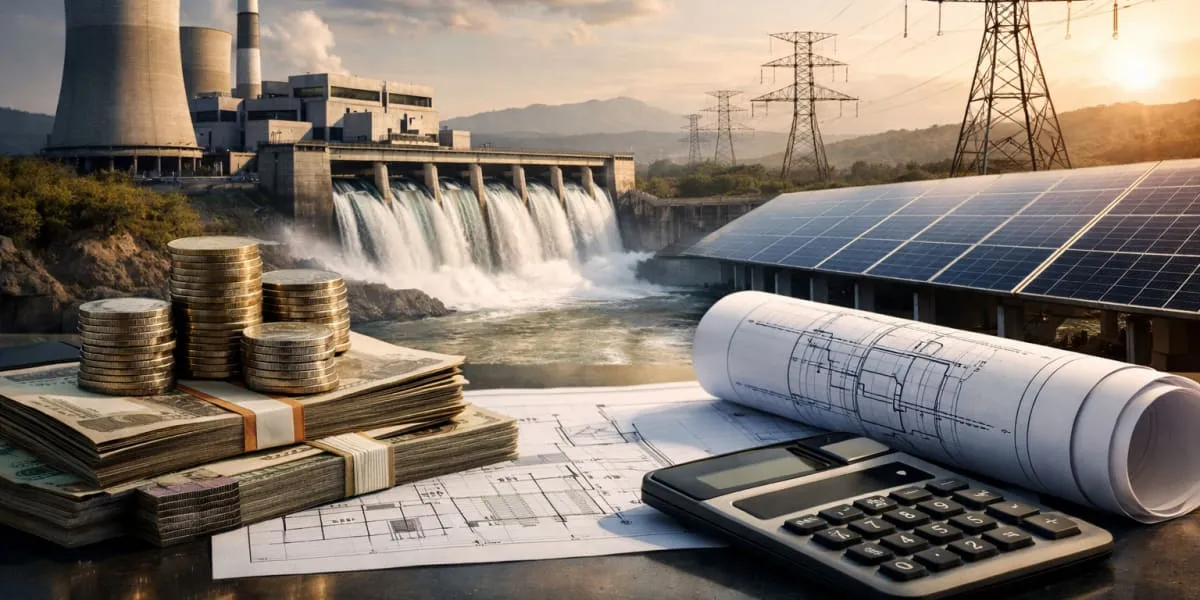
Assam unveiled a power sector investment roadmap in the 2026-27 state Budget proposing Rs 77,353 crore, equal to Rs 773,530 million (mn) or Rs 773.53 billion (bn), to expand generation, storage and transmission. The Finance Minister said the strategy will boost capacity through thermal, hydro and solar projects alongside storage and grid upgrades. The plan responds to rising electricity demand and aims to strengthen network resilience.

One major proposal is a pumped storage programme backed by Rs 27,100 crore, equal to Rs 271,000 million (mn) or Rs 271 bn, to deliver 4,900 megawatt (MW) of capacity. The Budget also proposes Rs 40,000 crore, equal to Rs 400,000 million (mn) or Rs 400 bn, for a 3,200 MW ultra-supercritical thermal plant that would be among the state’s largest. These measures aim to provide baseload and peaking support.

Renewable energy proposals include 137 MW of small hydropower, 75 MW of solar capacity and a 25 MW Battery Energy Storage System in Kamrup district. 11 small hydropower projects are planned across Karbi Anglong, West Karbi Anglong, Dima Hasao, Udalguri, Biswanath and Sivasagar districts, while new solar installations are proposed in Sonitpur and Namrup. The 120 MW Lower Kopili hydroelectric project has entered trial commissioning.

On transmission, the state has proposed Rs 4,600 crore, equal to Rs 46,000 million (mn) or Rs 46 bn, for new 400 kV corridors and grid substations. Over five years Assam plans to add nearly 15,000 circuit kilometres of transmission and distribution lines, establish 120 substations and install about 20,000 High Voltage Distribution Systems to improve reliability. The government aims to reduce transmission and distribution losses from the current 13.4 per cent to eight per cent.

Private investment is expected to complement state spending, with awarded projects that include a 3,200 MW thermal plant and 2,700 MW of pumped storage capacity. Officials indicated the combined initiatives are intended to accelerate capacity growth, attract further investment and enhance energy security for the state.

"Join industry leaders at RAHSTA Expo, India's premier platform for roads, highways and traffic infrastructure. Register now to explore innovations, network with experts and shape the future of mobility."

Assam unveiled a power sector investment roadmap in the 2026-27 state Budget proposing Rs 77,353 crore, equal to Rs 773,530 million (mn) or Rs 773.53 billion (bn), to expand generation, storage and transmission. The Finance Minister said the strategy will boost capacity through thermal, hydro and solar projects alongside storage and grid upgrades. The plan responds to rising electricity demand and aims to strengthen network resilience. One major proposal is a pumped storage programme backed by Rs 27,100 crore, equal to Rs 271,000 million (mn) or Rs 271 bn, to deliver 4,900 megawatt (MW) of capacity. The Budget also proposes Rs 40,000 crore, equal to Rs 400,000 million (mn) or Rs 400 bn, for a 3,200 MW ultra-supercritical thermal plant that would be among the state’s largest. These measures aim to provide baseload and peaking support. Renewable energy proposals include 137 MW of small hydropower, 75 MW of solar capacity and a 25 MW Battery Energy Storage System in Kamrup district. 11 small hydropower projects are planned across Karbi Anglong, West Karbi Anglong, Dima Hasao, Udalguri, Biswanath and Sivasagar districts, while new solar installations are proposed in Sonitpur and Namrup. The 120 MW Lower Kopili hydroelectric project has entered trial commissioning. On transmission, the state has proposed Rs 4,600 crore, equal to Rs 46,000 million (mn) or Rs 46 bn, for new 400 kV corridors and grid substations. Over five years Assam plans to add nearly 15,000 circuit kilometres of transmission and distribution lines, establish 120 substations and install about 20,000 High Voltage Distribution Systems to improve reliability. The government aims to reduce transmission and distribution losses from the current 13.4 per cent to eight per cent. Private investment is expected to complement state spending, with awarded projects that include a 3,200 MW thermal plant and 2,700 MW of pumped storage capacity. Officials indicated the combined initiatives are intended to accelerate capacity growth, attract further investment and enhance energy security for the state.

Next Story
Real Estate

Bharat Shah Family Buys Four Luxury Apartments In Worli For Rs1.8 bn

The family of veteran investor Bharat Shah has acquired four ultra-luxury apartments on the higher floors of Kalpataru One in Worli, South Mumbai, for Rs1.8 billion (bn). The purchases were registered on 6 July 2026 and were executed through Preeti Bharat Shah and Kinnari Bharat Shah, who bought the flats from Kalpataru Properties Limited. Property registration documents reviewed by Zapkey show the total consideration at Rs1.7941 billion. The transactions recorded a per square foot RERA carpet price of Rs0.101 million (mn), with each apartment valued at about Rs448.5 million. The four residenc..

Next Story
Infrastructure Urban

NITI Aayog Consultation On Critical Mineral Supply Chains

NITI Aayog convened a stakeholder consultation in New Delhi on Wednesday to assess requirements for critical minerals across strategic sectors, bringing together experts from government, research institutions, academia and industry. The meeting aimed to estimate current and future demand, identify supply chain vulnerabilities and discuss measures to strengthen domestic capabilities in exploration, processing and recycling. The exercise formed part of broader efforts to secure mineral value chains essential for economic growth, technological advancement and national security.\n\nDiscussions con..

Next Story
Infrastructure Urban

Gujarat Tops India in Renewable Energy With 50.386 GW Capacity

Gujarat has emerged as India’s leading renewable energy state with a total installed renewable energy capacity of 50.386 GW, according to the Chief Minister’s Office. The capacity includes 15,850.56 megawatt (MW) of wind power and 32,302.7 megawatt (MW) of solar power, and the state accounts for 17.82 per cent of India’s total renewable energy capacity. The state ranks first in installed wind capacity and second in solar capacity. Gujarat has also installed more than 1.3 million (mn) rooftop solar systems generating 7,408.10 megawatt (MW). Ground mounted solar projects account for 23,259..

Advertisement

Subscribe to Our Newsletter

Get daily newsletters around different themes from Construction world.

STAY CONNECTED

Advertisement

Advertisement

Advertisement