Avaada Group to Develop 1 GW Renewable Energy Projects in Bihar
POWER & RENEWABLE ENERGY

Avaada Group to Develop 1 GW Renewable Energy Projects in Bihar

Avaada Group has signed a memorandum of understanding (MoU) with the Government of Bihar to establish 1 gigawatt (GW) of renewable energy capacity across the state.

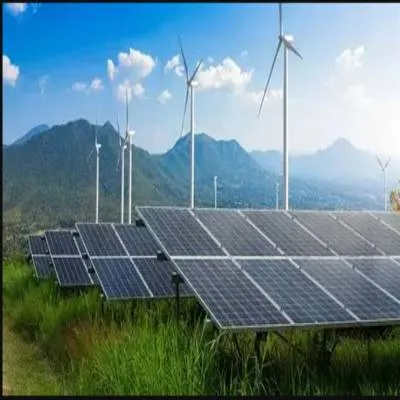
The company will invest Rs 50 billion to develop projects across various formats, including ground-mounted solar, floating solar, community solar plants, and battery energy storage systems. The state government will support Avaada in securing the necessary approvals and clearances from relevant departments.

The announcement aligns with Bihar’s recently unveiled renewable energy policy, which aims to attract investments worth Rs 1.5 trillion. The policy targets the development of 24 GW of renewable capacity and 6 gigawatt-hours (GWh) of energy storage by FY2030.

Key reforms under the policy include streamlined project approvals, cost reductions for developers, and incentives for clean energy manufacturing and EV charging infrastructure. The policy covers solar, wind, hybrid systems, biomass, and waste-to-energy segments.

Commenting on the development, Vineet Mittal, Chairman of Avaada Group, credited the state’s progressive policy for driving the company’s investment plans. Kishor Nair, CEO of Avaada Energy, added, “Our partnership with the Government of Bihar marks a significant step towards harnessing the state’s renewable energy potential. Beyond clean energy generation, this investment will create employment, attract allied industries, and support sustainable socio-economic development.”

According to the company, the planned projects are expected to generate direct employment for around 500 individuals. Commercial operations are likely to commence within two years of signing power purchase agreements (PPAs) with state agencies and after the allocation of suitable land or water bodies.

Avaada will be eligible for incentives under Bihar’s renewable energy policy and applicable frameworks. The group currently operates 5 GW of green energy capacity and aims to expand to 11 GW by 2026 and 30 GW by 2030. Its portfolio spans renewable power generation, solar module and cell manufacturing, and green fuels such as green hydrogen.

News source: Live Mint

Avaada Group has signed a memorandum of understanding (MoU) with the Government of Bihar to establish 1 gigawatt (GW) of renewable energy capacity across the state.The company will invest Rs 50 billion to develop projects across various formats, including ground-mounted solar, floating solar, community solar plants, and battery energy storage systems. The state government will support Avaada in securing the necessary approvals and clearances from relevant departments.The announcement aligns with Bihar’s recently unveiled renewable energy policy, which aims to attract investments worth Rs 1.5 trillion. The policy targets the development of 24 GW of renewable capacity and 6 gigawatt-hours (GWh) of energy storage by FY2030.Key reforms under the policy include streamlined project approvals, cost reductions for developers, and incentives for clean energy manufacturing and EV charging infrastructure. The policy covers solar, wind, hybrid systems, biomass, and waste-to-energy segments.Commenting on the development, Vineet Mittal, Chairman of Avaada Group, credited the state’s progressive policy for driving the company’s investment plans. Kishor Nair, CEO of Avaada Energy, added, “Our partnership with the Government of Bihar marks a significant step towards harnessing the state’s renewable energy potential. Beyond clean energy generation, this investment will create employment, attract allied industries, and support sustainable socio-economic development.”According to the company, the planned projects are expected to generate direct employment for around 500 individuals. Commercial operations are likely to commence within two years of signing power purchase agreements (PPAs) with state agencies and after the allocation of suitable land or water bodies.Avaada will be eligible for incentives under Bihar’s renewable energy policy and applicable frameworks. The group currently operates 5 GW of green energy capacity and aims to expand to 11 GW by 2026 and 30 GW by 2030. Its portfolio spans renewable power generation, solar module and cell manufacturing, and green fuels such as green hydrogen.News source: Live Mint

Related Stories

Gold Stories

Next Story
Infrastructure Urban

KONE Opens India's First Digital Experience Centre in Pune

KONE, a global elevator and escalator manufacturer, has inaugurated its first Digital Experience Centre (DEC) in India, located in Pune. The facility aims to showcase how artificial intelligence (AI), connectivity and data-driven technologies can enhance customer experiences and improve building operations.The centre was inaugurated by Jussi Herlin, Executive Vice Chair, KONE Corporation; Philippe Delorme, President and CEO, KONE; and Nandan Nilekani, Co-founder and Chairman of the Board, Infosys.Designed as an interactive customer environment, the facility demonstrates digital solutions cover..

Next Story
Infrastructure Urban

CII GreenCo Launches Circularity Guidelines for Indian Industry

The Confederation of Indian Industry (CII) GreenCo Council has launched the CII GreenCo Circularity Guidelines – Pilot Version at the 17th CII GreenCo Waste & Resource Management Summit 2026 in Chennai. The initiative aims to strengthen resource efficiency, waste reduction and circular economy practices across Indian manufacturing and process industries.The guidelines introduce a structured framework with circularity indices covering raw materials, consumables, packaging and other resource inputs. These indicators will help industries assess existing practices, identify opportunities to ..

Next Story
Infrastructure Energy

Global Electronics Association Launches IPC-1783-CO2E Standard

The Global Electronics Association has introduced IPC-1783-CO2E, a new international standard aimed at improving consistency, transparency and comparability in product carbon footprint reporting across the electronics manufacturing industry.The standard, titled International Standard for Data Collection and Reporting of CO2 Equivalent (CO2e) Emissions for the Electronics Manufacturing Supply Chain, provides industry-specific guidance for collecting, estimating and reporting carbon emissions data.With increasing regulatory requirements and customer expectations, electronics manufacturers face c..

Advertisement

Subscribe to Our Newsletter

Get daily newsletters around different themes from Construction world.

STAY CONNECTED

Advertisement

SPECIAL OFFER
QR Code