Bihar Clears 144 MW Solar Power Buy Under PM-KUSUM
POWER & RENEWABLE ENERGY

Bihar Clears 144 MW Solar Power Buy Under PM-KUSUM

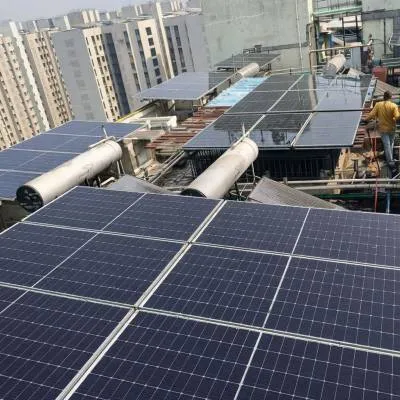
The Bihar Electricity Regulatory Commission (BERC) has approved a proposal by the Bihar State Power Generation Company (BSPGCL) and the Bihar State Power Holding Company (BSPHCL) to procure 144.27 MW of solar power under the PM-KUSUM Component-C programme for feeder-level solarisation over a period of 25 years.

The Commission also approved the discovered tariffs, which range from Rs 3.30 to Rs 3.48 per kWh, along with the draft power purchase agreement (PPA). The petition followed the Ministry of New and Renewable Energy’s (MNRE) decision on 14 November 2025 to increase the number of grid-connected agricultural pumps in Bihar eligible for solarisation from 90,000 to 140,300.

BSPGCL filed the petition on behalf of Bihar’s distribution companies to seek tariff adoption and approval of the draft PPA for this additional requirement. Earlier, BSPGCL had floated a tender to solarise 3,188 agricultural and mixed feeders, totalling 1,205.79 MW for a 25-year term. Of the 88 participating companies, 80 met the eligibility criteria.

MNRE clarified that only projects with PPAs signed by 31 December 2025 would qualify for Central Financial Assistance, making timely approvals crucial to secure subsidies and keep project costs aligned with planned benchmarks.

To meet the additional pump requirement, BSPGCL sought approval to adopt the lowest discovered tariffs from the same tender. BERC observed that the petition complied with MNRE guidelines and that the proposed PPA modifications were consistent with regulatory rules. While the tender covered 1,205.79 MW, the petition sought approval for only 144.278 MW to accommodate an additional 50,300 pumps.

Accordingly, BERC adopted the tariffs and approved the modified draft PPA and procurement plan for the 25-year period. It also noted that Bihar-specific constraints—such as high land costs and relatively low solar irradiation—justified tariffs between Rs 3.30 and Rs 3.47 per kWh.

Recently, BERC also approved the Bihar State Power Holding Company’s proposal to procure 200 MW of solar power along with a 100 MW/400 MWh energy storage system through the interstate transmission system Tranche-XV programme of the Solar Energy Corporation of India.

The Bihar Electricity Regulatory Commission (BERC) has approved a proposal by the Bihar State Power Generation Company (BSPGCL) and the Bihar State Power Holding Company (BSPHCL) to procure 144.27 MW of solar power under the PM-KUSUM Component-C programme for feeder-level solarisation over a period of 25 years. The Commission also approved the discovered tariffs, which range from Rs 3.30 to Rs 3.48 per kWh, along with the draft power purchase agreement (PPA). The petition followed the Ministry of New and Renewable Energy’s (MNRE) decision on 14 November 2025 to increase the number of grid-connected agricultural pumps in Bihar eligible for solarisation from 90,000 to 140,300. BSPGCL filed the petition on behalf of Bihar’s distribution companies to seek tariff adoption and approval of the draft PPA for this additional requirement. Earlier, BSPGCL had floated a tender to solarise 3,188 agricultural and mixed feeders, totalling 1,205.79 MW for a 25-year term. Of the 88 participating companies, 80 met the eligibility criteria. MNRE clarified that only projects with PPAs signed by 31 December 2025 would qualify for Central Financial Assistance, making timely approvals crucial to secure subsidies and keep project costs aligned with planned benchmarks. To meet the additional pump requirement, BSPGCL sought approval to adopt the lowest discovered tariffs from the same tender. BERC observed that the petition complied with MNRE guidelines and that the proposed PPA modifications were consistent with regulatory rules. While the tender covered 1,205.79 MW, the petition sought approval for only 144.278 MW to accommodate an additional 50,300 pumps. Accordingly, BERC adopted the tariffs and approved the modified draft PPA and procurement plan for the 25-year period. It also noted that Bihar-specific constraints—such as high land costs and relatively low solar irradiation—justified tariffs between Rs 3.30 and Rs 3.47 per kWh. Recently, BERC also approved the Bihar State Power Holding Company’s proposal to procure 200 MW of solar power along with a 100 MW/400 MWh energy storage system through the interstate transmission system Tranche-XV programme of the Solar Energy Corporation of India.

Next Story
Infrastructure Urban

Rosatom Delivers Nuclear Fuel for Kudankulam Unit 3

Rosatom has recently supplied nuclear fuel for the initial loading of the VVER-1000 reactor core at Unit 3 of the Kudankulam Nuclear Power Plant, marking a key milestone in the second stage of the Russian-designed nuclear power project in southern India.The fuel was supplied by Rosatom’s Nuclear Fuel Division, managed by TVEL, and manufactured at the Novosibirsk Chemical Concentrates Plant. The delivery includes the initial reactor load along with reserve fuel assemblies and is part of a long-term contract covering the entire operational life of Units 3 and 4.Building on operational experien..

Next Story
Infrastructure Transport

CBL International Enables First LNG Bunkering at Xiaomo Port

CBL International recently completed the first-ever LNG bunkering operation at Xiaomo Port, supplying liquefied natural gas to vessels operated by BYD in support of its maritime decarbonisation strategy. The operation was facilitated through a physical supplier in collaboration with China National Offshore Oil Corporation (CNOOC), which supported the port’s inaugural LNG bunkering activity. The milestone represents a strategic expansion of CBL International's sustainable fuel offerings beyond biofuels, while also diversifying revenue streams. As global shipping intensifies efforts to cut em..

Next Story
Infrastructure Urban

Aimtron, Aurassure Partner for IoT Weather Systems

Aimtron Electronics has recently entered into an OEM manufacturing engagement with Aurassure to produce new-age, IoT-enabled weather and environmental monitoring systems in India. The collaboration supports the growing demand for real-time environmental intelligence across urban, industrial and infrastructure applications. The engagement comes as global focus on climate-risk management and data-driven planning accelerates. The global weather monitoring systems market, valued at around USD 2.1 billion in 2024, is projected to reach nearly USD 4.8 billion by 2034, driven by the rapid adoption o..

Advertisement

Subscribe to Our Newsletter

Get daily newsletters around different themes from Construction world.

STAY CONNECTED

Advertisement

Advertisement

Advertisement

Advertisement

Open In App