+
BPCL and BARC unite to scale up tech for Green Hydrogen production
POWER & RENEWABLE ENERGY

BPCL and BARC unite to scale up tech for Green Hydrogen production

Bharat Petroleum Corporation Limited (BPCL), a Maharatna and Fortune Global 500 company, has teamed up with Bhabha Atomic Research Centre (BARC) to scale up Alkaline Electrolyser technology for the production of Green Hydrogen. Electrolyser Plants are currently imported. This is a first of its kind initiative aimed at assisting the country in meeting its renewable energy targets and reducing greenhouse gas emissions.

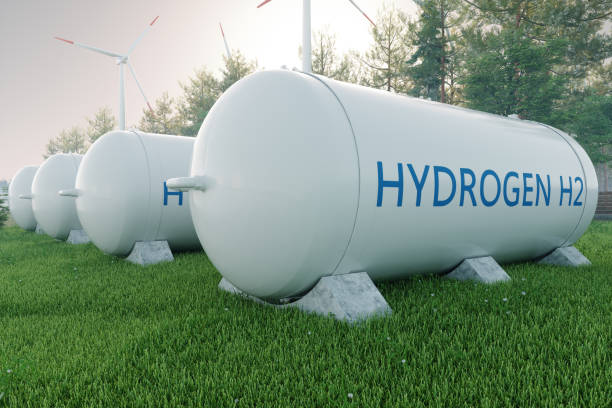
To make petrol, diesel, and other chemicals, refineries use large amounts of hydrogen for desulfurisation. Hydrogen is currently produced at the refinery. Natural gas is steam reformed, but this produces a lot of carbon dioxide. In consequence, refiners are erecting large-scale electrolysers to produce Green Hydrogen from water and thus decarbonise the production of hydrogen.

Bharat Petroleum intends to add solar, wind, and biofuels to its renewable energy portfolio, reiterating its commitment to sustainability and carbon reduction. In addition, the company intends to meet the power needs of new projects in its refineries, primarily from renewable sources.

With a combined refining capacity of around 35.3 mmtpa, BPCL operates refineries in Mumbai, Kochi, and Bina, Madhya Pradesh, through its subsidiary Bharat Oman Refineries Limited. It has a network of installations, depots, energy stations, aviation service stations, and LPG distributors as part of its marketing infrastructure.

Atomic energy plays a critical role in India's overall power sector's carbon intensity reduction. Thermal power generation from all sources accounts for 234,048 MW, or 60% of total installed power, while renewables, hydropower, and nuclear power account for 95,875 MW, 51,220 MW, and 6,780 MW up to 2%, respectively.

Image Source

Also read: BPCL records 24% increase in net profit at Rs 3,200.90 cr

Also read: BPCL to focus on bio-ethanol, compressed biogas, hydrogen

Bharat Petroleum Corporation Limited (BPCL), a Maharatna and Fortune Global 500 company, has teamed up with Bhabha Atomic Research Centre (BARC) to scale up Alkaline Electrolyser technology for the production of Green Hydrogen. Electrolyser Plants are currently imported. This is a first of its kind initiative aimed at assisting the country in meeting its renewable energy targets and reducing greenhouse gas emissions. To make petrol, diesel, and other chemicals, refineries use large amounts of hydrogen for desulfurisation. Hydrogen is currently produced at the refinery. Natural gas is steam reformed, but this produces a lot of carbon dioxide. In consequence, refiners are erecting large-scale electrolysers to produce Green Hydrogen from water and thus decarbonise the production of hydrogen. Bharat Petroleum intends to add solar, wind, and biofuels to its renewable energy portfolio, reiterating its commitment to sustainability and carbon reduction. In addition, the company intends to meet the power needs of new projects in its refineries, primarily from renewable sources. With a combined refining capacity of around 35.3 mmtpa, BPCL operates refineries in Mumbai, Kochi, and Bina, Madhya Pradesh, through its subsidiary Bharat Oman Refineries Limited. It has a network of installations, depots, energy stations, aviation service stations, and LPG distributors as part of its marketing infrastructure. Atomic energy plays a critical role in India's overall power sector's carbon intensity reduction. Thermal power generation from all sources accounts for 234,048 MW, or 60% of total installed power, while renewables, hydropower, and nuclear power account for 95,875 MW, 51,220 MW, and 6,780 MW up to 2%, respectively. Image Source Also read: BPCL records 24% increase in net profit at Rs 3,200.90 cr Also read: BPCL to focus on bio-ethanol, compressed biogas, hydrogen

Related Stories

Gold Stories

Next Story
Infrastructure Urban

Infrastructure Opportunity Outlook by IMPACCT.Info

India’s infrastructure pipeline is witnessing dynamic activity across stages — from immediate bidding to future planning. IMPACCT segments these into three categories: Immediate, 3–6 Month, and Future Opportunities, enabling businesses to identify, prepare, and participate in high-value tenders and projects across sectors.To read full article Click Here ..

Next Story
Real Estate

Glass, Reframed!

Glass façades, quintessential aesthetic building envelopes globally, have been widely adopted in India as well. But when the focus is high-performance building systems that deliver energy efficiency, comfort and architectural identity, glass isn’t the only preference. Combination solutions, involving glass and some other material, improve façade outcomes. Some combinations come at comparable prices, some at a higher price. Here is a selection of performance-oriented solutions...To read the full story Click Here ..

Next Story
Infrastructure Urban

Beyond Building Faster

India’s cities are expanding at an unprecedented pace, bringing new infrastructure and development opportunities while also intensifying challenges around mobility, public spaces, liveability and supporting infrastructure. The question, therefore, is not simply whether India can build faster, but whether it can build cities that work better.At a CW webinar, Are We Designing Better Cities – or Just Building Faster?, moderator Ar. Samir Shaikh, Founding Principal, AR&UD Studio, brought together perspectives from design, development, master planning and technology...To read the full artic..

Advertisement

Subscribe to Our Newsletter

Get daily newsletters around different themes from Construction world.

STAY CONNECTED

Advertisement

SPECIAL OFFER
QR Code