+
CIL to Invest $3 Bn in Clean Energy to Strengthen Renewables
POWER & RENEWABLE ENERGY

CIL to Invest $3 Bn in Clean Energy to Strengthen Renewables

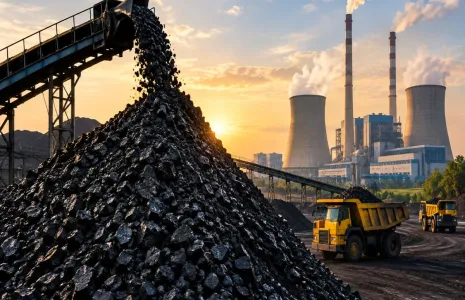
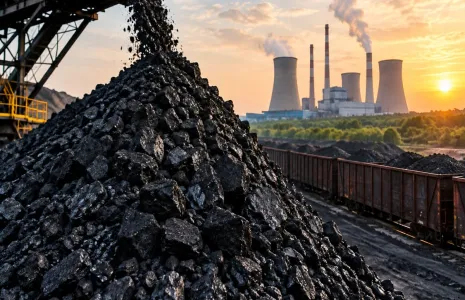
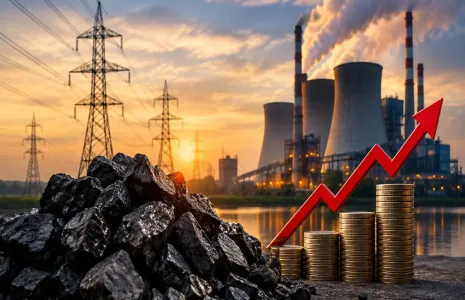
Coal India announced plans to establish clean energy projects with a combined capacity of approximately 4.5 gigawatts, at an estimated investment of Rs 250 billion (around $3 billion), as part of its commitment to achieving net-zero carbon emissions from its operations.

The state-run mining company has been gradually shifting its focus away from coal, a major source of pollution but still essential for meeting India’s current energy requirements. This transition aligns with the country's broader goal of reaching net-zero emissions by 2070.

The company revealed that it intends to supply clean energy, generated through solar and wind power projects, to AM Green Ammonia (India)'s upcoming green ammonia facilities. However, it did not specify a timeline for the development of these projects.

AM Green, backed significantly by the founders of India’s Greenko Group, has set a target to produce 5 million tons per annum (MTPA) of green ammonia by the year 2030.

Coal India’s move into clean energy comes at a time when it is also expanding its coal-based power capacity. This shift is occurring alongside rising electricity demand driven by climate change and rapid industrialisation.

To address the growing energy needs, India plans to increase its coal-fired power capacity by 80 gigawatts by 2031-32, up from the current 222 GW. Simultaneously, the country aims to scale up its clean energy capacity to at least 500 GW by 2030, compared to 172 GW at present.

Despite these ambitions, the renewable energy sector in India continues to face significant challenges, including limited interest in tenders, difficulties in acquiring land, delays in finalising power purchase agreements, and frequent project cancellations.

News source: Business Standard

Coal India announced plans to establish clean energy projects with a combined capacity of approximately 4.5 gigawatts, at an estimated investment of Rs 250 billion (around $3 billion), as part of its commitment to achieving net-zero carbon emissions from its operations. The state-run mining company has been gradually shifting its focus away from coal, a major source of pollution but still essential for meeting India’s current energy requirements. This transition aligns with the country's broader goal of reaching net-zero emissions by 2070. The company revealed that it intends to supply clean energy, generated through solar and wind power projects, to AM Green Ammonia (India)'s upcoming green ammonia facilities. However, it did not specify a timeline for the development of these projects. AM Green, backed significantly by the founders of India’s Greenko Group, has set a target to produce 5 million tons per annum (MTPA) of green ammonia by the year 2030. Coal India’s move into clean energy comes at a time when it is also expanding its coal-based power capacity. This shift is occurring alongside rising electricity demand driven by climate change and rapid industrialisation. To address the growing energy needs, India plans to increase its coal-fired power capacity by 80 gigawatts by 2031-32, up from the current 222 GW. Simultaneously, the country aims to scale up its clean energy capacity to at least 500 GW by 2030, compared to 172 GW at present. Despite these ambitions, the renewable energy sector in India continues to face significant challenges, including limited interest in tenders, difficulties in acquiring land, delays in finalising power purchase agreements, and frequent project cancellations. News source: Business Standard

Next Story
Infrastructure Transport

MMRDA Installs 325-Tonne Steel Spans on Mumbai Metro Line 4

The Mumbai Metropolitan Region Development Authority (MMRDA) has achieved a key construction milestone on Metro Line 4 with the successful installation of three large steel spans at Bhandup West during overnight operations.The spans, together weighing 325 metric tonnes, were launched using eight heavy-duty cranes and 12 multi-axle vehicles. The operation required precise engineering and meticulous planning to minimise disruption in the densely populated suburban area.Due to effective inter-agency coordination, the work—originally scheduled across four nights—was completed within just two n..

Next Story
Infrastructure Transport

CMRL Targets March 2027 Opening for Vadapalani–Panagal Park

Chennai Metro Rail Limited (CMRL) is progressing as scheduled to open the Vadapalani–Panagal Park section of Phase II’s Corridor 4 by March 2027. The 3.5 km underground stretch is part of the 26.1 km Corridor 4 connecting Lighthouse with Poonamallee Bypass.Construction activities are advancing steadily, with tunnelling works between Vadapalani and Panagal Park already completed. Track-laying operations are expected to commence shortly. At Panagal Park station, structural works have reached the concourse and platform levels, while excavation continues at the lowest level.CMRL is also consid..

Next Story
Infrastructure Transport

Maha-Metro Invites Pune Metro Civil Maintenance Bids

Maharashtra Metro Rail Corporation Limited (Maha-Metro) has invited bids for the annual civil maintenance contract of the Pune Metro Rail Project. The tender, bearing ID and number P1-O&M-20/2025, is scheduled to close on 23 February 2026, with a pre-bid meeting slated for 10 February 2026. The earnest money deposit (EMD) for the contract is Rs 3,50,500, and the duration of the contract is one year.The scope of work includes annual civil maintenance of 28 elevated and underground stations, 28.079 km of elevated viaduct including steel bridges, 12.15 km of tunnels, and two depots under the ..

Advertisement

Subscribe to Our Newsletter

Get daily newsletters around different themes from Construction world.

STAY CONNECTED

Advertisement

Advertisement

Advertisement

Open In App