Coal Ministry Tops Asset Monetisation With Rs 2 Trillion
POWER & RENEWABLE ENERGY

Coal Ministry Tops Asset Monetisation With Rs 2 Trillion

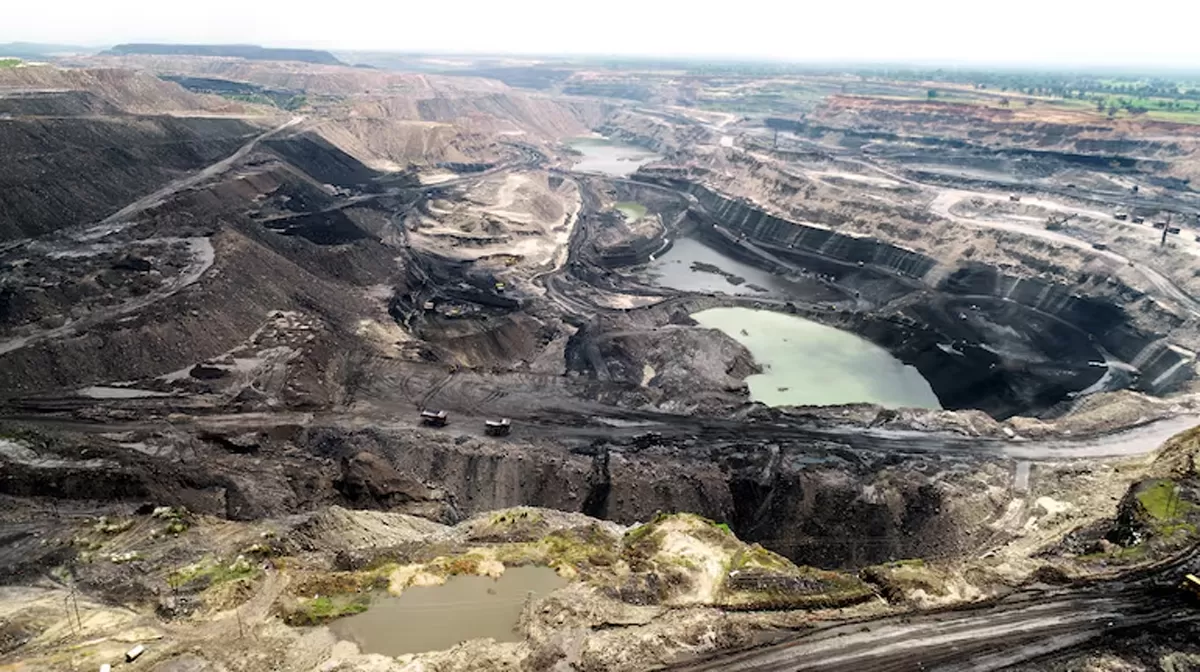
With the conclusion of the Union government's first National Monetisation Pipeline (NMP), the Ministry of Coal has emerged as the top-performing ministry, surpassing its four-year target by Rs 630 billion. Against a target of Rs 1.38 trillion between FY22 and FY25, the ministry monetised assets worth Rs 2 trillion—exceeding expectations by 45 per cent.

The Ministry of Road Transport and Highways followed as the second-best performer, although its final figures were pending at the time of reporting.

The NMP, launched in 2021, was India’s first comprehensive attempt to unlock value from underutilised public assets—including roads, airports, coal mines, pipelines, and telecom infrastructure—with a goal of raising Rs 6 trillion in four years. In the Union Budget 2025, Finance Minister Nirmala Sitharaman announced a second monetisation plan targeting Rs 10 trillion between 2025 and 2030, with details being finalised by NITI Aayog.

The Ministry of Coal’s exceptional performance was driven by commercial coal mine auctions, Mine Developer and Operator (MDO) projects, and revenue-sharing models with Coal India Ltd (CIL) and its subsidiaries. These strategies not only attracted private investment but also boosted long-term revenue generation.

A major milestone was reached in March 2025, when Bharat Coking Coal Ltd (BCCL), a CIL subsidiary, became the first entity in India to monetise a coal washery—the 2 million tonne per annum Dugda facility in Bokaro, Jharkhand.

“These outcomes reflect the ministry’s commitment to modernising India’s coal sector,” said a senior official. “We are focused on optimising asset use, expanding washing capacity, and reducing import dependency by involving private expertise.”

Since the launch of commercial coal mining in 2020, 125 mines have been auctioned across 11 rounds, with a cumulative production capacity of over 273 million tonnes per annum.

Despite its strong overall performance, the ministry did miss its FY25 monetisation target of Rs 547.22 billion, achieving Rs 468.73 billion—86 per cent of the annual goal. Officials attributed this shortfall to project delays and deferred proposals that will likely materialise in the following fiscal year.

With the conclusion of the Union government's first National Monetisation Pipeline (NMP), the Ministry of Coal has emerged as the top-performing ministry, surpassing its four-year target by Rs 630 billion. Against a target of Rs 1.38 trillion between FY22 and FY25, the ministry monetised assets worth Rs 2 trillion—exceeding expectations by 45 per cent.The Ministry of Road Transport and Highways followed as the second-best performer, although its final figures were pending at the time of reporting.The NMP, launched in 2021, was India’s first comprehensive attempt to unlock value from underutilised public assets—including roads, airports, coal mines, pipelines, and telecom infrastructure—with a goal of raising Rs 6 trillion in four years. In the Union Budget 2025, Finance Minister Nirmala Sitharaman announced a second monetisation plan targeting Rs 10 trillion between 2025 and 2030, with details being finalised by NITI Aayog.The Ministry of Coal’s exceptional performance was driven by commercial coal mine auctions, Mine Developer and Operator (MDO) projects, and revenue-sharing models with Coal India Ltd (CIL) and its subsidiaries. These strategies not only attracted private investment but also boosted long-term revenue generation.A major milestone was reached in March 2025, when Bharat Coking Coal Ltd (BCCL), a CIL subsidiary, became the first entity in India to monetise a coal washery—the 2 million tonne per annum Dugda facility in Bokaro, Jharkhand.“These outcomes reflect the ministry’s commitment to modernising India’s coal sector,” said a senior official. “We are focused on optimising asset use, expanding washing capacity, and reducing import dependency by involving private expertise.”Since the launch of commercial coal mining in 2020, 125 mines have been auctioned across 11 rounds, with a cumulative production capacity of over 273 million tonnes per annum.Despite its strong overall performance, the ministry did miss its FY25 monetisation target of Rs 547.22 billion, achieving Rs 468.73 billion—86 per cent of the annual goal. Officials attributed this shortfall to project delays and deferred proposals that will likely materialise in the following fiscal year.

Next Story
Real Estate

BXB Estates Sets AED 110 Million Jumeirah Golf Estates Record

BXB Estates has completed an AED 110 million residential transaction at Jumeirah Golf Estates, setting a new sales record for the prestigious Dubai residential community.Negotiated by Alfie Tabrez, Managing Partner of BXB Estates, the deal surpassed the previous record of AED 58 million for a completed ready villa in the development.The six-bedroom residence offers 21,714 sq ft of built-up space on a 15,873-sq-ft plot. It features nine bathrooms, four living lounges, a home office, bar lounge, private cinema and rooftop terrace.The property also includes a dedicated wellness area comprising a ..

Next Story
Infrastructure Urban

SECR Floats Rs 6,019 Mn EPC Tender For Paradol Nagpur Link

South East Central Railway (SECR) has invited bids for an Engineering, Procurement and Construction (EPC) contract to build a new broad gauge single line between Paradol Takeoff Point and Nagpur Road Station in Chhattisgarh. The contract carries an estimated cost of Rs 6,019.0 mn and requires an earnest money deposit of Rs 120.4 mn. The work is framed as an EPC assignment intended to strengthen regional rail infrastructure. The tender, issued under number CAO-C-BSP-26-27-15, specifies a completion period of 730 days and a bid validity of 180 days. Two pre-bid meetings are scheduled for 24 Augu..

Next Story
Infrastructure Transport

Indian Railways Reports Nine Per Cent Rise In July Freight Loading

Indian Railways handled 141.3 million tonnes (141.3 mn t) of freight in July, marking a rise of nine per cent year on year. Freight loading maintained a positive trajectory across the network compared with the same month last year. Passenger traffic also increased in July, contributing to higher overall network utilisation. The July outcome continued a pattern of steady monthly gains, reflecting gradual improvement in industrial and logistics activity. The growth in freight volumes reflected stronger demand across multiple sectors and improvements in logistics and train turnarounds. Enhanced r..

Advertisement

Subscribe to Our Newsletter

Get daily newsletters around different themes from Construction world.

STAY CONNECTED

Advertisement

Advertisement

Advertisement