Domestic Content Rule Hits Demand for Rooftop Solar Projects
POWER & RENEWABLE ENERGY

Domestic Content Rule Hits Demand for Rooftop Solar Projects

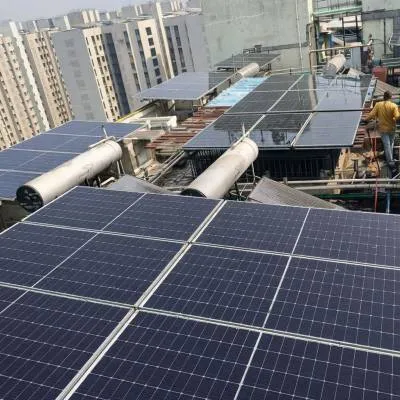
The Ministry for New and Renewable Energy (MNRE) has made it mandatory for new solar projects to use solar cells and modules made in India under the Domestic Content Requirement that came into force on June one. The rule applies to new rooftop and utility-scale installations and is intended to prioritise locally manufactured components. The change has been implemented nationwide by the ministry.

Since the requirement took effect many solar power system providers have reported a fall in demand, with some citing higher component costs and longer procurement timelines. Industry sources said project prices had risen by at least 20 per cent, increasing the upfront cost for household and commercial buyers. The reduction in new projects has been most visible over the last month as installers reassess costs.

Representatives of the Karnataka Renewable Energy Systems Manufacturers Association (KRESMA) reported that customers were reconsidering bookings and that sales volumes had softened. A senior association member conveyed that some buyers were deferring decisions because domestic modules increased system prices. Installers and manufacturers are exploring adjustments to procurement and financing to mitigate the short-term impact.

Market analysts noted that while the immediate effect has been a slowdown in rooftop uptake, the policy aims to build domestic manufacturing capacity and reduce import dependence over time. Several developers indicated they would seek cost efficiencies or pass some costs to end users depending on contract terms and subsidy availability. The ministry has maintained that the requirement will support local industry and long-term energy security even as stakeholders adapt to the new procurement landscape.

Analysts said the sector would undergo an adjustment as suppliers scaled production and price differentials narrowed, with timelines varying by manufacturer and project size. Regulators and industry groups will monitor procurement outcomes and market response to assess whether further measures are required.

"Join industry leaders at RAHSTA Expo, India's premier platform for roads, highways and traffic infrastructure. Register now to explore innovations, network with experts and shape the future of mobility."

The Ministry for New and Renewable Energy (MNRE) has made it mandatory for new solar projects to use solar cells and modules made in India under the Domestic Content Requirement that came into force on June one. The rule applies to new rooftop and utility-scale installations and is intended to prioritise locally manufactured components. The change has been implemented nationwide by the ministry. Since the requirement took effect many solar power system providers have reported a fall in demand, with some citing higher component costs and longer procurement timelines. Industry sources said project prices had risen by at least 20 per cent, increasing the upfront cost for household and commercial buyers. The reduction in new projects has been most visible over the last month as installers reassess costs. Representatives of the Karnataka Renewable Energy Systems Manufacturers Association (KRESMA) reported that customers were reconsidering bookings and that sales volumes had softened. A senior association member conveyed that some buyers were deferring decisions because domestic modules increased system prices. Installers and manufacturers are exploring adjustments to procurement and financing to mitigate the short-term impact. Market analysts noted that while the immediate effect has been a slowdown in rooftop uptake, the policy aims to build domestic manufacturing capacity and reduce import dependence over time. Several developers indicated they would seek cost efficiencies or pass some costs to end users depending on contract terms and subsidy availability. The ministry has maintained that the requirement will support local industry and long-term energy security even as stakeholders adapt to the new procurement landscape. Analysts said the sector would undergo an adjustment as suppliers scaled production and price differentials narrowed, with timelines varying by manufacturer and project size. Regulators and industry groups will monitor procurement outcomes and market response to assess whether further measures are required.

Next Story
Infrastructure Transport

Railways To Operate Over 300 Special Trains For Rath Yatra

Union Railway Minister Ashwini Vaishnaw announced that Indian Railways (IR) will operate more than 300 special trains for the annual Jagannath Rath Yatra in Odisha and over 100 special trains during the Onam festival in Keralam. He flagged off the Nanded–Mumbai and Tanakpur–Nanded Express trains and inaugurated the extension of the Tanakpur–Pilibhit service up to Shahjahanpur via video conference from Rail Sadan in Bhubaneswar. He noted that the summer season, which concluded on 30 June, had seen a record 15,000 special trains. Vaishnaw stated that the newly launched services are intende..

Next Story
Infrastructure Transport

Vande Bharat Express To Start From Tripura Soon

Tripura Chief Minister Manik Saha said the Vande Bharat Express will commence operations from Tripura in the coming days after he flagged off the Agartala–Karimganj MEMU service at Agartala Railway Station. He recalled the rail history of the state, noting that a metre-gauge service first arrived in 1964 and that broad gauge reached Agartala in 2008 following national projects and later upgrades under the Act East policy. The event was described as a milestone for regional connectivity and the MEMU was presented as the first electric passenger train to originate from Tripura.\n\nSaha said he..

Next Story
Infrastructure Urban

MEMU Suspension Disrupts Commuters Between Vadodara And Dahod

The Vadodara–Dahod Mainline Electric Multiple Unit (MEMU) service has been temporarily suspended for 26 days after its rake was diverted to Odisha to manage the surge in passenger traffic during the annual Rath Yatra in Puri. Indian Railways redeployed several MEMU rakes from different zones to meet the additional travel demand for the festival scheduled from the seventh of July to the second of August. As a result, train numbers 69233 and 69234 operating between Vadodara and Dahod will remain cancelled for the duration. Railway authorities advised passengers to use alternative train service..

Advertisement

Subscribe to Our Newsletter

Get daily newsletters around different themes from Construction world.

STAY CONNECTED

Advertisement

Advertisement

Advertisement