Electric Vehicle Fleet to Hit 700 million by 2040
POWER & RENEWABLE ENERGY

Electric Vehicle Fleet to Hit 700 million by 2040

The most recent estimate from BloombergNEF (BNEF) projects that there will be more than 100 million electric vehicles (EV) on the road by 2026 and that there will be 700 million by 2040. These projections show a sharp increase from the 27 million EVs registered at the start of this year.

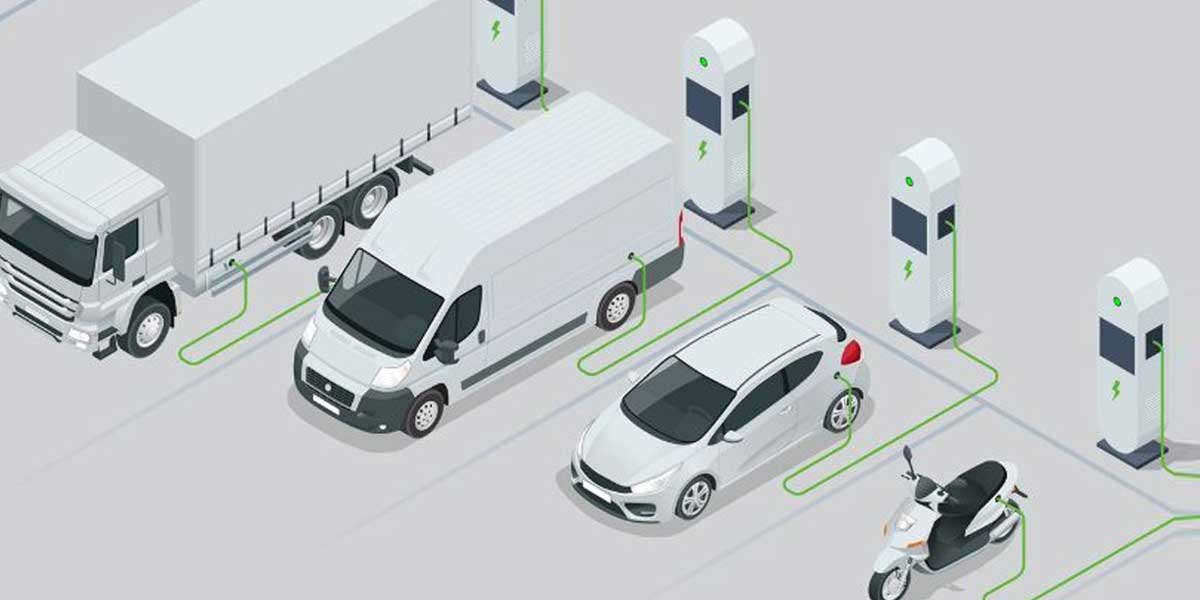
The electrification trend quickly spreads to all areas of road transport, affecting everything from rickshaws to large trucks. Notably, the use of EVs has increased noticeably in growing economies like India, Thailand, and Indonesia.

In India, EV sales increased by almost 300% from the 322,877 units sold in 2021 to an astonishing one million units in 2022.

Numerous new business opportunities are arising as the popularity of EVs grows. According to BNEF's base-case Economic Transition Scenario, sales of all types of EVs are expected to total a remarkable $8.8 trillion by 2030 and a staggering $57 trillion by 2050.

This scenario emphasises the crucial role that EVs and batteries play in many countries' industrial policy and makes the assumption that no new policies are introduced. As a result, it is anticipated that in the coming years, rivalry between countries to entice investment into this developing industry will increase.

The most recent estimate from BloombergNEF (BNEF) projects that there will be more than 100 million electric vehicles (EV) on the road by 2026 and that there will be 700 million by 2040. These projections show a sharp increase from the 27 million EVs registered at the start of this year. The electrification trend quickly spreads to all areas of road transport, affecting everything from rickshaws to large trucks. Notably, the use of EVs has increased noticeably in growing economies like India, Thailand, and Indonesia. In India, EV sales increased by almost 300% from the 322,877 units sold in 2021 to an astonishing one million units in 2022. Numerous new business opportunities are arising as the popularity of EVs grows. According to BNEF's base-case Economic Transition Scenario, sales of all types of EVs are expected to total a remarkable $8.8 trillion by 2030 and a staggering $57 trillion by 2050. This scenario emphasises the crucial role that EVs and batteries play in many countries' industrial policy and makes the assumption that no new policies are introduced. As a result, it is anticipated that in the coming years, rivalry between countries to entice investment into this developing industry will increase.

Next Story
Infrastructure Urban

India Expands Semiconductor Training To 500 Institutions

Under the Chips to Startups programme of the India Semiconductor Mission, the Union minister responsible for Railways, Information and Broadcasting, and Electronics and IT reported notable progress in talent development. He indicated that over the past four years substantial steps have been taken towards a 10-year target of training 85,000 engineers in semiconductor design. World-class EDA tools have been deployed in 315 academic institutions across the country to provide students with practical exposure to chip design. These EDA tools are supported by leading global firms and are accessible t..

Next Story
Infrastructure Urban

Delhi Institutions Support India Semiconductor Mission

The Government of India has prioritised talent development through training, upskilling and workforce development under the Chips to Startups initiative of the India Semiconductor Mission, with officials noting progress in four years towards a 10-year target of training 85,000 engineers in semiconductor design. Electronic design automation tools provided by Synopsys, Cadence, Siemens, Renesas, Ansys and AMD have been deployed in 315 academic institutions, enabling students to gain practical chip design experience. Chips have been fabricated and tested at the Semiconductor Laboratory, Mohali, a..

Next Story
Infrastructure Urban

NHA Announces Winners Of NHCX Hackathon At IIT Hyderabad

The National Health Authority (NHA) has concluded the NHCX Hackathon under the Ayushman Bharat Digital Mission (ABDM) to stimulate innovation around the National Health Claims Exchange (NHCX). The winning teams presented their solutions at the NHCX Innovation Meet held at IIT Hyderabad during a two-day event in March 2026 that also served as the hackathon grand finale. The hackathon itself ran from 22 to 28 February 2026 and aimed to accelerate paperless, transparent claims processing across India. The event was organised with a range of ecosystem partners, including the Insurance Regulatory a..

Advertisement

Subscribe to Our Newsletter

Get daily newsletters around different themes from Construction world.

STAY CONNECTED

Advertisement

Advertisement

Advertisement