Finance Ministry Clears Rs 55 Billion Floating Solar Storage Scheme
POWER & RENEWABLE ENERGY

Finance Ministry Clears Rs 55 Billion Floating Solar Storage Scheme

The Expenditure Finance Committee (EFC) cleared a Rs 55 billion (Rs 55 bn) floating solar battery storage scheme and the proposal will be sent to the Union Cabinet for final approval. The committee, part of the Finance Ministry, approved the plan to accelerate renewable energy deployment and strengthen energy security. The approval reduces the outlay from the Rs 67 billion sought by the Ministry of New and Renewable Energy (MNRE) and asks the ministry to refine components of the incentive model. Officials signalled a faster roll out to mitigate supply uncertainty.

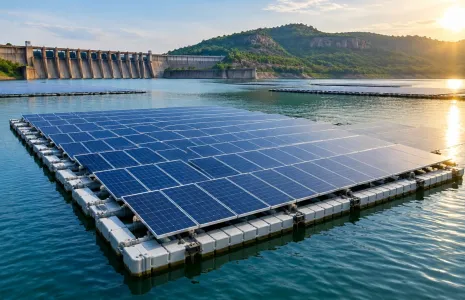
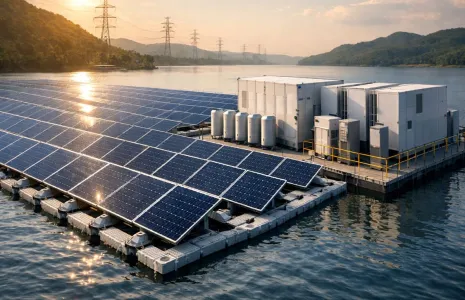
The scheme is designed to incentivise states and stakeholders to deploy floating solar panels integrated with battery storage systems on reservoirs and other water bodies. Floating solar projects are intended to ease pressure on land resources while improving generation efficiency through lower panel temperatures. Battery storage has been portrayed as a critical element to manage intermittency and to support a stable electricity supply. The model seeks to combine generation and storage to balance surplus output and peak demand.

The EFC approved an estimated expenditure of Rs 55 billion and instructed MNRE to fine tune financial and technical components before Cabinet consideration. The revised model will define incentives for project developers, state utilities and financing arrangements to mobilise private investment. The initiative aligns with the national clean energy targets and the objective of reducing dependence on imported fossil fuels. Officials indicated that enhanced storage capacity would improve grid reliability and operational flexibility.

The move follows concerns over geopolitical tensions in West Asia that have underscored supply risks and prompted policy attention on domestic energy resilience. The scheme is part of broader measures to scale renewable capacity and to integrate storage solutions into India’s power system. Stakeholders will await Cabinet decision before deployment timelines are finalised. The government expects further consultations to refine implementation details.

The Expenditure Finance Committee (EFC) cleared a Rs 55 billion (Rs 55 bn) floating solar battery storage scheme and the proposal will be sent to the Union Cabinet for final approval. The committee, part of the Finance Ministry, approved the plan to accelerate renewable energy deployment and strengthen energy security. The approval reduces the outlay from the Rs 67 billion sought by the Ministry of New and Renewable Energy (MNRE) and asks the ministry to refine components of the incentive model. Officials signalled a faster roll out to mitigate supply uncertainty. The scheme is designed to incentivise states and stakeholders to deploy floating solar panels integrated with battery storage systems on reservoirs and other water bodies. Floating solar projects are intended to ease pressure on land resources while improving generation efficiency through lower panel temperatures. Battery storage has been portrayed as a critical element to manage intermittency and to support a stable electricity supply. The model seeks to combine generation and storage to balance surplus output and peak demand. The EFC approved an estimated expenditure of Rs 55 billion and instructed MNRE to fine tune financial and technical components before Cabinet consideration. The revised model will define incentives for project developers, state utilities and financing arrangements to mobilise private investment. The initiative aligns with the national clean energy targets and the objective of reducing dependence on imported fossil fuels. Officials indicated that enhanced storage capacity would improve grid reliability and operational flexibility. The move follows concerns over geopolitical tensions in West Asia that have underscored supply risks and prompted policy attention on domestic energy resilience. The scheme is part of broader measures to scale renewable capacity and to integrate storage solutions into India’s power system. Stakeholders will await Cabinet decision before deployment timelines are finalised. The government expects further consultations to refine implementation details.

Next Story
Building Material

Enlight Metals to Expand Raipur Plant Capacity

Enlight Metals has announced plans to expand the production capacity of its Raipur manufacturing facility from around 1,200 tonnes to nearly 4,000 tonnes.The expansion is aimed at strengthening the company’s ability to serve rising demand across industrial, infrastructure and contract manufacturing requirements.Located in Raipur, Chhattisgarh, the facility serves as a key manufacturing hub for Enlight Metals. The planned capacity enhancement is expected to improve supply capabilities, operational efficiency and the company’s ability to handle larger project requirements.The facility includ..

Next Story
Infrastructure Urban

Hindustan Zinc Partners Sulfozyme for Zinc Park Project

Hindustan Zinc has signed a Memorandum of Understanding with Sulfozyme Agro India under its Zinc Industrial Park initiative at Khankhala in Bhilwara district, Rajasthan. The partnership aims to strengthen India’s downstream zinc sector through sustainable metal recovery, resource efficiency and industrial development.Under the agreement, Sulfozyme Agro will establish proposed operations at the Zinc Industrial Park to process zinc-based materials into value-added products for industrial and downstream applications.Hindustan Zinc will support the venture through assured raw material linkage an..

Next Story
Infrastructure Urban

Cortec MCI Technology Restores Croatia Monuments

Cortec’s Migrating Corrosion Inhibitor technology has been used in restoration works for historic monuments in Croatia, including the Church of St Donatus in Zadar and the medieval city walls of Ilok.The Church of St Donatus, one of the most significant pre-Romanesque churches in Europe, is listed in the Register of Cultural Goods of the Republic of Croatia and is under UNESCO protection. The monument required urgent rehabilitation after 3D scanning analysis identified critical issues in the church walls, main structure and roof.The reinforced concrete support structure beneath the roof, ins..

Advertisement

Subscribe to Our Newsletter

Get daily newsletters around different themes from Construction world.

STAY CONNECTED

Advertisement

Advertisement

Advertisement