Grew Energy's 3.2 GW solar module plant in Jammu & Kashmir
POWER & RENEWABLE ENERGY

Grew Energy's 3.2 GW solar module plant in Jammu & Kashmir

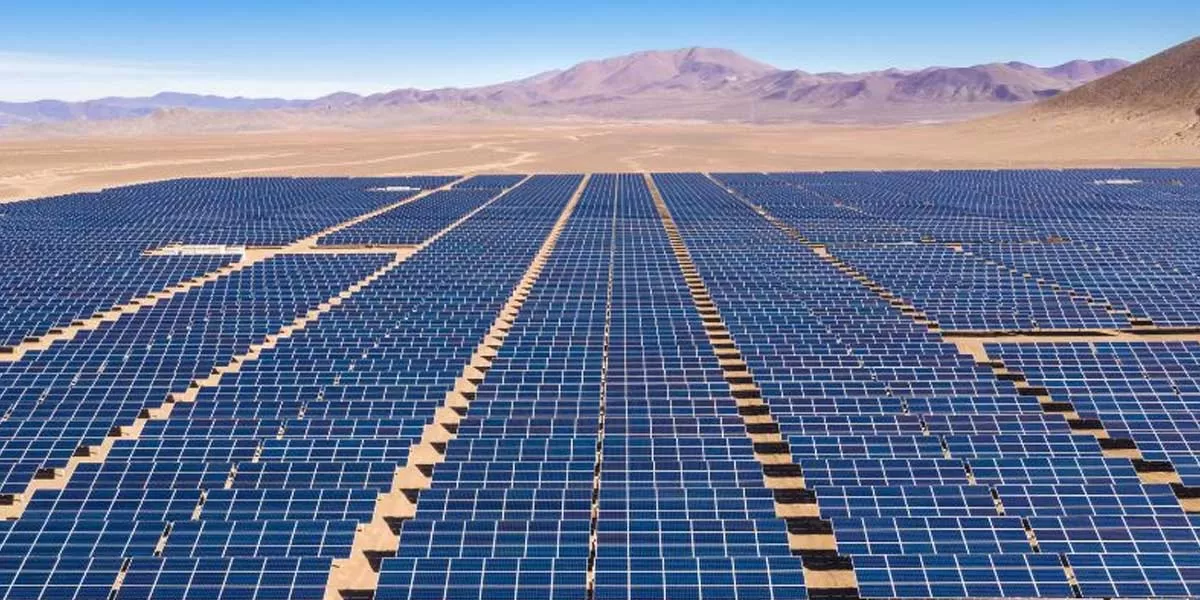
Grew Energy, a renewable energy venture of the Chiripal Group, has announced its intentions to establish a 3.2 GW solar module manufacturing facility in Kathua, Jammu & Kashmir. The company revealed that it would be investing Rs 45 billion in setting up the fully integrated three-stage facility, spanning 80 acres of land.

Upon its completion, the plant is expected to possess an annual production capacity of 3.2 GW of high-efficiency solar modules and 2.8 GW of solar ingots, wafers, and cells.

CEO Vinay Thadani expressed that the new plant would contribute significantly to the socio-economic development of the state and would also play a pivotal role in fulfilling India?s net zero target. Additionally, Thadani emphasized that it would create employment opportunities for the people of Jammu & Kashmir.

With its existing 2.8 GW module facility in Rajasthan and the addition of the new unit, Grew Energy aims to achieve a total manufacturing capacity of 6 GW for modules and 2.8 GW for solar components by fiscal year 2025.

In the previous month, the company emerged as the successful bidder in Solar Energy Corporation of India?s (SECI) auction for the manufacturing, testing, packaging, forwarding, supplying, and transporting of 200 MW domestically manufactured solar modules, with each MWp valued at ?22.66 million (~$271,597).

Furthermore, in the preceding year, SECI had declared the company as a winner, making it eligible to receive a total of Rs 5.67 billion under Tranche II of the performance-linked incentive program to manufacture 2 GW of solar modules.

Earlier this year, Jammu and Kashmir had been chosen as the location for GoodEnough Energy?s Rs 4.50 billion battery energy storage systems gigafactory, boasting a capacity of 7 GWh. The gigafactory is anticipated to commence operations in October 2024, with plans to scale up its capacity to 20 GWh by 2026.

Grew Energy, a renewable energy venture of the Chiripal Group, has announced its intentions to establish a 3.2 GW solar module manufacturing facility in Kathua, Jammu & Kashmir. The company revealed that it would be investing Rs 45 billion in setting up the fully integrated three-stage facility, spanning 80 acres of land. Upon its completion, the plant is expected to possess an annual production capacity of 3.2 GW of high-efficiency solar modules and 2.8 GW of solar ingots, wafers, and cells. CEO Vinay Thadani expressed that the new plant would contribute significantly to the socio-economic development of the state and would also play a pivotal role in fulfilling India?s net zero target. Additionally, Thadani emphasized that it would create employment opportunities for the people of Jammu & Kashmir. With its existing 2.8 GW module facility in Rajasthan and the addition of the new unit, Grew Energy aims to achieve a total manufacturing capacity of 6 GW for modules and 2.8 GW for solar components by fiscal year 2025. In the previous month, the company emerged as the successful bidder in Solar Energy Corporation of India?s (SECI) auction for the manufacturing, testing, packaging, forwarding, supplying, and transporting of 200 MW domestically manufactured solar modules, with each MWp valued at ?22.66 million (~$271,597). Furthermore, in the preceding year, SECI had declared the company as a winner, making it eligible to receive a total of Rs 5.67 billion under Tranche II of the performance-linked incentive program to manufacture 2 GW of solar modules. Earlier this year, Jammu and Kashmir had been chosen as the location for GoodEnough Energy?s Rs 4.50 billion battery energy storage systems gigafactory, boasting a capacity of 7 GWh. The gigafactory is anticipated to commence operations in October 2024, with plans to scale up its capacity to 20 GWh by 2026.

Next Story
Infrastructure Transport

MMRDA advances 250 m on Orange Gate–Marine Drive tunnel

The Mumbai Metropolitan Region Development Authority (MMRDA) has completed 250 m of underground tunnelling for the Orange Gate–Marine Drive Urban Road Tunnel using India’s largest slurry shield tunnel boring machine (TBM) deployed for an urban road project.The project involves twin tunnels extending over 7 km beneath critical transport corridors, including Central Railway, Western Railway and Metro Line 3. The work requires high-precision engineering to navigate densely developed urban infrastructure.Once completed, the tunnel is expected to reduce travel time between Orange Gate and Marin..

Next Story
Infrastructure Urban

Hindustan Zinc Pays Rs 188.46 Billion in FY26

Hindustan Zinc contributed Rs 188.46 billion to the public exchequer in FY 2025-26, according to its 9th Tax Transparency Report. The contribution, equivalent to 46 per cent of the company’s revenue, included direct and indirect taxes, government royalties, dividends to the Government of India, withholding taxes and other statutory levies.The company’s five-year cumulative contribution to the exchequer stood at Rs 915.72 billion. In FY26, Hindustan Zinc reported revenue of Rs 408.44 billion, EBITDA of Rs 221.62 billion and profit after tax of Rs 138.32 billion. It also achieved its highest..

Next Story
Infrastructure Urban

World of Concrete India 2026 Opens in Mumbai

Informa Markets in India will host the 12th edition of World of Concrete India 2026 from 3–5 June 2026 at the Bombay Exhibition Centre, Mumbai. The specialised B2B exhibition will bring together manufacturers, suppliers, contractors, developers, architects, consultants, infrastructure companies, project leaders and government stakeholders.The event is expected to feature over 350 brands and more than 18,000 trade professionals. It will cover concrete and cement, dry mortar, precast technologies, formwork, construction chemicals, industrial and commercial flooring, scaffolding, safety solutio..

Advertisement

Subscribe to Our Newsletter

Get daily newsletters around different themes from Construction world.

STAY CONNECTED

Advertisement

Advertisement

Advertisement

-->