Gujarat allocates 479 MW solar projects via PM KUSUM program
POWER & RENEWABLE ENERGY

Gujarat allocates 479 MW solar projects via PM KUSUM program

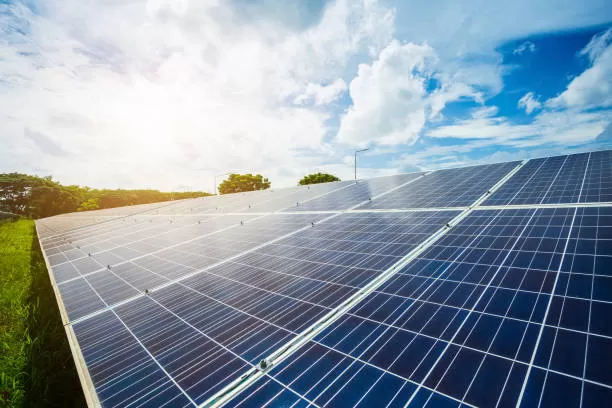
The Government of Gujarat announced that 479 MW of solar projects had been awarded to various developers under the Pradhan Mantri Kisan Urja Suraksha Evam Uthan Mahabhiyaan (PM KUSUM).

It was stated that these projects had been tendered for feeder-level solarization under Component C of the PM KUSUM program and were expected to become operational by the end of 2024.

The winning companies, including Onix Renewable, Indian Infrastructure and Project India, WAA Solar, Raghuvir Avenues, and GreenBloom Energy, among others, were mentioned.

It was mentioned that the quoted tariffs had ranged from Rs 2.87/kWh to Rs 3.00/kWh.

It was further stated that the tariff range and the capacities allocated to the winners were mentioned in the table titled List of Winners of Solar Projects Under PGVCL's Tender (Component C of KUSUM Program).

It was informed that these projects would be distributed across 170 locations in Gujarat.

Additionally, it was reported that power purchase agreements had been signed with the state electricity distribution company, Paschim Gujarat Vij.

As per the PM Kusum program, it was explained that agriculture feeders that were already segregated or primarily supported agricultural loads could be solarized by installing grid-connected solar projects to meet their annual power needs.

It was elaborated that the total annual power requirements for an agriculture feeder would be assessed, and a solar project of sufficient capacity would be installed through either CAPEX or RESCO mode.

Furthermore, it was mentioned that solar power projects could be installed at the feeder level to meet the power needs of a single feeder or multiple agriculture feeders from a distribution sub-station, feeding power at 11 KV or higher voltage, depending on land availability and technical feasibility.

According to the guidelines, it was outlined that the cost of a solar project was benchmarked at Rs 35 million/MW with central financial assistance (CFA) of Rs 10.5 million/MW.

The Government of Gujarat announced that 479 MW of solar projects had been awarded to various developers under the Pradhan Mantri Kisan Urja Suraksha Evam Uthan Mahabhiyaan (PM KUSUM). It was stated that these projects had been tendered for feeder-level solarization under Component C of the PM KUSUM program and were expected to become operational by the end of 2024. The winning companies, including Onix Renewable, Indian Infrastructure and Project India, WAA Solar, Raghuvir Avenues, and GreenBloom Energy, among others, were mentioned. It was mentioned that the quoted tariffs had ranged from Rs 2.87/kWh to Rs 3.00/kWh. It was further stated that the tariff range and the capacities allocated to the winners were mentioned in the table titled List of Winners of Solar Projects Under PGVCL's Tender (Component C of KUSUM Program). It was informed that these projects would be distributed across 170 locations in Gujarat. Additionally, it was reported that power purchase agreements had been signed with the state electricity distribution company, Paschim Gujarat Vij. As per the PM Kusum program, it was explained that agriculture feeders that were already segregated or primarily supported agricultural loads could be solarized by installing grid-connected solar projects to meet their annual power needs. It was elaborated that the total annual power requirements for an agriculture feeder would be assessed, and a solar project of sufficient capacity would be installed through either CAPEX or RESCO mode. Furthermore, it was mentioned that solar power projects could be installed at the feeder level to meet the power needs of a single feeder or multiple agriculture feeders from a distribution sub-station, feeding power at 11 KV or higher voltage, depending on land availability and technical feasibility. According to the guidelines, it was outlined that the cost of a solar project was benchmarked at Rs 35 million/MW with central financial assistance (CFA) of Rs 10.5 million/MW.

Next Story
Infrastructure Urban

Implementation Status of Jal Jeevan Mission

Since August 2019 the Government has implemented Jal Jeevan Mission to provide assured potable water through household tap connections in rural India. At the start of the mission only 32.3 million (mn) rural households, representing 16.7 per cent, were reported to have tap water connections. States and union territories have reported that 125.8 mn additional rural households have since been provided with tap connections. As a result, of about 193.6 mn rural households roughly 158.2 mn, or 81.71 per cent, are reported to have tap water supply at home.\n\nThe State, district and village level st..

Next Story
Infrastructure Urban

Jal Jeevan Mission Reaches Eighty One Per Cent Rural Coverage

The Government reported substantial progress under the Jal Jeevan Mission, launched in August 2019 to provide tap water to every rural household. At launch only 32.3 million (mn) rural households had tap connections and states and Union territories reported provision of 125.8 mn additional households by March 2026. Consequently, out of about 193.6 mn rural households around 158.2 mn, or 81.71 per cent, are reported to have tap water at home. The Finance Minister announced extension of the mission until 2028 in the 2025-26 budget speech. The Swachh Bharat Mission Grameen, launched in October 20..

Next Story
Infrastructure Urban

Empowering Local Governance for Sustainable Rural Water Supply

The Ministry of Jal Shakti has aligned the Jal Jeevan Mission (JJM) with the 73rd Amendment to strengthen village level planning and community ownership of water supply. Gram Panchayats, village water and sanitation committees and Pani Samitis are to plan, implement, manage and maintain piped water systems, with gram sabha processes formalising handover and oversight. Implementation support agencies including non government organisations, community based organisations and self help groups have been empanelled to train local committees and promote women participation. Under JJM, the department ..

Advertisement

Subscribe to Our Newsletter

Get daily newsletters around different themes from Construction world.

STAY CONNECTED

Advertisement

Advertisement

Advertisement