+
IESA Launches BESS Platform for C&I Consumers
POWER & RENEWABLE ENERGY

IESA Launches BESS Platform for C&I Consumers

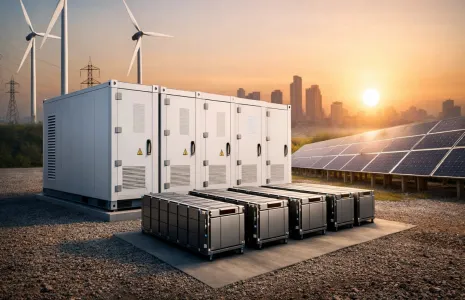
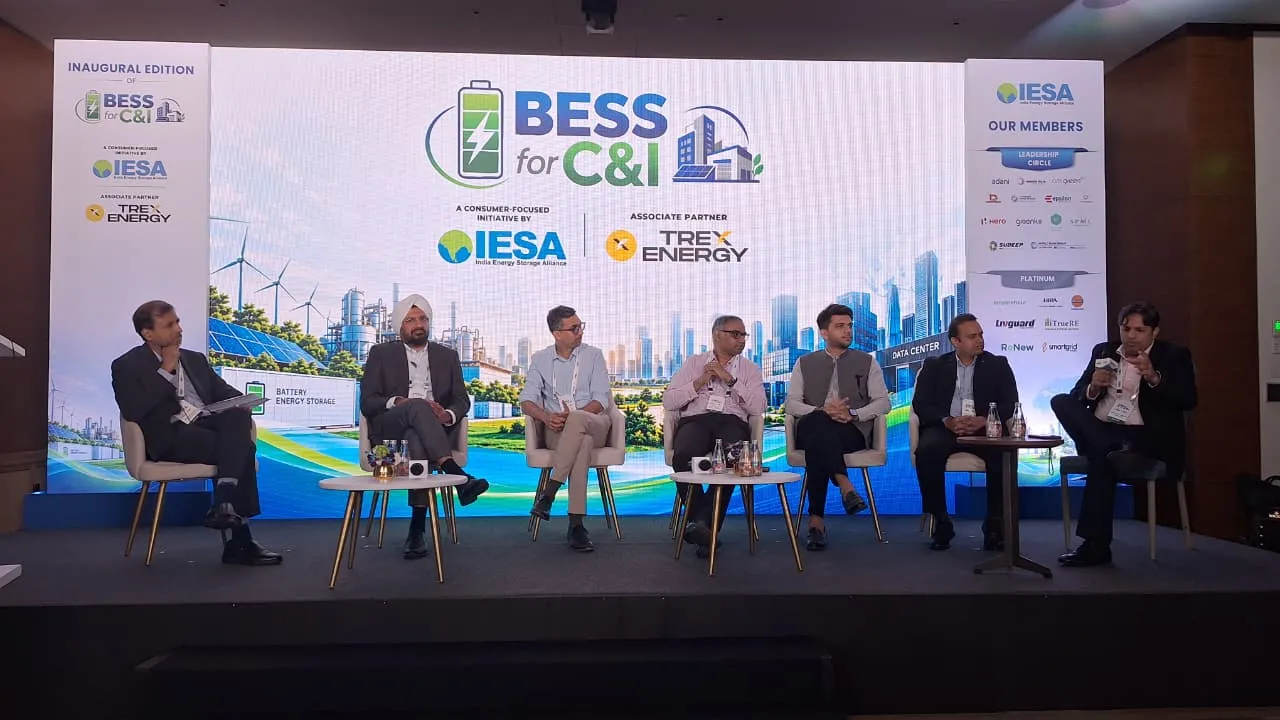
The India Energy Storage Alliance (IESA) has introduced its ‘BESS for C&I’ initiative in Mumbai to accelerate battery energy storage adoption among commercial and industrial (C&I) consumers. The initiative aims to empower 300 C&I consumers with storage solutions over the next three years.

India’s C&I battery storage capacity has increased from 40 MWh to 650 MWh and is projected to reach nearly 4 GWh by FY2027. However, high upfront costs, evolving regulations, limited financing options and gaps in user awareness continue to constrain wider adoption.

Starting October 2026, BESS for C&I will conduct monthly sessions bringing together industry representatives, developers and policymakers to discuss deployment, economics and best practices. The initiative will operate as a free workgroup for C&I consumers and provide policy updates, technology trends and pricing insights, along with access to B2B meetings, technology tours and masterclasses.

“The BESS for C&I platform is designed to address the unique challenges faced by commercial and industrial energy consumers as battery storage becomes essential for grid flexibility and business resilience. No single technology can meet all system needs; collaboration, knowledge-sharing, and innovation across the value chain are critical to accelerating adoption and shaping India’s battery storage future,” said Debmalya Sen, President, IESA.

Industry participants highlighted the need for domestic cell and component manufacturing, stronger supply chains and clearer regulations to support the sector. Bharat Chhittarka, Director, Trex Energy, called for states to establish clear policies covering time-of-day tariffs, energy arbitrage and peak shaving to encourage large-scale BESS deployment.

Bimal Jindal, CEO, Energy Business, JBM Renewables Private Limited, emphasised the need to build a domestic battery ecosystem covering component manufacturing, lithium carbonate, cell production and R&D. He also suggested increasing mandated BESS deployment and reducing GST on BESS from 18 per cent to 5 per cent.

Sushmita R. Ajwani, Head of Business Development (C&I), Aditya Birla Renewables, highlighted domestic cell manufacturing, regulatory clarity and targeted incentives as important factors for accelerating adoption. Meanwhile, Inder Bhambra, COO-BESS and Chief Business Officer, India region, Envision Energy India Limited, called for local development of cell technologies and DC container assembly, along with rationalisation of open-access and transmission-related charges.

IESA said utility-scale battery storage capex has risen 15 per cent in recent months, adding to project cost volatility. Through IESA Connect, the alliance plans to extend the initiative to cities and industrial clusters across India, involving C&I consumers in discussions around policy, standards and safety.


The India Energy Storage Alliance (IESA) has introduced its ‘BESS for C&I’ initiative in Mumbai to accelerate battery energy storage adoption among commercial and industrial (C&I) consumers. The initiative aims to empower 300 C&I consumers with storage solutions over the next three years.India’s C&I battery storage capacity has increased from 40 MWh to 650 MWh and is projected to reach nearly 4 GWh by FY2027. However, high upfront costs, evolving regulations, limited financing options and gaps in user awareness continue to constrain wider adoption.Starting October 2026, BESS for C&I will conduct monthly sessions bringing together industry representatives, developers and policymakers to discuss deployment, economics and best practices. The initiative will operate as a free workgroup for C&I consumers and provide policy updates, technology trends and pricing insights, along with access to B2B meetings, technology tours and masterclasses.“The BESS for C&I platform is designed to address the unique challenges faced by commercial and industrial energy consumers as battery storage becomes essential for grid flexibility and business resilience. No single technology can meet all system needs; collaboration, knowledge-sharing, and innovation across the value chain are critical to accelerating adoption and shaping India’s battery storage future,” said Debmalya Sen, President, IESA.Industry participants highlighted the need for domestic cell and component manufacturing, stronger supply chains and clearer regulations to support the sector. Bharat Chhittarka, Director, Trex Energy, called for states to establish clear policies covering time-of-day tariffs, energy arbitrage and peak shaving to encourage large-scale BESS deployment.Bimal Jindal, CEO, Energy Business, JBM Renewables Private Limited, emphasised the need to build a domestic battery ecosystem covering component manufacturing, lithium carbonate, cell production and R&D. He also suggested increasing mandated BESS deployment and reducing GST on BESS from 18 per cent to 5 per cent.Sushmita R. Ajwani, Head of Business Development (C&I), Aditya Birla Renewables, highlighted domestic cell manufacturing, regulatory clarity and targeted incentives as important factors for accelerating adoption. Meanwhile, Inder Bhambra, COO-BESS and Chief Business Officer, India region, Envision Energy India Limited, called for local development of cell technologies and DC container assembly, along with rationalisation of open-access and transmission-related charges.IESA said utility-scale battery storage capex has risen 15 per cent in recent months, adding to project cost volatility. Through IESA Connect, the alliance plans to extend the initiative to cities and industrial clusters across India, involving C&I consumers in discussions around policy, standards and safety.

Related Stories

Gold Stories

Next Story
Infrastructure Transport

Perungalathur Road over Bridge's Final Arm to Open

Traffic on the Tambaram-Perungalathur stretch of GST Road is expected to ease with the opening of the final 250-m arm of the Perungalathur Road Over Bridge towards the Tambaram Eastern Bypass on Gandhi Road. The arm, completed by the state government, is scheduled to open to traffic on Friday without a formal inauguration. The 15-m-wide, bidirectional arm is the sixth and final arm of the bridge. Its construction was delayed for nearly two years because a 33/11 kV substation stood on the alignment. Four months ago, the state highways department paid Rs. 320 mn to Tamil Nadu Generation and Dist..

Next Story
Infrastructure Transport

Assam to Get New Saraighat Rail-Cum-Road Bridge and Rail Doubling

The Ministry of Railways plans to take up the Second Saraighat Rail-Cum-Road Bridge project in Assam, along with doubling of the 7.2-km railway line between Agthori and Kamakhya stations. The work falls under Northeast Frontier Railway (NFR) and is intended to add rail and road capacity across the Brahmaputra. Larsen & Toubro (L&T) has been entrusted with the Agthori-Kamakhya doubling project, which received sanction in 2024. Planning and tendering followed the approval, while geotechnical investigations have been completed and engineering, design and construction drawings are under way. The c..

Next Story
Infrastructure Transport

Deep Depression Damages 613 km of Roads in Andhra Pradesh

Heavy rains triggered by a deep depression in the Bay of Bengal have damaged 613 km of Roads and Buildings Department roads across Andhra Pradesh, with Srikakulam accounting for 356 km of the affected network. The deep depression crossed the coast late on Wednesday night, but rain continued across coastal districts on Thursday. State Minister for Roads and Buildings B C Janardhan Reddy directed department officials to remain on high alert after reviewing the situation. The damage was assessed as of 7 a.m. on Thursday across Srikakulam, Parvathipuram-Manyam, Vizianagaram, Alluri Sitarama Raju, ..

Advertisement

Subscribe to Our Newsletter

Get daily newsletters around different themes from Construction world.

STAY CONNECTED

Advertisement

SPECIAL OFFER
QR Code