India Battery Storage Tariffs Seen Rising as Costs Squeeze Projects
POWER & RENEWABLE ENERGY

India Battery Storage Tariffs Seen Rising as Costs Squeeze Projects

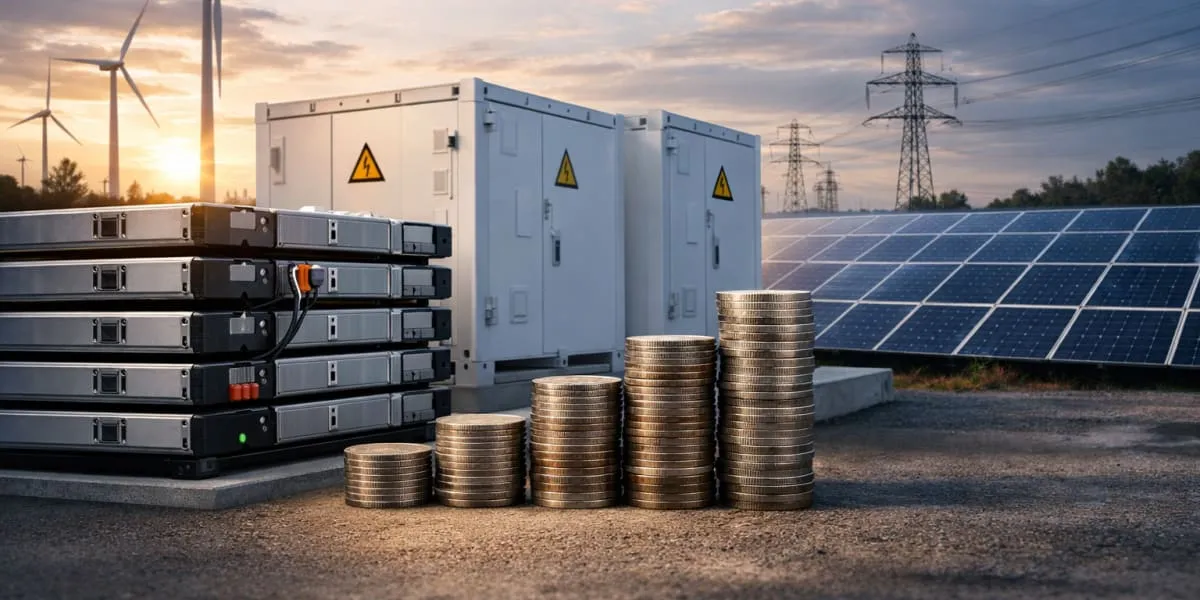
Developers and lenders at an energy industry event said tariffs for battery storage in India are expected to rise as higher input costs have made low-priced projects harder to sustain. The South Asian nation is expanding battery storage to provide round-the-clock renewable power, with about 260 gigawatt-hours (GWh) of energy storage projects at various stages of development. The push aims to capture output from an expanding renewable fleet measured in gigawatt (GW) scale.

Installed battery storage capacity rose more than elevenfold to eight point seven GWh in the first half of 2026 from zero point seven eight GWh at the end of 2025, and IESA data indicated it is expected to reach 10 GWh by the end of 2026. That pipeline remains far smaller than the renewable generation capacity of about 283 GW. The India Energy Storage Alliance (IESA) provided the installation and pipeline figures to industry participants.

Industry participants attributed rising costs to the withdrawal of export incentives by China, the world's largest battery supplier, and to higher prices for lithium, copper and aluminium linked to the Iran war. State Bank of India (SBI) representatives said some projects that secured funding have not progressed as battery prices rose and suppliers did not honour earlier price commitments. A SBI deputy general manager noted the lowest tariff quote seen in 2025 was Rs 148,000 per megawatt (MW) per month and that such levels are not sustainable at current battery prices. Lenders warned that projects based on earlier low bids face viability and financing risks.

Developers have at times offered low tariffs to win state government contracts, increasing pressure on margins and project delivery. Mahindra Susten, the clean energy arm of the Mahindra Group, cautioned against a race to the bottom, arguing tariffs must be realistic to ensure projects secure financing, are built on time and meet quality standards. The industry view at the event suggested the sector will need more sustainable pricing to scale storage deployment.

"Join industry leaders at RAHSTA Expo, India's premier platform for roads, highways and traffic infrastructure. Register now to explore innovations, network with experts and shape the future of mobility."

Developers and lenders at an energy industry event said tariffs for battery storage in India are expected to rise as higher input costs have made low-priced projects harder to sustain. The South Asian nation is expanding battery storage to provide round-the-clock renewable power, with about 260 gigawatt-hours (GWh) of energy storage projects at various stages of development. The push aims to capture output from an expanding renewable fleet measured in gigawatt (GW) scale. Installed battery storage capacity rose more than elevenfold to eight point seven GWh in the first half of 2026 from zero point seven eight GWh at the end of 2025, and IESA data indicated it is expected to reach 10 GWh by the end of 2026. That pipeline remains far smaller than the renewable generation capacity of about 283 GW. The India Energy Storage Alliance (IESA) provided the installation and pipeline figures to industry participants. Industry participants attributed rising costs to the withdrawal of export incentives by China, the world's largest battery supplier, and to higher prices for lithium, copper and aluminium linked to the Iran war. State Bank of India (SBI) representatives said some projects that secured funding have not progressed as battery prices rose and suppliers did not honour earlier price commitments. A SBI deputy general manager noted the lowest tariff quote seen in 2025 was Rs 148,000 per megawatt (MW) per month and that such levels are not sustainable at current battery prices. Lenders warned that projects based on earlier low bids face viability and financing risks. Developers have at times offered low tariffs to win state government contracts, increasing pressure on margins and project delivery. Mahindra Susten, the clean energy arm of the Mahindra Group, cautioned against a race to the bottom, arguing tariffs must be realistic to ensure projects secure financing, are built on time and meet quality standards. The industry view at the event suggested the sector will need more sustainable pricing to scale storage deployment.

Next Story
Infrastructure Transport

Bhogapuram Airport Set For Take Off After Licence Issued

Union Civil Aviation Minister Kinjarapu Ram Mohan Naidu announced that Alluri Sitharama Raju Bhogapuram International Airport has achieved 100 per cent completion following issuance of its aerodrome licence by the Ministry of Civil Aviation after an inspection with public representatives, district officials and GMR Group representatives. The licence was granted after extensive verification over the past month to ensure that safety and operational standards were met. The Chief Minister's Office has already contacted the Prime Minister's Office to finalise an inauguration date and commercial fli..

Next Story
Infrastructure Urban

Auto Sector To Grow 22-24 Per Cent In Q1 FY27

Credit Rating Information Services of India (Crisil) estimated that India's automobile sector is expected to report revenue growth of 22-24 per cent year-on-year in the first quarter of FY27 and to be among the largest contributors to corporate revenue growth in the quarter. The agency estimated overall corporate revenue to have grown 11-11.5 per cent year-on-year in the quarter ended 30 June 2026, the fastest pace in two years despite supply chain disruptions and higher input costs from the West Asia conflict. This compared with growth of 9.6 per cent in the preceding quarter. Crisil said the..

Next Story
Infrastructure Urban

Nomura Sees Q1 Pressure On Cement Margins; Backs Major Players

Nomura said cement margins will be under pressure in the June quarter as fuel and packaging costs rose, although volume growth is expected to remain healthy. The brokerage forecast six to seven per cent year-on-year organic volume growth for the Indian cement industry in the period, with Shree Cement identified as likely to post the highest growth at 15 per cent year-on-year. It noted that the West and North regions outperformed on pricing, aiding companies with greater exposure in those markets. Average trade prices improved three per cent sequentially to around Rs 326 per bag after price inc..

Advertisement

Subscribe to Our Newsletter

Get daily newsletters around different themes from Construction world.

STAY CONNECTED

Advertisement

Advertisement

Advertisement