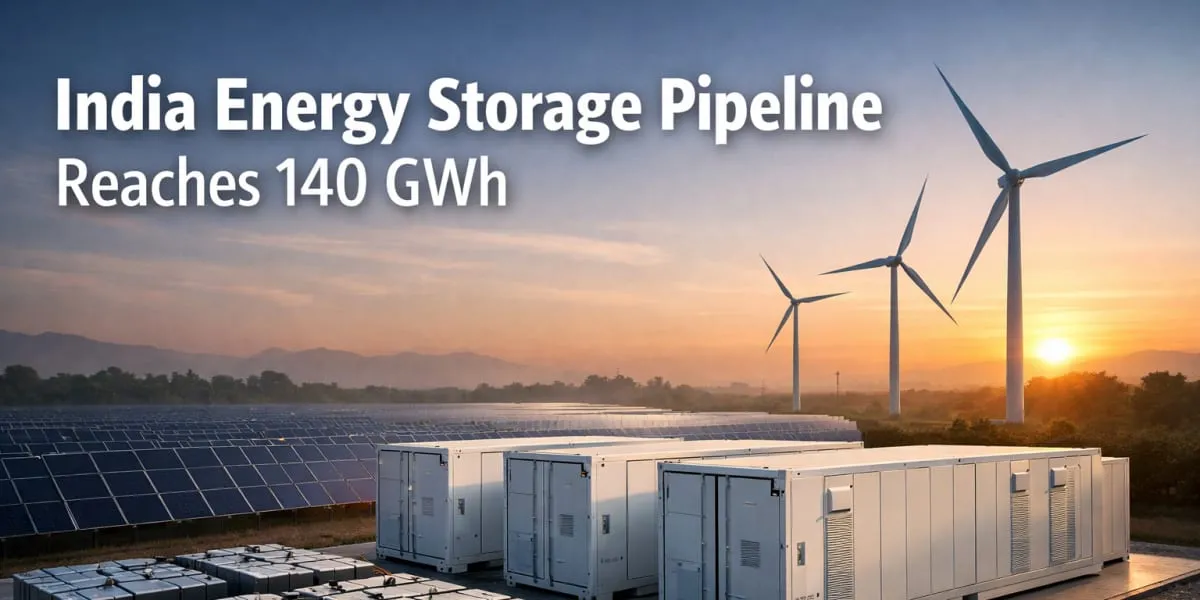
India Energy Storage Pipeline Reaches 140 GWh
POWER & RENEWABLE ENERGY

India Energy Storage Pipeline Reaches 140 GWh

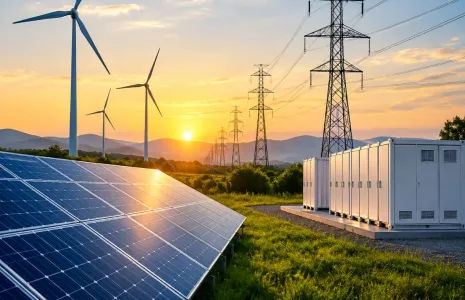
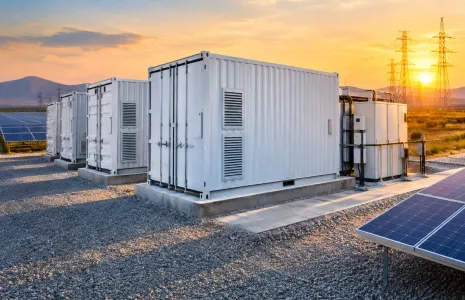
India has commissioned seven point five gigawatt-hour (GWh) of energy storage capacity, while more than 140 GWh is under construction, awarded or under tendering, the Minister of State for Power and New and Renewable Energy, Shripad Yesso Naik, said at an industry event. The figures indicate growing momentum in deployment of grid-scale storage across the country. The minister noted that this pipeline reflects projects from both standalone batteries and storage integrated with renewable generation.

Naik said that to build a truly flexible grid deployment must accelerate because the requirement is no longer measured only in gigawatts but in the ability to respond instantly to changing system conditions. He added that whereas India previously focused on whether it could generate enough electricity the present challenge is to deliver the right electricity at the right time and at the right place. The remarks framed storage as central to system reliability and integration of variable renewable energy.

The government has introduced viability gap funding for standalone Battery Energy Storage System (BESS) and is providing support through the Power System Development Fund, the minister said. There has been a waiver of inter state transmission charges and steps to integrate storage with renewable energy projects. The Advanced Chemistry Cell production linked incentive scheme includes a 50 GWh allocation that encompasses dedicated capacity for stationary storage and related manufacturing.

Naik described an opportunity for India to become a manufacturing hub for the complete storage ecosystem covering battery management systems, energy management systems and power conversion systems alongside thermal management and fire safety systems. He said battery recycling, power electronics and advanced software will increasingly become the intelligence behind the future grid. Vijay Mittal, joint secretary at the Ministry of Heavy Industries, indicated the government intends to expand policy support for battery recycling and related supply chain measures.

"Join industry leaders at RAHSTA Expo, India's premier platform for roads, highways and traffic infrastructure. Register now to explore innovations, network with experts and shape the future of mobility."

India has commissioned seven point five gigawatt-hour (GWh) of energy storage capacity, while more than 140 GWh is under construction, awarded or under tendering, the Minister of State for Power and New and Renewable Energy, Shripad Yesso Naik, said at an industry event. The figures indicate growing momentum in deployment of grid-scale storage across the country. The minister noted that this pipeline reflects projects from both standalone batteries and storage integrated with renewable generation. Naik said that to build a truly flexible grid deployment must accelerate because the requirement is no longer measured only in gigawatts but in the ability to respond instantly to changing system conditions. He added that whereas India previously focused on whether it could generate enough electricity the present challenge is to deliver the right electricity at the right time and at the right place. The remarks framed storage as central to system reliability and integration of variable renewable energy. The government has introduced viability gap funding for standalone Battery Energy Storage System (BESS) and is providing support through the Power System Development Fund, the minister said. There has been a waiver of inter state transmission charges and steps to integrate storage with renewable energy projects. The Advanced Chemistry Cell production linked incentive scheme includes a 50 GWh allocation that encompasses dedicated capacity for stationary storage and related manufacturing. Naik described an opportunity for India to become a manufacturing hub for the complete storage ecosystem covering battery management systems, energy management systems and power conversion systems alongside thermal management and fire safety systems. He said battery recycling, power electronics and advanced software will increasingly become the intelligence behind the future grid. Vijay Mittal, joint secretary at the Ministry of Heavy Industries, indicated the government intends to expand policy support for battery recycling and related supply chain measures.

Next Story
Real Estate

Bharat Shah Family Buys Four Luxury Apartments In Worli For Rs1.8 bn

The family of veteran investor Bharat Shah has acquired four ultra-luxury apartments on the higher floors of Kalpataru One in Worli, South Mumbai, for Rs1.8 billion (bn). The purchases were registered on 6 July 2026 and were executed through Preeti Bharat Shah and Kinnari Bharat Shah, who bought the flats from Kalpataru Properties Limited. Property registration documents reviewed by Zapkey show the total consideration at Rs1.7941 billion. The transactions recorded a per square foot RERA carpet price of Rs0.101 million (mn), with each apartment valued at about Rs448.5 million. The four residenc..

Next Story
Infrastructure Urban

NITI Aayog Consultation On Critical Mineral Supply Chains

NITI Aayog convened a stakeholder consultation in New Delhi on Wednesday to assess requirements for critical minerals across strategic sectors, bringing together experts from government, research institutions, academia and industry. The meeting aimed to estimate current and future demand, identify supply chain vulnerabilities and discuss measures to strengthen domestic capabilities in exploration, processing and recycling. The exercise formed part of broader efforts to secure mineral value chains essential for economic growth, technological advancement and national security.\n\nDiscussions con..

Next Story
Infrastructure Urban

Gujarat Tops India in Renewable Energy With 50.386 GW Capacity

Gujarat has emerged as India’s leading renewable energy state with a total installed renewable energy capacity of 50.386 GW, according to the Chief Minister’s Office. The capacity includes 15,850.56 megawatt (MW) of wind power and 32,302.7 megawatt (MW) of solar power, and the state accounts for 17.82 per cent of India’s total renewable energy capacity. The state ranks first in installed wind capacity and second in solar capacity. Gujarat has also installed more than 1.3 million (mn) rooftop solar systems generating 7,408.10 megawatt (MW). Ground mounted solar projects account for 23,259..

Advertisement

Subscribe to Our Newsletter

Get daily newsletters around different themes from Construction world.

STAY CONNECTED

Advertisement

Advertisement

Advertisement