India needs $10 trillion investment to hit net zero target
POWER & RENEWABLE ENERGY

India needs $10 trillion investment to hit net zero target

India’s target of achieving net zero emissions by 2070, announced by Prime Minister Narendra Modi at the UN Climate Summit COP26 in Glasgow in November 2021, might be somewhat over-ambitious, according to experts, and would require a huge investment.

India is the third largest emitter of greenhouse gases after China and the US. China has said that it plans to achieve net carbon neutrality by 2060, and the US along with the European Union (EU) aims to do so by 2050.

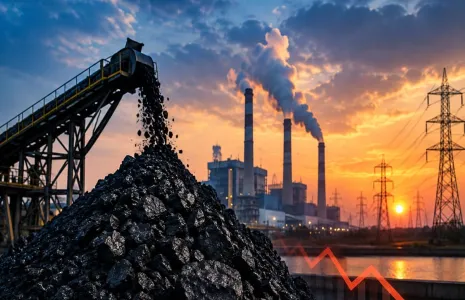
To achieve its target, India will have to move away from its heavy dependency on coal and a proper roadmap is required to achieve this, before moving towards the larger target.

According to a study, an investment of $10 trillion, starting from this year itself, would be needed to achieve the net zero target. And if the deadline is advanced to 2050, then the amount may go up to $13.5 trillion.

The economic benefits of India stepping up its transition to climate neutrality by 2070 are immense - boost of up to 4.7% per cent to the annual GDP by 2036 and creating some 15 million new jobs by 2047, according to a report by the High-Level Policy Commission on Getting Asia to Net Zero. The benefits are even greater if India reaches net zero carbon emissions by 2050.

The report, titled ‘Getting India to Net Zero’, released in August this year, said that achieving the zero-emission target by 2070 would be worth $371 billion in financial terms.

See also:
Rs 100 bn infra works for Andamans in pipeline: minister
Ahmedabad’s Sakri Lake to be developed in Rs 190 mn project


India’s target of achieving net zero emissions by 2070, announced by Prime Minister Narendra Modi at the UN Climate Summit COP26 in Glasgow in November 2021, might be somewhat over-ambitious, according to experts, and would require a huge investment. India is the third largest emitter of greenhouse gases after China and the US. China has said that it plans to achieve net carbon neutrality by 2060, and the US along with the European Union (EU) aims to do so by 2050. To achieve its target, India will have to move away from its heavy dependency on coal and a proper roadmap is required to achieve this, before moving towards the larger target. According to a study, an investment of $10 trillion, starting from this year itself, would be needed to achieve the net zero target. And if the deadline is advanced to 2050, then the amount may go up to $13.5 trillion. The economic benefits of India stepping up its transition to climate neutrality by 2070 are immense - boost of up to 4.7% per cent to the annual GDP by 2036 and creating some 15 million new jobs by 2047, according to a report by the High-Level Policy Commission on Getting Asia to Net Zero. The benefits are even greater if India reaches net zero carbon emissions by 2050. The report, titled ‘Getting India to Net Zero’, released in August this year, said that achieving the zero-emission target by 2070 would be worth $371 billion in financial terms. See also: Rs 100 bn infra works for Andamans in pipeline: ministerAhmedabad’s Sakri Lake to be developed in Rs 190 mn project

Next Story
Infrastructure Energy

Vedanta Aluminium Uses 1.57 bn Units of Green Energy in FY25

Vedanta Aluminium, India’s largest aluminium producer, recently reported consumption of 1.57 billion units of renewable energy in FY25, marking a significant milestone in its 2030 decarbonisation roadmap. The company also achieved an 8.96 per cent reduction in greenhouse gas (GHG) emissions intensity compared to FY21, reinforcing its leadership in India’s low-carbon manufacturing transition. During FY25, Vedanta Aluminium expanded its renewable energy portfolio through long-term power purchase agreements, strengthening its strategy to source nearly 1,500 MW of renewable power over the lon..

Next Story
Real Estate

Oberoi Group to Develop Luxury Resort at Makaibari Tea Estate

EIH Limited, the flagship company of The Oberoi Group, has announced the signing of a management agreement to develop an Oberoi luxury resort at the iconic Makaibari Tea Estate in Darjeeling. The project marks a key milestone in the Group’s long-term strategy of creating distinctive hospitality experiences in rare and environmentally significant locations. Established in 1859, Makaibari is one of the world’s oldest tea estates and is globally recognised for its Himalayan landscape, primary forests and exceptional biodiversity. Spread across 1,236 acres, the estate houses one of the world..

Next Story
Real Estate

GHV Infra Secures Rs 1.09 Bn EPC Order in Jamshedpur

GHV Infra Projects Ltd, a fast-growing EPC company in India’s infrastructure and construction sector, has recently secured a Rs 1.09 billion work order in Jamshedpur, Jharkhand. Awarded by a reputed group entity, the contract covers end-to-end civil construction, mechanical, electrical and plumbing (MEP) systems, along with high-quality finishing works for a large building development. The project will be executed over a 30-month period, with defined benchmarks for quality, safety and timely delivery. The order strengthens GHV Infra’s footprint in Jamshedpur, a key industrial hub known fo..

Advertisement

Subscribe to Our Newsletter

Get daily newsletters around different themes from Construction world.

STAY CONNECTED

Advertisement

Advertisement

Advertisement

Advertisement

Open In App