India Power Sector Enters Value Chain Reset Led By Transmission
POWER & RENEWABLE ENERGY

India Power Sector Enters Value Chain Reset Led By Transmission

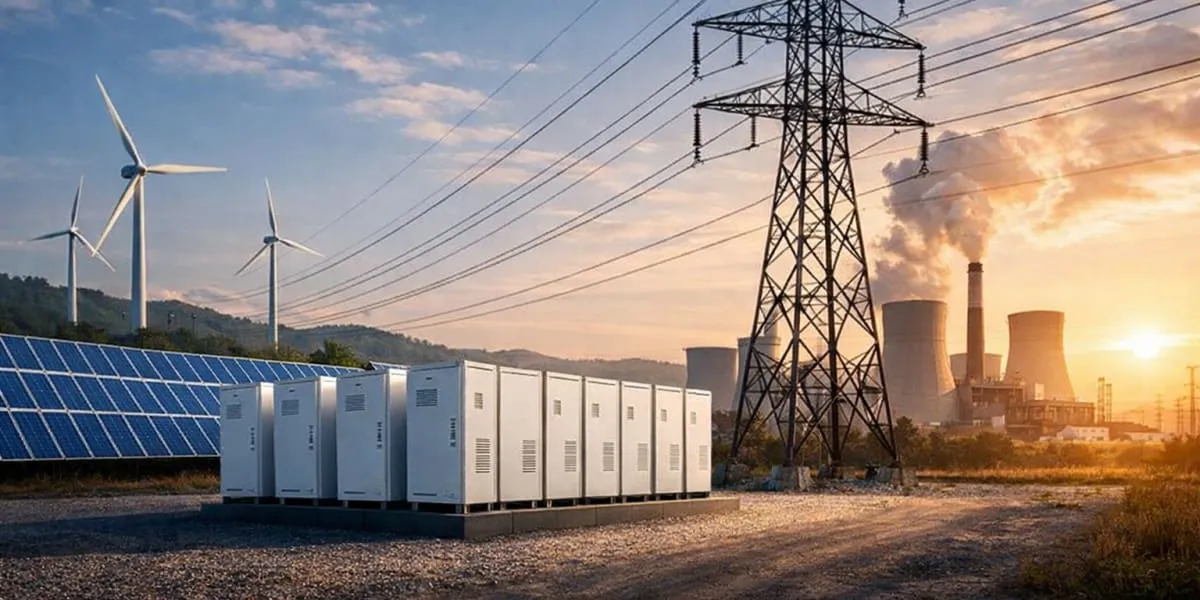
Macquarie Equity Research said India’s electricity system is entering a synchronised reset across generation, transmission and distribution, with transmission capital expenditure and energy storage central to the coming decade. The brokerage expects installed capacity to rise from 538 gigawatt (GW) today to 900GW by FY32E, with coal anchoring baseload stability at plant load factors above 65 per cent while renewables supply most incremental capacity. It added that 74GW of storage will be needed by 2032 to manage intermittency and meet evening peaks.

Peak demand reached a record 271GW in May 2026 during a heatwave and the Central Electricity Authority (CEA) projects power demand to grow at six per cent compound annual growth rate to 2030. The International Energy Agency expects electricity consumption to rise at six point four per cent annually through 2030, driven by rising cooling demand that accounts for more than twenty per cent of incremental growth and by new high-load segments such as data centres and electrified transport. Industrial demand remains large.

The report highlights a transmission-led capex super-cycle and estimates India will need US$51 billion (bn) in transmission investment to evacuate 500GW of non-fossil capacity by 2030 and 900GW by 2035-36. Timing is a constraint because generation assets take 12 to 18 months to build while transmission corridors require 36 to 48 months, increasing curtailment risk without inter-regional development. The grid lost 2,300 gigawatt hour (GWh) between May and December 2025 when mid-day solar surges exceeded absorption capacity.

Under the Revamped Distribution Sector Scheme (RDSS) Rs2.83 trillion (tn) has been sanctioned and 203 million (mn) smart meters are planned, supporting a turnaround. Aggregate technical and commercial losses have eased to fifteen per cent from twenty-two per cent in FY2021 and distribution companies (DISCOMs) reported a Rs25 billion (bn) profit in FY2025, while overdue payables have fallen below Rs500 billion (bn). Regulatory reforms such as the Draft National Electricity Policy 2026 and the Electricity (Amendment) Bill 2026 aim to shift the sector to market-based systems, and the brokerage said the next phase will depend on how quickly transmission and storage keep pace with demand.

"Join industry leaders at RAHSTA Expo, India's premier platform for roads, highways and traffic infrastructure. Register now to explore innovations, network with experts and shape the future of mobility."

Macquarie Equity Research said India’s electricity system is entering a synchronised reset across generation, transmission and distribution, with transmission capital expenditure and energy storage central to the coming decade. The brokerage expects installed capacity to rise from 538 gigawatt (GW) today to 900GW by FY32E, with coal anchoring baseload stability at plant load factors above 65 per cent while renewables supply most incremental capacity. It added that 74GW of storage will be needed by 2032 to manage intermittency and meet evening peaks. Peak demand reached a record 271GW in May 2026 during a heatwave and the Central Electricity Authority (CEA) projects power demand to grow at six per cent compound annual growth rate to 2030. The International Energy Agency expects electricity consumption to rise at six point four per cent annually through 2030, driven by rising cooling demand that accounts for more than twenty per cent of incremental growth and by new high-load segments such as data centres and electrified transport. Industrial demand remains large. The report highlights a transmission-led capex super-cycle and estimates India will need US$51 billion (bn) in transmission investment to evacuate 500GW of non-fossil capacity by 2030 and 900GW by 2035-36. Timing is a constraint because generation assets take 12 to 18 months to build while transmission corridors require 36 to 48 months, increasing curtailment risk without inter-regional development. The grid lost 2,300 gigawatt hour (GWh) between May and December 2025 when mid-day solar surges exceeded absorption capacity. Under the Revamped Distribution Sector Scheme (RDSS) Rs2.83 trillion (tn) has been sanctioned and 203 million (mn) smart meters are planned, supporting a turnaround. Aggregate technical and commercial losses have eased to fifteen per cent from twenty-two per cent in FY2021 and distribution companies (DISCOMs) reported a Rs25 billion (bn) profit in FY2025, while overdue payables have fallen below Rs500 billion (bn). Regulatory reforms such as the Draft National Electricity Policy 2026 and the Electricity (Amendment) Bill 2026 aim to shift the sector to market-based systems, and the brokerage said the next phase will depend on how quickly transmission and storage keep pace with demand.

Next Story
Products

Aerolam partners Leminar to expand insulation business in UAE

Aerolam Group has entered into an exclusive distribution agreement with Leminar Global to strengthen the availability of its insulation products across the UAE, marking a key step in the company's expansion across the Gulf Cooperation Council (GCC) region.Under the agreement, Leminar Global, an HVAC and plumbing solutions provider and part of the Al Shirawi Group, will serve as the authorised distributor of Aerolam's insulation portfolio in the UAE. The partnership is aimed at meeting growing demand for energy-efficient building materials as construction activity accelerates across the country..

Next Story
Products

GRAFF showcases water-focused bathroom and kitchen collections

GRAFF has introduced a range of bathroom and kitchen collections centred on water, design and sustainability, highlighting products that combine user comfort with water-efficient technologies.For bathrooms, the company has showcased its Riva, Ametis and Aqua-Sense shower collections, featuring rain showers, adjustable water streams, intuitive controls and chromatic lighting designed to enhance the bathing experience. The collections are intended to create a spa-like environment while incorporating technologies that optimise water consumption.In the kitchen segment, GRAFF has highlighted its Fu..

Next Story
Infrastructure Energy

PM dedicates HRRL refinery, Barmer township showcases sustainable design

Prime Minister Narendra Modi has dedicated the HPCL Rajasthan Refinery Ltd's (HRRL) Integrated Refinery-cum-Petrochemical Complex at Pachpadra, Balotra, Rajasthan, marking the commissioning of India's first greenfield integrated refinery-cum-petrochemical complex. Developed as a joint venture between Hindustan Petroleum Corporation Ltd (HPCL) and the Government of Rajasthan, the refinery has a capacity of 9 million metric tonnes per annum (MMTPA).Speaking at the inauguration, the Prime Minister said the refinery would strengthen India's energy security while generating long-term employment opp..

Advertisement

Subscribe to Our Newsletter

Get daily newsletters around different themes from Construction world.

STAY CONNECTED

Advertisement

Advertisement

Advertisement