India Speeds Up National Gas Grid to Boost Clean Energy Access
POWER & RENEWABLE ENERGY

India Speeds Up National Gas Grid to Boost Clean Energy Access

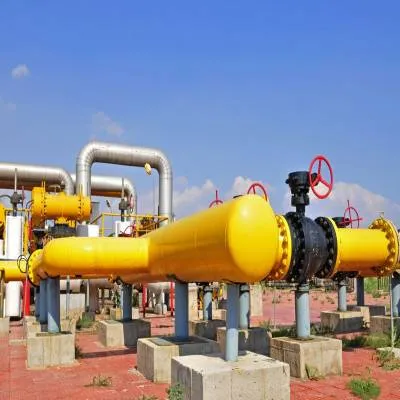
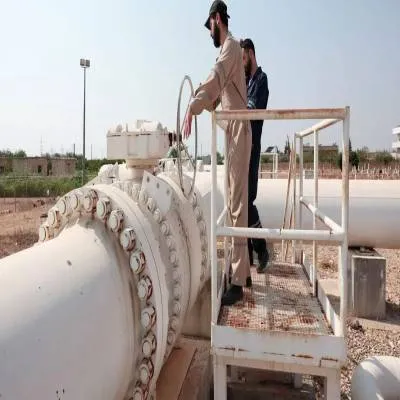
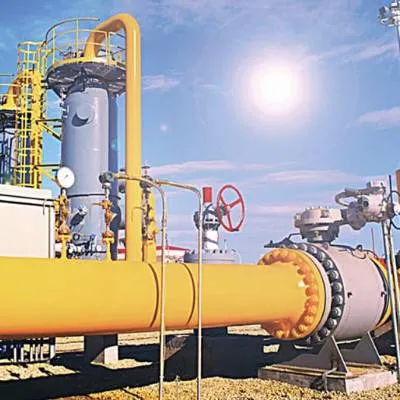
India’s efforts to expand natural gas accessibility have gained momentum, with the Petroleum and Natural Gas Regulatory Board (PNGRB) accelerating the rollout of the National Gas Grid. The regulator has authorised around 34,233 km of natural gas pipeline network—covering common carrier routes, spur lines, tie-in connections and dedicated pipelines—across multiple regions. Of this, 25,429 km is already operational, while another 10,459 km is progressing through various stages of construction as of June 2025.

To advance the vision of ‘One Nation, One Gas Grid,’ the government has introduced several measures aimed at strengthening connectivity and ensuring steady supply. These include approvals for key trunk pipeline projects, viability gap funding for low-demand regions, a unified tariff structure to promote equitable access, and rapid expansion of City Gas Distribution (CGD) networks. Additional initiatives such as establishing Liquefied Natural Gas (LNG) terminals, granting marketing and pricing freedom under a defined ceiling for gas from challenging geological zones, and promoting Bio-CNG through the SATAT programme are further supporting the sector’s growth.

Regular coordination between the central government, state administrations and implementing agencies is underway to remove bottlenecks, address right-of-way issues and speed up construction timelines.

The expanding pipeline infrastructure is expected to significantly enhance access to clean, reliable and affordable fuel. Rural communities, industrial clusters and CGD areas stand to benefit through improved energy availability, reduced reliance on conventional fuels and increased convenience for households. For industries, consistent gas supply at competitive rates can strengthen manufacturing efficiency, attract investment, lower operational costs and generate employment. Within CGD networks, wider availability of CNG and PNG will support cleaner mobility and promote sustainable domestic energy use.

This update was shared by Suresh Gopi, Minister of State, Ministry of Petroleum and Natural Gas, in a written reply in the Rajya Sabha.

News source: PIB

India’s efforts to expand natural gas accessibility have gained momentum, with the Petroleum and Natural Gas Regulatory Board (PNGRB) accelerating the rollout of the National Gas Grid. The regulator has authorised around 34,233 km of natural gas pipeline network—covering common carrier routes, spur lines, tie-in connections and dedicated pipelines—across multiple regions. Of this, 25,429 km is already operational, while another 10,459 km is progressing through various stages of construction as of June 2025.To advance the vision of ‘One Nation, One Gas Grid,’ the government has introduced several measures aimed at strengthening connectivity and ensuring steady supply. These include approvals for key trunk pipeline projects, viability gap funding for low-demand regions, a unified tariff structure to promote equitable access, and rapid expansion of City Gas Distribution (CGD) networks. Additional initiatives such as establishing Liquefied Natural Gas (LNG) terminals, granting marketing and pricing freedom under a defined ceiling for gas from challenging geological zones, and promoting Bio-CNG through the SATAT programme are further supporting the sector’s growth.Regular coordination between the central government, state administrations and implementing agencies is underway to remove bottlenecks, address right-of-way issues and speed up construction timelines.The expanding pipeline infrastructure is expected to significantly enhance access to clean, reliable and affordable fuel. Rural communities, industrial clusters and CGD areas stand to benefit through improved energy availability, reduced reliance on conventional fuels and increased convenience for households. For industries, consistent gas supply at competitive rates can strengthen manufacturing efficiency, attract investment, lower operational costs and generate employment. Within CGD networks, wider availability of CNG and PNG will support cleaner mobility and promote sustainable domestic energy use.This update was shared by Suresh Gopi, Minister of State, Ministry of Petroleum and Natural Gas, in a written reply in the Rajya Sabha.News source: PIB

Next Story
Building Material

Cement Makers Set for ~250 bps Margin Boost on Strong Realisations

Cement manufacturers are expected to record a 250–300 basis points (bps) expansion in operating margins this fiscal, supported by improved realisations driven by higher volumes, greater premiumisation and broadly stable input costs. Industry volume is projected to grow 6.5–7.5 per cent this fiscal, up from 5 per cent in the previous year. While the first half saw a moderate 5 per cent on-year rise—recovering from flat demand a year earlier—the second half is likely to strengthen with 8–9 per cent growth backed by pent-up demand and better liquidity.Pan-India cement prices are expecte..

Next Story
Infrastructure Urban

Zen Technologies Bags Rs 1.20 Bn MoD Contract for Combat Training Node

Zen Technologies has secured a Rs 1.20 billion contract from the Ministry of Defence to establish India’s first Combat Training Node (CTN) at the Infantry School in Mhow, Madhya Pradesh. The institution, regarded as the alma mater of the country’s infantry forces, will host this state-of-the-art training ecosystem designed to enhance operational preparedness through advanced simulation technologies.The CTN will integrate more than 60 training simulators and solutions, aimed at modernising and standardising combat training. The initiative aligns with India’s broader goal of strengthening ..

Next Story
Building Material

Shree Cement Rolls Out Bangur Marble Cement in Odisha Market

Shree Cement has expanded its premium portfolio in eastern India with the launch of Bangur Marble Cement in Odisha under its master brand, Bangur Cement. The product, a premium PSC cement, is engineered for superior brightness, enhanced strength and strong crack resistance—qualities that make it particularly suitable for exposed concrete structures and large, visually striking designs. Its composition also makes it well suited to the climatic conditions of coastal Odisha, offering durable performance in challenging environments.The company plans to make the cement available through more than..

Advertisement

Subscribe to Our Newsletter

Get daily newsletters around different themes from Construction world.

STAY CONNECTED

Advertisement

Advertisement

Advertisement

Advertisement

Open In App