+
Modi Government Pushes Atmanirbhar Container Drive With BCSL MoU
PORTS & SHIPPING

Modi Government Pushes Atmanirbhar Container Drive With BCSL MoU

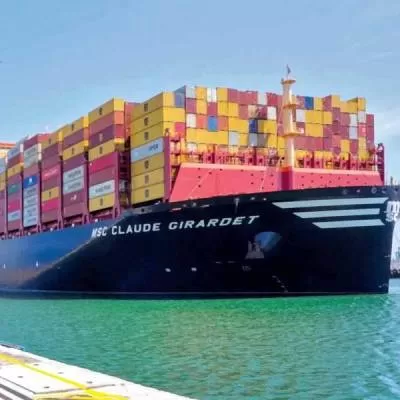
The Union Government advanced a plan to create an integrated, domestically anchored container ecosystem with the signing of a Memorandum of Understanding to establish the Bharat Container Shipping Line (BCSL). The MoU was signed by key agencies including the Shipping Corporation of India and Container Corporation of India alongside major port authorities and Sagarmala Finance Corporation Limited under the Ministry of Ports, Shipping and Waterways, in the presence of senior ministers. The initiative aligns with the Container Manufacturing Assistance Scheme announced in the Union Budget 2026–27.

A separate tripartite agreement was executed to finance the Outer Harbour Project at V.O. Chidambaranar Port Authority in Tuticorin, involving the port authority, Indian Railway Finance Corporation Limited and Sagarmala Finance Corporation Limited. The framework provides for joint funding of up to Rs 150 billion (bn) for eligible projects to expand port capacity under the Sagarmala Programme and the PM Gati Shakti National Master Plan. Funding is expected to focus on debt financing for breakwater construction and related onshore and offshore facilities through a Hybrid Annuity Model.

The release described a proposed Rs 590 bn fleet and domestic container manufacturing initiative that will form a key part of India’s export-import logistics strategy and will be supported by CMAS incentives. Ministers conveyed that these measures are intended to build national shipping capability in the container segment, reinforce port infrastructure and strengthen multimodal connectivity across the supply chain. The government framed the package as a way to reduce vulnerability to volatile freight rates and global supply shocks for exporters and importers.

The statement referenced India’s growth trajectory and cited an expected gross domestic product of about $7.3 trillion (tn) by 2030 as a factor likely to increase containerised cargo traffic and demand for port capacity. Officials indicated that implementation details and timelines will be pursued by the partners and that the agreements are intended to advance the objectives of Atmanirbhar Bharat and Maritime Amrit Kaal 2047. Stakeholders were urged to coordinate on project execution and financing arrangements to realise the stated objectives.

The Union Government advanced a plan to create an integrated, domestically anchored container ecosystem with the signing of a Memorandum of Understanding to establish the Bharat Container Shipping Line (BCSL). The MoU was signed by key agencies including the Shipping Corporation of India and Container Corporation of India alongside major port authorities and Sagarmala Finance Corporation Limited under the Ministry of Ports, Shipping and Waterways, in the presence of senior ministers. The initiative aligns with the Container Manufacturing Assistance Scheme announced in the Union Budget 2026–27. A separate tripartite agreement was executed to finance the Outer Harbour Project at V.O. Chidambaranar Port Authority in Tuticorin, involving the port authority, Indian Railway Finance Corporation Limited and Sagarmala Finance Corporation Limited. The framework provides for joint funding of up to Rs 150 billion (bn) for eligible projects to expand port capacity under the Sagarmala Programme and the PM Gati Shakti National Master Plan. Funding is expected to focus on debt financing for breakwater construction and related onshore and offshore facilities through a Hybrid Annuity Model. The release described a proposed Rs 590 bn fleet and domestic container manufacturing initiative that will form a key part of India’s export-import logistics strategy and will be supported by CMAS incentives. Ministers conveyed that these measures are intended to build national shipping capability in the container segment, reinforce port infrastructure and strengthen multimodal connectivity across the supply chain. The government framed the package as a way to reduce vulnerability to volatile freight rates and global supply shocks for exporters and importers. The statement referenced India’s growth trajectory and cited an expected gross domestic product of about $7.3 trillion (tn) by 2030 as a factor likely to increase containerised cargo traffic and demand for port capacity. Officials indicated that implementation details and timelines will be pursued by the partners and that the agreements are intended to advance the objectives of Atmanirbhar Bharat and Maritime Amrit Kaal 2047. Stakeholders were urged to coordinate on project execution and financing arrangements to realise the stated objectives.

Next Story
Infrastructure Transport

Second Mountain Tunnel Breakthrough in Palghar Advances High Speed Rail

The Mumbai-Ahmedabad high speed rail (MAHSR) project reached a milestone with the breakthrough of a mountain tunnel in Palghar, Maharashtra. Mountain tunnel MT-six measures 454 metres long and 14.4 metres wide and will accommodate up and down tracks. The breakthrough follows MT-five near Saphale on second January 2026 and the MT-six excavation was completed from both ends using the New Austrian Tunnelling Method. The ministry reported that the tunnelling was completed within 12 months. The New Austrian Tunnelling Method is favoured for its flexibility in complex geology and irregular tunnel s..

Advertisement

Subscribe to Our Newsletter

Get daily newsletters around different themes from Construction world.

STAY CONNECTED

Advertisement

Advertisement

Advertisement

Open In App