+
Second Mountain Tunnel Breakthrough in Palghar Advances High Speed Rail
RAILWAYS & METRO RAIL

Second Mountain Tunnel Breakthrough in Palghar Advances High Speed Rail

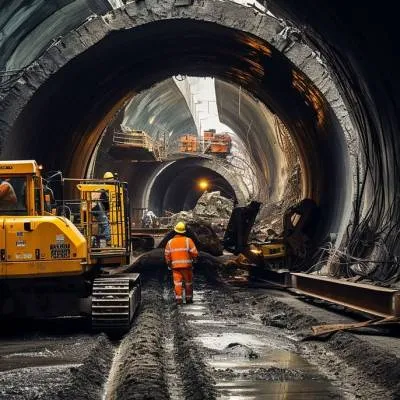
The Mumbai-Ahmedabad high speed rail (MAHSR) project reached a milestone with the breakthrough of a mountain tunnel in Palghar, Maharashtra. Mountain tunnel MT-six measures 454 metres long and 14.4 metres wide and will accommodate up and down tracks. The breakthrough follows MT-five near Saphale on second January 2026 and the MT-six excavation was completed from both ends using the New Austrian Tunnelling Method. The ministry reported that the tunnelling was completed within 12 months.

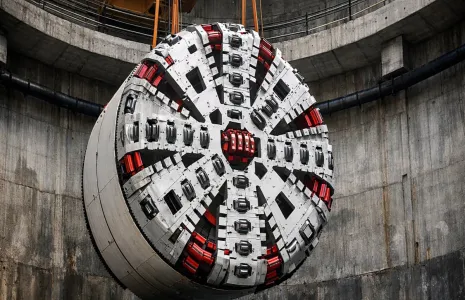
The New Austrian Tunnelling Method is favoured for its flexibility in complex geology and irregular tunnel shapes where tunnel boring machines are less suitable. Excavation employed controlled drill and blast techniques with shotcreting, rock bolts and lattice girders, avoiding very heavy machinery. Safety was ensured through geotechnical instruments, real time monitoring, fire safety measures, ventilation and controlled access.

The rail minister congratulated the project team and noted the pace of work had instilled renewed confidence and drawn global attention to construction innovations. The ministry highlighted that many advanced machines and technologies used on the project were manufactured in India and that the Gujarat section is expected to begin commercial operations next year. Officials projected that high speed services would extend to Thane by 2028 and that the corridor would reach Mumbai by 2029. Local representatives welcomed the breakthrough and the district was described as rapidly developing through multiple railway projects, with seven mountain tunnels under progress.

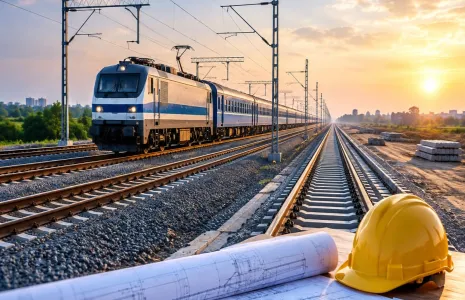
The MAHSR project spans approximately 508 kilometres, covering 352 km in Gujarat and Dadra and Nagar Haveli and 156 km in Maharashtra, and is expected to foster economic activity along the corridor. As on 27 January 2026 around 334 km of viaducts, 17 river bridges and 12 major crossings have been completed, while track laying and electrification have picked up pace in the Gujarat section. Work has also progressed on the longest river bridge on the Vaitarna, foundation works on Ulhas and Jagani, four stations, long span steel crossings and a 21 km tunnel between Bandra Kurla complex and Shilphata.

The Mumbai-Ahmedabad high speed rail (MAHSR) project reached a milestone with the breakthrough of a mountain tunnel in Palghar, Maharashtra. Mountain tunnel MT-six measures 454 metres long and 14.4 metres wide and will accommodate up and down tracks. The breakthrough follows MT-five near Saphale on second January 2026 and the MT-six excavation was completed from both ends using the New Austrian Tunnelling Method. The ministry reported that the tunnelling was completed within 12 months. The New Austrian Tunnelling Method is favoured for its flexibility in complex geology and irregular tunnel shapes where tunnel boring machines are less suitable. Excavation employed controlled drill and blast techniques with shotcreting, rock bolts and lattice girders, avoiding very heavy machinery. Safety was ensured through geotechnical instruments, real time monitoring, fire safety measures, ventilation and controlled access. The rail minister congratulated the project team and noted the pace of work had instilled renewed confidence and drawn global attention to construction innovations. The ministry highlighted that many advanced machines and technologies used on the project were manufactured in India and that the Gujarat section is expected to begin commercial operations next year. Officials projected that high speed services would extend to Thane by 2028 and that the corridor would reach Mumbai by 2029. Local representatives welcomed the breakthrough and the district was described as rapidly developing through multiple railway projects, with seven mountain tunnels under progress. The MAHSR project spans approximately 508 kilometres, covering 352 km in Gujarat and Dadra and Nagar Haveli and 156 km in Maharashtra, and is expected to foster economic activity along the corridor. As on 27 January 2026 around 334 km of viaducts, 17 river bridges and 12 major crossings have been completed, while track laying and electrification have picked up pace in the Gujarat section. Work has also progressed on the longest river bridge on the Vaitarna, foundation works on Ulhas and Jagani, four stations, long span steel crossings and a 21 km tunnel between Bandra Kurla complex and Shilphata.

Next Story
Infrastructure Transport

Modi Government Pushes Atmanirbhar Container Drive With BCSL MoU

The Union Government advanced a plan to create an integrated, domestically anchored container ecosystem with the signing of a Memorandum of Understanding to establish the Bharat Container Shipping Line (BCSL). The MoU was signed by key agencies including the Shipping Corporation of India and Container Corporation of India alongside major port authorities and Sagarmala Finance Corporation Limited under the Ministry of Ports, Shipping and Waterways, in the presence of senior ministers. The initiative aligns with the Container Manufacturing Assistance Scheme announced in the Union Budget 2026–2..

Next Story
Infrastructure Urban

Ministry Reports Gains In Mobility For Marginalised Communities

The Ministry of Social Justice and Empowerment is implementing skill development, education and rehabilitation schemes to promote socio-economic mobility and sustainable livelihoods for marginalised and disadvantaged communities across the country. Programmes target Scheduled Castes, Other Backward Classes, Economically Weaker Sections, De-notified Tribes and Safai Karamcharis through specialised implementing corporations and empanelled training institutes. Pradhan Mantri Dakshata Aur Kushalta Sampann Hitgrahi Yojana, or PM-DAKSH, provided skill training and placement support through the Nati..

Next Story
Infrastructure Urban

Long Term Care Infrastructure For Senior Citizens

The Ministry of Social Justice and Empowerment is implementing schemes to strengthen long term care, assisted living and support systems for senior citizens nationwide. The Longitudinal Ageing Study in India (LASI) under the Ministry of Health and Family Welfare found that 23.8 per cent of persons aged 60 years and above have at least one limitation in Activities of Daily Living (ADL), indicating care dependency. Policy measures target both community and institutional care. Atal Vayo Abhyudaya Yojana (AVYAY) has been in effect since 1 April 2021 to coordinate welfare for older persons. The In..

Advertisement

Subscribe to Our Newsletter

Get daily newsletters around different themes from Construction world.

STAY CONNECTED

Advertisement

Advertisement

Advertisement

Open In App