+
India to play a leadership role in RE sector in the future: Piyush Goyal
POWER & RENEWABLE ENERGY

India to play a leadership role in RE sector in the future: Piyush Goyal

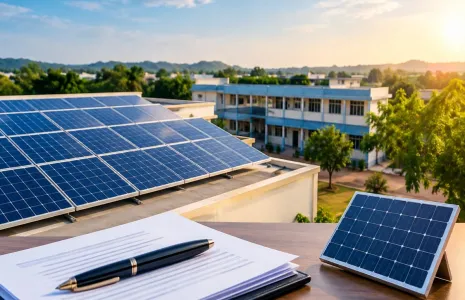
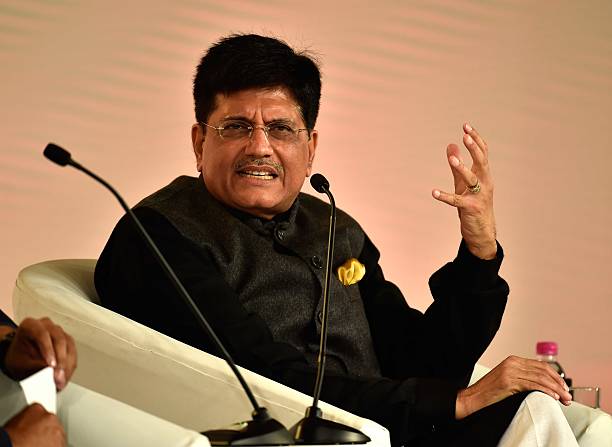
Minister of Commerce and Industry, Consumer Affairs, Food and Public Distribution, and Textiles, Piyush Goyal, told the media that India would be a leader in renewable energy in the coming years, addressing the Valedictory Session of the second Aatmanirhar Bharat Self-Reliance for Renewable Energy Manufacturing.

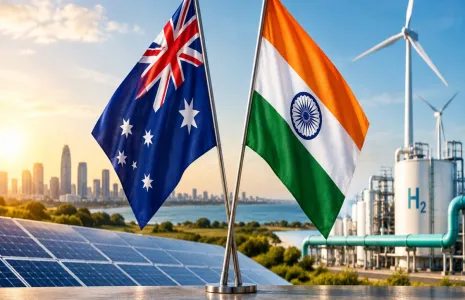
Seeing the progress of renewables in the country, he said that the initial stage of hydro-power is already attracting Hydrogen technologies. The Hydrogen Energy Mission in 2021-22 for generating hydrogen from green power has been launched.

The LED Mission was another success under PM Narendra Modi. LEDs have saved the country's billions of dollars in electricity, and it has reduced carbon emissions by over 120 million tonnes each year, he said.

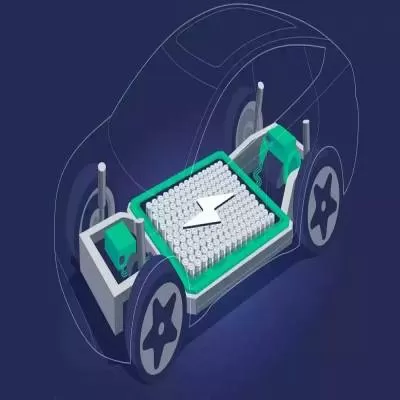
Goyal said that the Ministry would encourage electric vehicle owners to charge their batteries using renewable or solar energy, for which the industries are looking to introduce charging stations across the gas stations in the country. According to him, battery technologies will be crucial for sustainability and for progressing renewable energy.

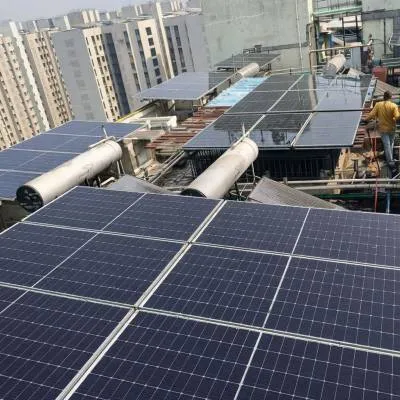
Goyal said that by 2023-24 India would be blending 20% ethanol in petrol products. The target is to have vehicles that can take up to 100% ethanol. They aim to make India realise its electricity needs more sustainably and also balance the electricity cost in such a way that it does not affect the development goals. With a renewable energy target of 175 GW by 2022, India is now looking forward to 450 GW by 2030.

India's movement towards wind power and importation of wind equipment made it one of the biggest manufacturers of wind equipment, he said.

Image Source


Also read: Prince Charles lauds India's solar power efforts

Also read: US-based 1366 Technologies to invest $300 mn for solar module in India

Minister of Commerce and Industry, Consumer Affairs, Food and Public Distribution, and Textiles, Piyush Goyal, told the media that India would be a leader in renewable energy in the coming years, addressing the Valedictory Session of the second Aatmanirhar Bharat Self-Reliance for Renewable Energy Manufacturing. Seeing the progress of renewables in the country, he said that the initial stage of hydro-power is already attracting Hydrogen technologies. The Hydrogen Energy Mission in 2021-22 for generating hydrogen from green power has been launched. The LED Mission was another success under PM Narendra Modi. LEDs have saved the country's billions of dollars in electricity, and it has reduced carbon emissions by over 120 million tonnes each year, he said. Goyal said that the Ministry would encourage electric vehicle owners to charge their batteries using renewable or solar energy, for which the industries are looking to introduce charging stations across the gas stations in the country. According to him, battery technologies will be crucial for sustainability and for progressing renewable energy. Goyal said that by 2023-24 India would be blending 20% ethanol in petrol products. The target is to have vehicles that can take up to 100% ethanol. They aim to make India realise its electricity needs more sustainably and also balance the electricity cost in such a way that it does not affect the development goals. With a renewable energy target of 175 GW by 2022, India is now looking forward to 450 GW by 2030. India's movement towards wind power and importation of wind equipment made it one of the biggest manufacturers of wind equipment, he said. Image Source Also read: Prince Charles lauds India's solar power efforts Also read: US-based 1366 Technologies to invest $300 mn for solar module in India

Related Stories

Gold Stories

Next Story
Infrastructure Transport

Mumbai-Ahmedabad Bullet Train’s Surat-Vapi Section Set for 2027

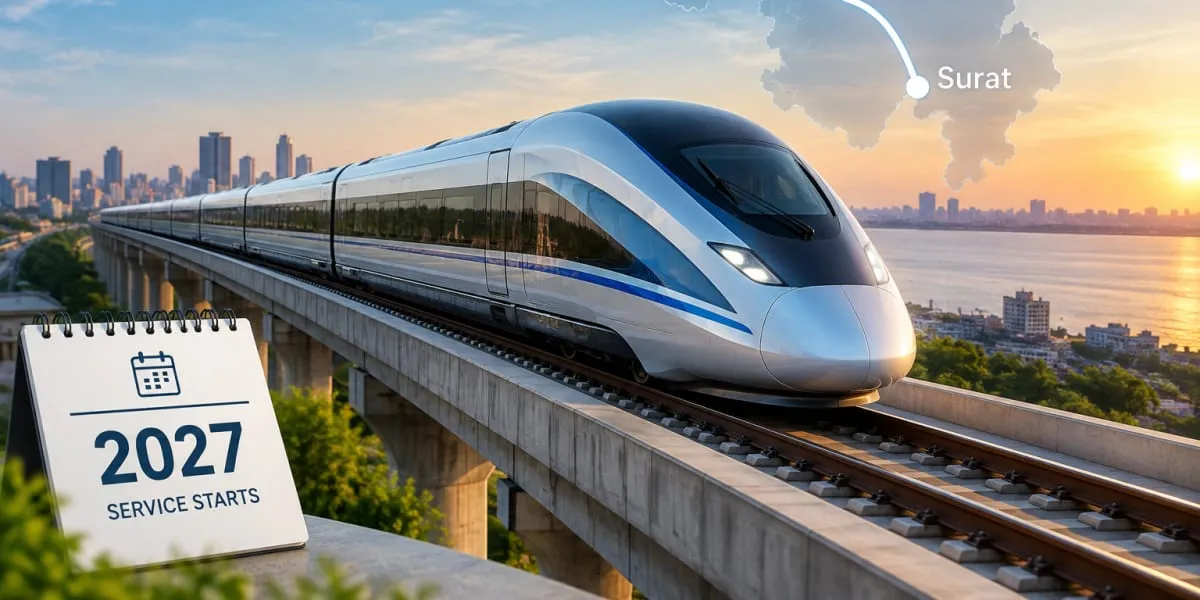
The first section of the Mumbai-Ahmedabad Bullet Train corridor, linking Surat and Vapi, is targeted to begin services in 2027. Construction is expected to be completed by December 2026, while Railway Minister Ashwini Vaishnaw has indicated that an inauguration could take place around the middle of 2027. The National High Speed Rail Corporation (NHSRCL) said the train being manufactured in India is expected to reach the tracks around April or May 2027. The train will undergo extensive testing before the section is opened for passenger services. The project began construction in 2021 and includ..
Next Story
Infrastructure Transport

Indian Railways Approves Four Projects Worth Rs. 7.36 bn Across Four States

Indian Railways has approved four projects with a combined value of Rs. 7.36 bn across Uttar Pradesh, Maharashtra, Andhra Pradesh and Gujarat. The programme covers train protection, signalling, electric traction supply and a road overbridge, with each project assigned to a different railway zone. In Uttar Pradesh, Rs. 2.52 bn has been approved to extend the Kavach 4.0 automatic train protection system across 607.7 km in the Lucknow Division of North Eastern Railway. The system monitors train movements and can apply the brakes if a driver fails to observe a signal or exceeds a safe speed. The w..
Next Story
Infrastructure Urban

Chandru Raheja Sells 1.49% Stake in Mindspace REIT for Rs. 5 bn

Billionaire Chandru Lachmandas Raheja has sold a 1.49 per cent holding in Mindspace Business Parks REIT for Rs. 5 bn through a bulk deal on the BSE. The transaction involved 9.9 mn units and was executed at an average price of Rs. 505 per unit, according to exchange data. Following the sale, units of Mindspace Business Parks REIT were trading 0.18 per cent lower at Rs. 504.05 on Tuesday. Exchange data did not identify the buyers involved in the transaction. Raheja is the chairman of real estate company K Raheja Corp. The sale involved 99,00,990 units, representing 1.49 per cent of the Mumbai-b..

Advertisement

Subscribe to Our Newsletter

Get daily newsletters around different themes from Construction world.

STAY CONNECTED

Advertisement

SPECIAL OFFER
QR Code