+
India’s 500 GW Clean Power Target Needs Grid Stability Milestones
POWER & RENEWABLE ENERGY

India’s 500 GW Clean Power Target Needs Grid Stability Milestones

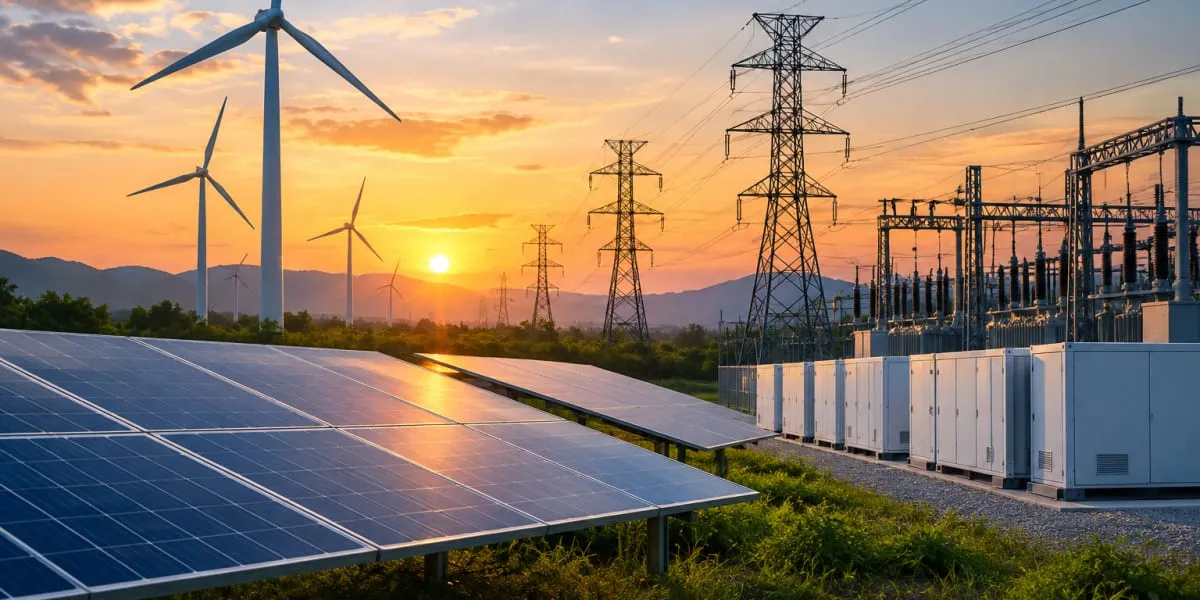
India’s 500 GW non-fossil fuel capacity target for 2030 needs to be accompanied by parallel grid-stability milestones, according to a joint report by the Federation of Indian Chambers of Commerce and Industry (FICCI) and Nangia. The report said the expansion of clean power must be supported by corresponding improvements in transmission, storage and institutional capacity.

Titled Grid Stability in India: From Diagnostic Assessment to a Reform and Implementation Roadmap, the report said the power grid is absorbing a growing share of smaller, weather-dependent and power-electronics-based generation. It noted that these changes are increasing the need for stronger system planning and operational coordination as renewable energy capacity expands across the country.

The report recommended resolving the legal framework for grid-forming technologies and establishing consistent definitions and thresholds for battery energy storage systems (BESS) above 50 MW. It also called for minimum national requirements covering grid inertia, the rate of change of frequency and system strength, including in regions with high concentrations of renewable energy projects.

Further recommendations included completing corridor-identification exercises for grid-enhancing technologies and congestion management. The report proposed a national framework for deviation settlement and demand flexibility, with defined parameters that would allow states to exercise discretion within agreed ranges. It also recommended blended finance for early-stage or higher-risk projects involving grid-forming technologies and measures designed to strengthen the power system.

The recommendations seek to align India’s clean power growth with the technical and regulatory systems required to maintain reliable electricity supply. By establishing common standards and clearer institutional responsibilities, the proposed measures would provide a framework for managing variability, congestion and changing system conditions as renewable generation increases.

India’s 500 GW non-fossil fuel capacity target for 2030 needs to be accompanied by parallel grid-stability milestones, according to a joint report by the Federation of Indian Chambers of Commerce and Industry (FICCI) and Nangia. The report said the expansion of clean power must be supported by corresponding improvements in transmission, storage and institutional capacity. Titled Grid Stability in India: From Diagnostic Assessment to a Reform and Implementation Roadmap, the report said the power grid is absorbing a growing share of smaller, weather-dependent and power-electronics-based generation. It noted that these changes are increasing the need for stronger system planning and operational coordination as renewable energy capacity expands across the country. The report recommended resolving the legal framework for grid-forming technologies and establishing consistent definitions and thresholds for battery energy storage systems (BESS) above 50 MW. It also called for minimum national requirements covering grid inertia, the rate of change of frequency and system strength, including in regions with high concentrations of renewable energy projects. Further recommendations included completing corridor-identification exercises for grid-enhancing technologies and congestion management. The report proposed a national framework for deviation settlement and demand flexibility, with defined parameters that would allow states to exercise discretion within agreed ranges. It also recommended blended finance for early-stage or higher-risk projects involving grid-forming technologies and measures designed to strengthen the power system. The recommendations seek to align India’s clean power growth with the technical and regulatory systems required to maintain reliable electricity supply. By establishing common standards and clearer institutional responsibilities, the proposed measures would provide a framework for managing variability, congestion and changing system conditions as renewable generation increases.

Related Stories

Gold Stories

Next Story
Building Material

Cement Prices Rise Rs. 7 per Bag in September; October Hikes Expected

Cement companies may seek to raise prices by Rs. 5 to Rs. 20 per bag across most markets in October, although the ability to sustain the increases will depend on demand recovery and dealer acceptance, according to a report by Centrum Broking. The outlook follows a pickup in pricing momentum during September after largely stable prices in July and August. The all-India average trade price increased by Rs. 7 per bag month-on-month to Rs. 356 in September. Centrum Broking’s channel checks indicated gains across both trade and non-trade segments, with non-trade prices recording sharper increases..

Next Story
Products

Minister G Kishan Reddy Says No Coal Shortage Despite Higher Power Demand

Union Coal and Mines Minister G Kishan Reddy said India was not facing a coal shortage despite higher demand from thermal power plants, monsoon-related disruptions in mining operations and lower hydropower generation. He said coal was being supplied to power stations through railway rakes and road transport. Reddy made the remarks on Monday on the sidelines of the Assocham-organised Angul Aluminium Roadshow in Kolkata. His comments came amid reports of alleged supply constraints at some power plants, although he said the temporary interruptions should not be interpreted as a broader shortage. ..

Next Story
Infrastructure Energy

Bondada Engineering Secures Rs. 1.47 bn in Multiple Orders

Bondada Engineering has secured multiple domestic orders with an aggregate value of Rs. 1.47 bn, the company disclosed in a filing with BSE on September 29, 2026. The orders cover telecom infrastructure, renewable energy and energy-efficient lighting solutions, and are inclusive of taxes. Bondada Green Engineering, a subsidiary of Bondada Engineering, received an order for the supply of 200 telecom towers under the BSNL 40GBT project in Gujarat. The award forms part of the company’s telecom infrastructure business and is linked to requirements in the state. Bondada Renewable Energy, another ..

Advertisement

Subscribe to Our Newsletter

Get daily newsletters around different themes from Construction world.

STAY CONNECTED

Advertisement

SPECIAL OFFER
QR Code