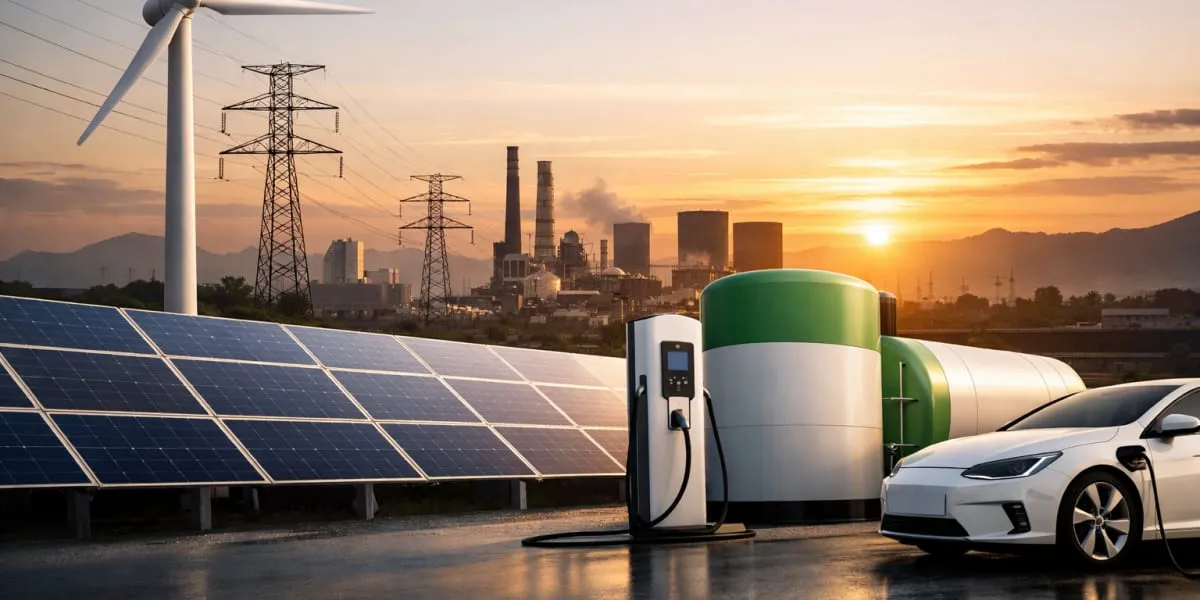
India's Clean Energy Push Anchored in Aatmanirbharta
POWER & RENEWABLE ENERGY

India's Clean Energy Push Anchored in Aatmanirbharta

At the CII Annual Business Summit 2026 in Delhi, the Union Minister for New and Renewable Energy and Consumer Affairs, Food and Public Distribution, Shri Pralhad Joshi, said India’s clean energy transition is central to industrial competitiveness and long-term economic resilience. He said the drive towards 500 GW of non-fossil fuel capacity is laying the foundation for a globally competitive, innovation-driven and Aatmanirbharta energy ecosystem. The minister framed the shift as integral to trade positioning and future growth.

He said Aatmanirbharta now stands as a recognised framework for resilient, sustainable growth and pointed to India’s Vaccine Maitri initiative as an example of domestic capability supporting global responsibility. He noted that the Unified Payments Interface has set global benchmarks and that defence manufacturing exports such as BrahMos missiles signal growing technological self-reliance. He recalled recent appeals by the prime minister promoting more self-reliant ways of living and working.

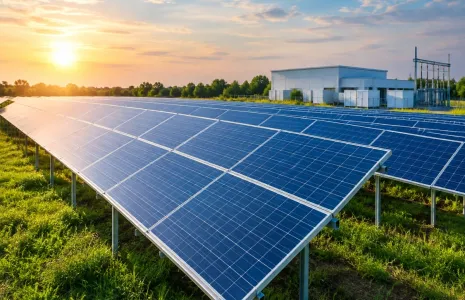
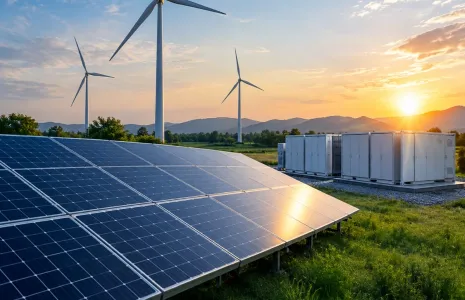
The minister cited rapid capacity expansion and noted that India’s non-fossil fuel capacity rose from 81 GW in 2014 to 288 GW at present, representing growth of over 256 per cent. He said solar capacity increased from two point eight GW to 155 GW and wind capacity grew from 21 GW to 56.4 GW, while renewables supplied nearly one-third of the record peak demand of 256 GW. He added that even as global renewable investments fell by around seven per cent, India continued to attract robust investment.

He outlined policy measures intended to provide stability and boost domestic value addition, including Renewable Consumption Obligation trajectories, carbon credit certificate regulations, green ammonia procurement frameworks, a standardised warranty regime for solar PV modules, and the Renewable Energy Equipment Import Monitoring System alongside tax and duty reforms. The minister said the next phase requires closer integration of generation, storage and transmission and improved grid resilience, with green hydrogen, battery storage and pumped hydro among the priorities. He invited industry and investors to the Renewable Energy Investors Meet and said that with scale, speed, skill and Aatmanirbharta India will meet the 500 GW target by 2030.

At the CII Annual Business Summit 2026 in Delhi, the Union Minister for New and Renewable Energy and Consumer Affairs, Food and Public Distribution, Shri Pralhad Joshi, said India’s clean energy transition is central to industrial competitiveness and long-term economic resilience. He said the drive towards 500 GW of non-fossil fuel capacity is laying the foundation for a globally competitive, innovation-driven and Aatmanirbharta energy ecosystem. The minister framed the shift as integral to trade positioning and future growth. He said Aatmanirbharta now stands as a recognised framework for resilient, sustainable growth and pointed to India’s Vaccine Maitri initiative as an example of domestic capability supporting global responsibility. He noted that the Unified Payments Interface has set global benchmarks and that defence manufacturing exports such as BrahMos missiles signal growing technological self-reliance. He recalled recent appeals by the prime minister promoting more self-reliant ways of living and working. The minister cited rapid capacity expansion and noted that India’s non-fossil fuel capacity rose from 81 GW in 2014 to 288 GW at present, representing growth of over 256 per cent. He said solar capacity increased from two point eight GW to 155 GW and wind capacity grew from 21 GW to 56.4 GW, while renewables supplied nearly one-third of the record peak demand of 256 GW. He added that even as global renewable investments fell by around seven per cent, India continued to attract robust investment. He outlined policy measures intended to provide stability and boost domestic value addition, including Renewable Consumption Obligation trajectories, carbon credit certificate regulations, green ammonia procurement frameworks, a standardised warranty regime for solar PV modules, and the Renewable Energy Equipment Import Monitoring System alongside tax and duty reforms. The minister said the next phase requires closer integration of generation, storage and transmission and improved grid resilience, with green hydrogen, battery storage and pumped hydro among the priorities. He invited industry and investors to the Renewable Energy Investors Meet and said that with scale, speed, skill and Aatmanirbharta India will meet the 500 GW target by 2030.

Next Story
Infrastructure Urban

Maharashtra Clears Rs 317.93 Bn For Virar Alibaug Corridor

Maharashtra has granted administrative approval for phase one of the 14-lane Virar-Alibaug Multi-Modal Transport Corridor, an access-controlled route to improve connectivity across the Mumbai Metropolitan Region and link the Jawaharlal Nehru Port Authority, Navi Mumbai International Airport and the Mumbai Trans Harbour Link. The first phase spans 126.06 km and is estimated at Rs 317.93 billion. The Urban Development Department lists the construction cost at Rs 215.34 billion. The alignment is proposed through 104 villages across Vasai, Bhiwandi, Kalyan, Ambernath, Panvel, Uran, Pen and Alibaug..

Next Story
Infrastructure Urban

Gurugram To Control Streetlights Via Mobile App

The Municipal Corporation of Gurugram has announced a mobile app based system to operate and monitor the city streetlighting network as part of a smart city upgrade. The initiative will bring 0.112 million streetlights under digital control, replacing the previous practice in which workers manually switched lights across different sectors. The programme is intended to improve maintenance efficiency and strengthen the digital infrastructure of the city. The move aligns with broader urban digitalisation efforts in the region. The platform will allow officials to operate the streetlights remotely..

Next Story
Technology

Ahmedabad Plans Singapore Style Artificial Intelligence Indoor Garden

Ahmedabad will host a proposed Singapore style indoor garden on the Sabarmati Riverfront, a project unveiled at the Vibrant Gujarat regional conference by Simon Wong. The proposal, modelled on Singapore's Gardens by the Bay, aims to blend architecture, ecology and technology to create a year-round attraction. Organisers positioned the scheme as part of broader smart city and tourism ambitions for the region. The project is planned as a climate-controlled dome designed to recreate a tropical forest environment with artificial rain simulation, immersive fog and dense tropical plantations. Advanc..

Advertisement

Subscribe to Our Newsletter

Get daily newsletters around different themes from Construction world.

STAY CONNECTED

Advertisement

Advertisement

Advertisement