I4C And RBIH Sign MoU To Strengthen AI Detection Of Mule Accounts
ECONOMY & POLICY

I4C And RBIH Sign MoU To Strengthen AI Detection Of Mule Accounts

Indian Cyber Crime Coordination Centre (I4C), Ministry of Home Affairs, and Reserve Bank Innovation Hub (RBIH) have signed a Memorandum of Understanding (MoU) to strengthen collaboration in combating cyber?enabled financial frauds and curtailing mule accounts across the banking and digital payments ecosystem. The agreement is intended to facilitate cooperation in fraud?risk intelligence sharing, analytical support and operational coordination to reinforce proactive fraud detection and prevention mechanisms. The partnership is described as a step towards integrating institutional capabilities to address increasingly sophisticated digital threats.

The Union Home Minister and Minister of Cooperation, Shri Amit Shah, posted on X that the government is working to make the country cyber secure and that mule accounts present significant hurdles to curbing cybercrime. He said the MoU will allow data from I4C's Suspect Registry to be fed into AI driven fraud detection systems and that this integration should help detect and remove hidden mule accounts more swiftly. The announcement framed the move as strengthening protections for citizens using digital banking services.

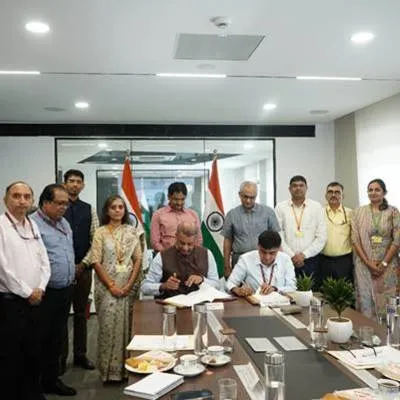
The MoU was signed by Smt Roopa M, IG (Admin), I4C, and Shri Sahil Kinni, CEO, RBIH, in the presence of senior officials including the Deputy Governor of the Reserve Bank of India and senior officers from the Ministry of Home Affairs and I4C. The ceremony underscored inter?agency coordination and the intent to operationalise the protocols required for secure data exchange and model training. Institutional collaboration is expected to accelerate deployment of enhanced detection tools across regulated entities.

Under the agreement, I4C will share mule account related intelligence and suspect identifiers from its Suspect Registry with RBIH for use in training and enhancing AI driven fraud?risk assessment models, including MuleHunter.ai. RBIH will utilise the datasets to refine detection frameworks implemented across banks and payment platforms and to support resilience of the digital payments ecosystem. The I4C will continue to operate reporting and intelligence platforms such as the National Cybercrime Reporting Portal and the Suspect Registry as part of a broader response architecture to protect citizens and strengthen trust in digital financial services.

Indian Cyber Crime Coordination Centre (I4C), Ministry of Home Affairs, and Reserve Bank Innovation Hub (RBIH) have signed a Memorandum of Understanding (MoU) to strengthen collaboration in combating cyber?enabled financial frauds and curtailing mule accounts across the banking and digital payments ecosystem. The agreement is intended to facilitate cooperation in fraud?risk intelligence sharing, analytical support and operational coordination to reinforce proactive fraud detection and prevention mechanisms. The partnership is described as a step towards integrating institutional capabilities to address increasingly sophisticated digital threats. The Union Home Minister and Minister of Cooperation, Shri Amit Shah, posted on X that the government is working to make the country cyber secure and that mule accounts present significant hurdles to curbing cybercrime. He said the MoU will allow data from I4C's Suspect Registry to be fed into AI driven fraud detection systems and that this integration should help detect and remove hidden mule accounts more swiftly. The announcement framed the move as strengthening protections for citizens using digital banking services. The MoU was signed by Smt Roopa M, IG (Admin), I4C, and Shri Sahil Kinni, CEO, RBIH, in the presence of senior officials including the Deputy Governor of the Reserve Bank of India and senior officers from the Ministry of Home Affairs and I4C. The ceremony underscored inter?agency coordination and the intent to operationalise the protocols required for secure data exchange and model training. Institutional collaboration is expected to accelerate deployment of enhanced detection tools across regulated entities. Under the agreement, I4C will share mule account related intelligence and suspect identifiers from its Suspect Registry with RBIH for use in training and enhancing AI driven fraud?risk assessment models, including MuleHunter.ai. RBIH will utilise the datasets to refine detection frameworks implemented across banks and payment platforms and to support resilience of the digital payments ecosystem. The I4C will continue to operate reporting and intelligence platforms such as the National Cybercrime Reporting Portal and the Suspect Registry as part of a broader response architecture to protect citizens and strengthen trust in digital financial services.

Next Story
Infrastructure Urban

Maharashtra Clears Rs 317.93 Bn For Virar Alibaug Corridor

Maharashtra has granted administrative approval for phase one of the 14-lane Virar-Alibaug Multi-Modal Transport Corridor, an access-controlled route to improve connectivity across the Mumbai Metropolitan Region and link the Jawaharlal Nehru Port Authority, Navi Mumbai International Airport and the Mumbai Trans Harbour Link. The first phase spans 126.06 km and is estimated at Rs 317.93 billion. The Urban Development Department lists the construction cost at Rs 215.34 billion. The alignment is proposed through 104 villages across Vasai, Bhiwandi, Kalyan, Ambernath, Panvel, Uran, Pen and Alibaug..

Next Story
Infrastructure Urban

Gurugram To Control Streetlights Via Mobile App

The Municipal Corporation of Gurugram has announced a mobile app based system to operate and monitor the city streetlighting network as part of a smart city upgrade. The initiative will bring 0.112 million streetlights under digital control, replacing the previous practice in which workers manually switched lights across different sectors. The programme is intended to improve maintenance efficiency and strengthen the digital infrastructure of the city. The move aligns with broader urban digitalisation efforts in the region. The platform will allow officials to operate the streetlights remotely..

Next Story
Technology

Ahmedabad Plans Singapore Style Artificial Intelligence Indoor Garden

Ahmedabad will host a proposed Singapore style indoor garden on the Sabarmati Riverfront, a project unveiled at the Vibrant Gujarat regional conference by Simon Wong. The proposal, modelled on Singapore's Gardens by the Bay, aims to blend architecture, ecology and technology to create a year-round attraction. Organisers positioned the scheme as part of broader smart city and tourism ambitions for the region. The project is planned as a climate-controlled dome designed to recreate a tropical forest environment with artificial rain simulation, immersive fog and dense tropical plantations. Advanc..

Advertisement

Subscribe to Our Newsletter

Get daily newsletters around different themes from Construction world.

STAY CONNECTED

Advertisement

Advertisement

Advertisement