India's Private Nuclear Sector Seen Investing Rs. 7.5 tn by 2047
POWER & RENEWABLE ENERGY

India's Private Nuclear Sector Seen Investing Rs. 7.5 tn by 2047

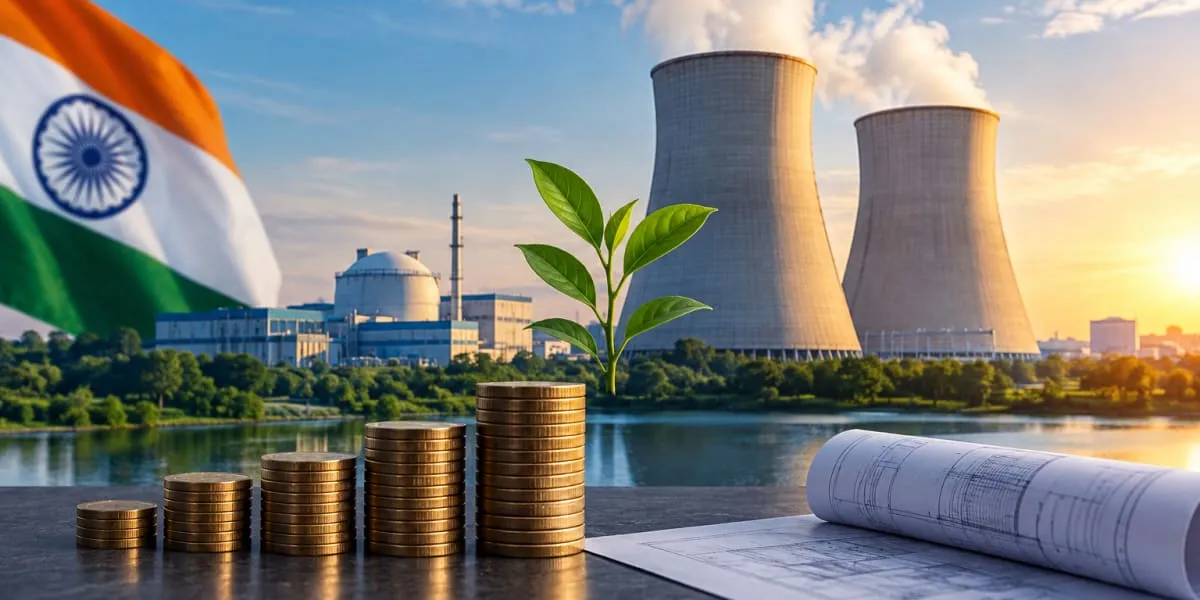
India’s private sector is expected to invest about Rs. 7.5 tn and contribute 30 GW to the country’s planned 100 GW nuclear power capacity by 2047, Atomic Energy Commission Chairman Ajit Kumar Mohanty said. India currently has about 9 GW of installed nuclear capacity, while the government is seeking to accelerate expansion beyond the traditional public-sector model.

Nuclear Power Corporation of India (NPCIL) operates 24 reactors with a combined capacity of about 9 GW. A further 17 reactors, with total capacity of around 13 GW, are at various stages of implementation. Mohanty said private companies were assessing reactor technologies, fuel arrangements, land requirements and possible partnerships with NPCIL and overseas technology providers.

The Sustainable Harnessing and Advancement of Nuclear Energy for Transforming India Act, enacted in December 2025, opened the sector to wider participation by public and private entities while retaining sovereign control over sensitive activities. Nuclear projects generally require five to seven years to build, depending on technology, regulatory approvals and construction requirements. The estimated cost of generating 1 MW is about Rs. 250 mn.

India is also exploring small modular reactors for specialised requirements in industries such as steel and cement. These reactors could support captive power at individual facilities or groups of industrial units, subject to reactor design, regulatory provisions and the commercial model adopted. Electricity costs from new nuclear projects will remain a significant consideration for investors and power purchasers.

The expansion is linked to India’s three-stage nuclear programme, which aims to increase use of domestic resources, including thorium. The first stage uses uranium-fuelled reactors, while the second is based on fast breeder technology. The Prototype Fast Breeder Reactor at Kalpakkam achieved first criticality in April 2026, marking India’s entry into the second stage. The country has also signed civil nuclear cooperation agreements with 18 countries, creating scope for further technology and engineering partnerships.

India’s private sector is expected to invest about Rs. 7.5 tn and contribute 30 GW to the country’s planned 100 GW nuclear power capacity by 2047, Atomic Energy Commission Chairman Ajit Kumar Mohanty said. India currently has about 9 GW of installed nuclear capacity, while the government is seeking to accelerate expansion beyond the traditional public-sector model. Nuclear Power Corporation of India (NPCIL) operates 24 reactors with a combined capacity of about 9 GW. A further 17 reactors, with total capacity of around 13 GW, are at various stages of implementation. Mohanty said private companies were assessing reactor technologies, fuel arrangements, land requirements and possible partnerships with NPCIL and overseas technology providers. The Sustainable Harnessing and Advancement of Nuclear Energy for Transforming India Act, enacted in December 2025, opened the sector to wider participation by public and private entities while retaining sovereign control over sensitive activities. Nuclear projects generally require five to seven years to build, depending on technology, regulatory approvals and construction requirements. The estimated cost of generating 1 MW is about Rs. 250 mn. India is also exploring small modular reactors for specialised requirements in industries such as steel and cement. These reactors could support captive power at individual facilities or groups of industrial units, subject to reactor design, regulatory provisions and the commercial model adopted. Electricity costs from new nuclear projects will remain a significant consideration for investors and power purchasers. The expansion is linked to India’s three-stage nuclear programme, which aims to increase use of domestic resources, including thorium. The first stage uses uranium-fuelled reactors, while the second is based on fast breeder technology. The Prototype Fast Breeder Reactor at Kalpakkam achieved first criticality in April 2026, marking India’s entry into the second stage. The country has also signed civil nuclear cooperation agreements with 18 countries, creating scope for further technology and engineering partnerships.

Related Stories

Gold Stories

Next Story
Resources

Kalpataru Projects International elevates Amit Uplenchwar as Joint MD and CEO

Kalpataru Projects International (KPIL) has elevated Amit Uplenchwar as Joint Managing Director and CEO (designate), following approval by its board on 5 November 2026. He will take charge as Additional Director, Joint Managing Director and CEO from 1 January 2027 for a five-year term ending 31 December 2031, subject to shareholders' approval.Uplenchwar brings over three decades of experience in corporate strategy, business operations, business development, mergers and acquisitions, and international business management. His experience spans transportation, power, water, oil and gas, aerospace..

Next Story
Resources

HCC appoints Vivek Singhal as CEO

Hindustan Construction Company (HCC) has appointed Vivek Singhal as Chief Executive Officer, effective 5 November 2026. He brings over four decades of experience in infrastructure and engineering, procurement and construction (EPC), covering project execution, business leadership, business development and profit and loss management.Singhal has spent 16 years in international markets, delivering projects and managing assets worth approximately Rs 285 billion across five countries. His experience spans airports, metro rail, urban transport, hydropower, bridges and other infrastructure sectors.He..
Next Story
Infrastructure Energy

Essar Signs PPA for 300 MW Hybrid Renewable Energy Project

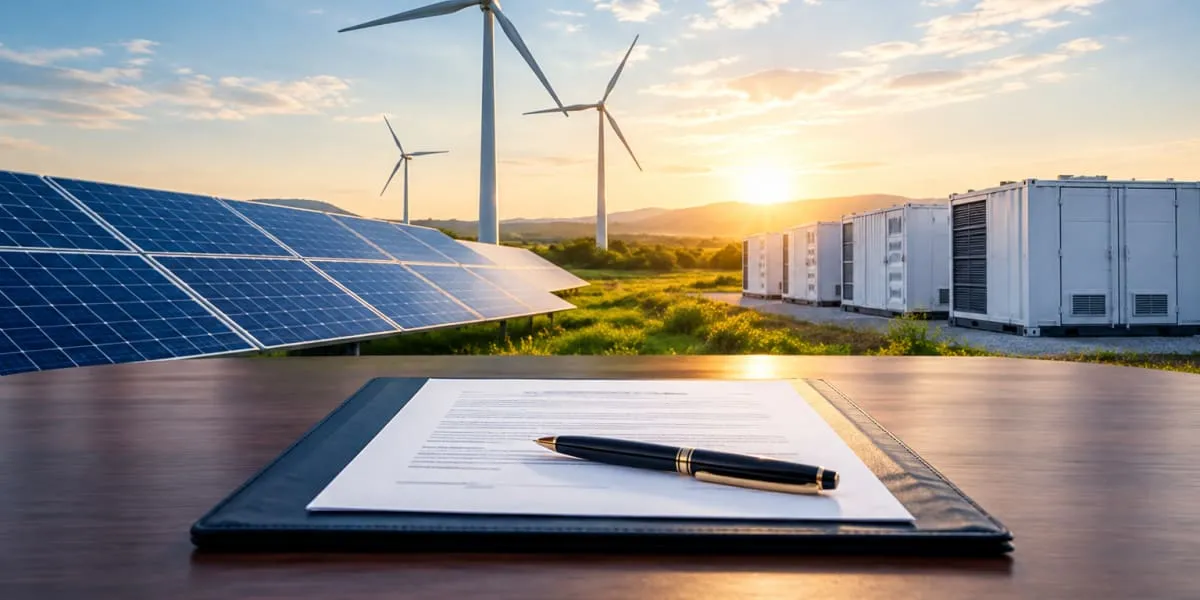
Essar Renewables, the renewable energy arm of Essar Power, has signed a Power Purchase Agreement (PPA) with NHPC for a 300 MW renewable energy project in Andhra Pradesh. The agreement follows the company’s successful bid for the project two years ago. Essar Power will invest approximately Rs. 45 bn in the development. The project will combine solar and wind generation with Battery Energy Storage Systems (BESS), enabling the supply of reliable and dispatchable renewable power. It forms part of Essar Power’s plan to build a diversified energy portfolio of approximately 5 GW across renewable,..

Advertisement

Subscribe to Our Newsletter

Get daily newsletters around different themes from Construction world.

STAY CONNECTED

Advertisement

SPECIAL OFFER
QR Code