India’s Renewable Energy Goal Needs LDES and FY28 VGF
POWER & RENEWABLE ENERGY

India’s Renewable Energy Goal Needs LDES and FY28 VGF

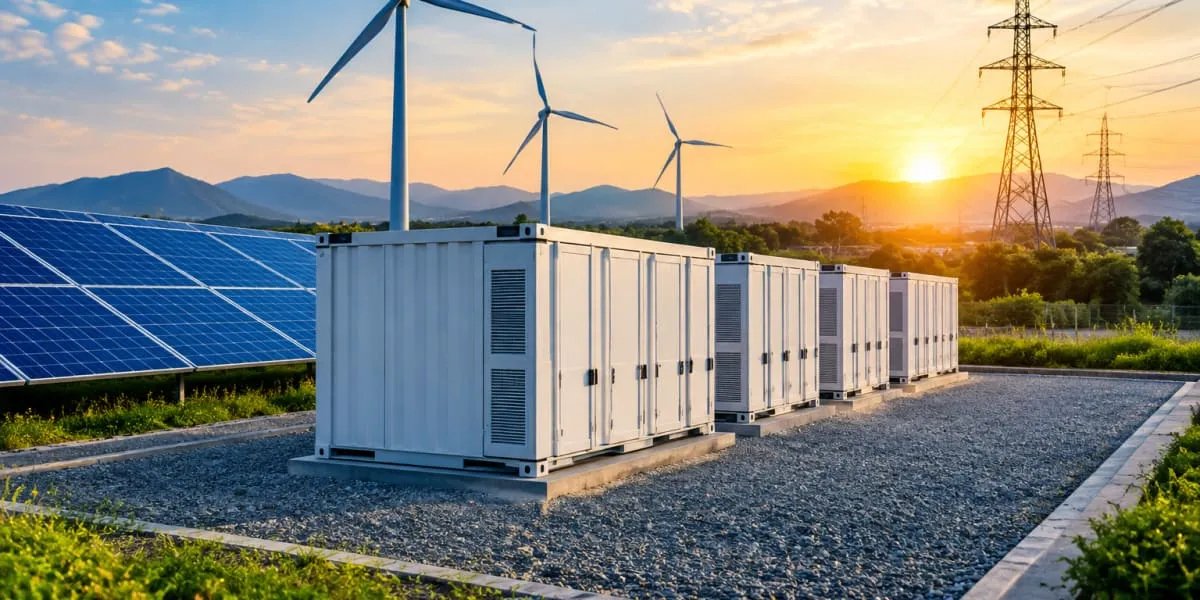
India’s target of achieving 500 GW of renewable energy capacity by 2030 depends on the rapid expansion of long-duration energy storage (LDES), with viability gap funding (VGF) in FY28 identified as a critical enabler, according to a report by the India Energy Storage Alliance (IESA) and Customized Energy Solutions. The report said the focus must now move beyond capacity addition towards integrating and optimising renewable resources.

LDES is needed to support grid stability, renewable integration and energy resilience by storing surplus electricity and dispatching it during periods of high demand or weak generation. India curtailed 2.3 terawatt-hours (TWh) of solar power during eight months in 2025 because of grid and storage constraints, highlighting the need for greater flexibility and reduced renewable energy wastage.

The LDES Council estimates that global requirements will reach 8 terawatts (TW) of capacity, equivalent to 140 TWh of storage, by 2040. Against this, 117 GW was operational globally in 2025, meaning deployment must rise nearly 50-fold. Meeting the requirement is expected to involve USD 4 tn in capital investment and could generate about USD 540 bn in annual system-wide savings.

India’s Central Electricity Authority has projected a battery energy storage system requirement of 34.5 GWh by FY2027. While 9.3 GWh has been commissioned and 195 GWh of projects have been awarded or put out to tender, the pipeline is concentrated on short-duration systems, creating a need to diversify into technologies capable of extended grid balancing and resource adequacy.

The report identified flow batteries, iron-air batteries, pumped hydro, compressed air and thermal energy storage as options for different applications. It said India also needs a formal statutory definition of LDES and dedicated funding for projects offering eight hours or more of storage. Policy support, technology-neutral investment and new business models were identified as necessary to accelerate deployment.

India’s target of achieving 500 GW of renewable energy capacity by 2030 depends on the rapid expansion of long-duration energy storage (LDES), with viability gap funding (VGF) in FY28 identified as a critical enabler, according to a report by the India Energy Storage Alliance (IESA) and Customized Energy Solutions. The report said the focus must now move beyond capacity addition towards integrating and optimising renewable resources. LDES is needed to support grid stability, renewable integration and energy resilience by storing surplus electricity and dispatching it during periods of high demand or weak generation. India curtailed 2.3 terawatt-hours (TWh) of solar power during eight months in 2025 because of grid and storage constraints, highlighting the need for greater flexibility and reduced renewable energy wastage. The LDES Council estimates that global requirements will reach 8 terawatts (TW) of capacity, equivalent to 140 TWh of storage, by 2040. Against this, 117 GW was operational globally in 2025, meaning deployment must rise nearly 50-fold. Meeting the requirement is expected to involve USD 4 tn in capital investment and could generate about USD 540 bn in annual system-wide savings. India’s Central Electricity Authority has projected a battery energy storage system requirement of 34.5 GWh by FY2027. While 9.3 GWh has been commissioned and 195 GWh of projects have been awarded or put out to tender, the pipeline is concentrated on short-duration systems, creating a need to diversify into technologies capable of extended grid balancing and resource adequacy. The report identified flow batteries, iron-air batteries, pumped hydro, compressed air and thermal energy storage as options for different applications. It said India also needs a formal statutory definition of LDES and dedicated funding for projects offering eight hours or more of storage. Policy support, technology-neutral investment and new business models were identified as necessary to accelerate deployment.

Related Stories

Gold Stories

Next Story
Infrastructure Urban

Jupiter Wagons Wins Rs. 3.24 bn ACT2 Wagon Orders from Private Firms

Jupiter Wagons has secured private-sector orders worth more than Rs. 3.24 bn from GATX India and Chetak International for its ACT2 automobile carrier wagons. The company announced the orders on 2 November 2026, saying the contracts would strengthen its business with private wagon-leasing and logistics operators. GATX India has issued a Letter of Intent (LOI) for the manufacture and supply of 10 rakes comprising 270 ACT2 wagons. The LOI is valued at Rs. 2.15 bn and covers the production and delivery of the company’s new-design automobile carrier platform. Chetak International has separately p..

Next Story
Infrastructure Urban

Tata Motors Takes Control of Iveco with 89.42 Per Cent Stake

Tata Motors has taken control of Italian commercial-vehicle maker Iveco after acquiring an 89.42 per cent stake for approximately €3.43 bn, or Rs. 363.87 bn. The transaction gives India’s largest commercial-vehicle manufacturer control of a European business with annual revenue of Rs. 1.42 tn, while shifting attention to integration, cash-flow generation and repayment of acquisition debt. TML CV Holdings B.V., Tata Motors’ indirect wholly owned subsidiary, acquired 238.16 mn common shares at €14.40 apiece. The holding represents 89.42 per cent of Iveco’s common share capital, excludi..

Next Story
Building Material

Ambuja Cements to Invest Rs. 145 bn to Raise Capacity by FY30

Ambuja Cements will invest Rs. 145 bn to expand its cement capacity to 155 mn tonnes per annum by fiscal 2030. The planned investment, equivalent to $1.53 bn, will increase production capacity from the company’s current level of 113.5 MTPA. The company expects capacity to reach 119 MTPA by March 2027, with the wider expansion programme adding facilities across several major cement markets. The investment is intended to support the company’s long-term growth and strengthen its manufacturing network in India. The new capacity will be developed across Assam, Bihar, Jharkhand, Gujarat, Maharas..

Advertisement

Subscribe to Our Newsletter

Get daily newsletters around different themes from Construction world.

STAY CONNECTED

Advertisement

SPECIAL OFFER
QR Code