+
International Symposium on Human-Centred AI and Energy Security
POWER & RENEWABLE ENERGY

International Symposium on Human-Centred AI and Energy Security

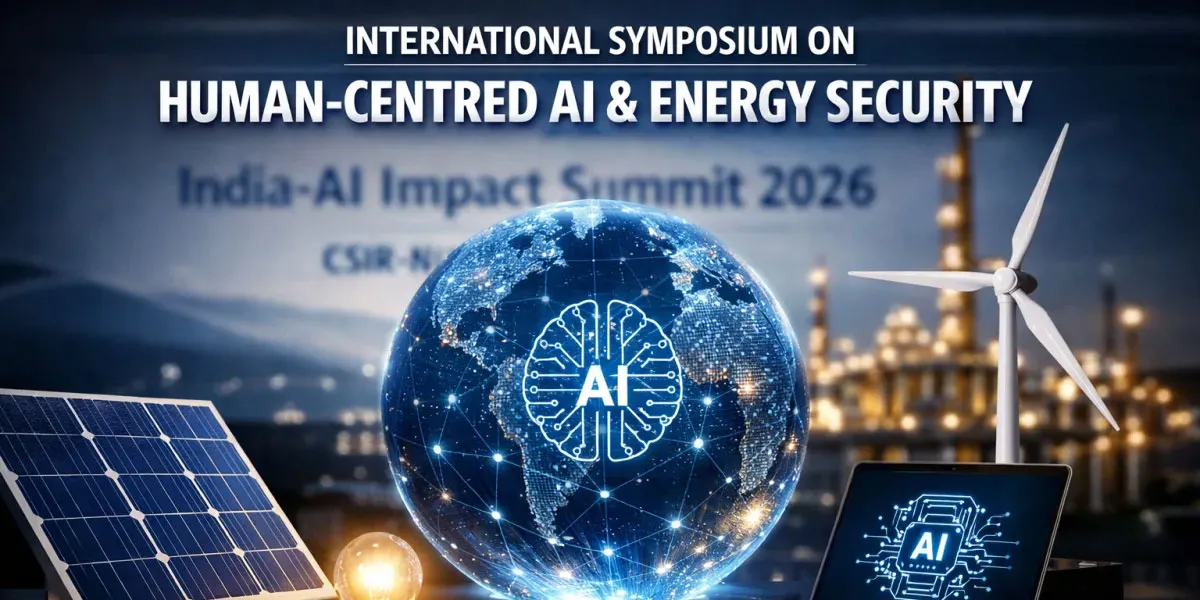
CSIR-National Institute of Science Communication and Policy Research organised an international symposium on human-centred artificial intelligence and sustainable development as an official pre-summit event of the India-AI Impact Summit 2026 at its Pusa campus in New Delhi. The meeting brought together experts from India and abroad to deliberate people-centric AI approaches for securing inclusive and sustainable energy futures. Organisers said the aim was to generate actionable ideas to shape safe and trusted AI frameworks that support energy security.

The inaugural session featured a welcome by Dr Geetha Vani Rayasam, Director of CSIR-NIScPR, who outlined the need for safe and trusted AI and linked the symposium to national pre-summit consultations. The former INSA president and a senior professor from the Indian Institute of Technology Kanpur observed that AI presents both opportunities and challenges and urged informed societal debate to ensure AI acts as an enabler. A visiting Russian scholar highlighted cultural perspectives and social dimensions of energy transitions.

The keynote session on AI-driven pathways to energy security examined ethical and systems-level challenges and collaborative opportunities, with interventions from academics and researchers. Afternoon technical sessions emphasised interdisciplinary research, reliable data ecosystems and policy-aligned innovation so that AI contributes meaningfully to sustainable development. Presenters addressed governance applications, international collaboration and legal frameworks relevant to AI.

A second technical session explored ethical dilemmas, energy transition risks and the dual impact of AI on demand, infrastructure and policy readiness while highlighting next-generation research paradigms and data-driven innovation. A high-level panel considered policy, institutional readiness and international cooperation needed to harness AI for secure energy systems and concluded that responsible deployment and aligned policies will be pivotal. The valedictory session summarised key insights and recommendations and the Director reaffirmed the institute's commitment to advancing human-centred AI and science-informed policy for energy security.

CSIR-National Institute of Science Communication and Policy Research organised an international symposium on human-centred artificial intelligence and sustainable development as an official pre-summit event of the India-AI Impact Summit 2026 at its Pusa campus in New Delhi. The meeting brought together experts from India and abroad to deliberate people-centric AI approaches for securing inclusive and sustainable energy futures. Organisers said the aim was to generate actionable ideas to shape safe and trusted AI frameworks that support energy security. The inaugural session featured a welcome by Dr Geetha Vani Rayasam, Director of CSIR-NIScPR, who outlined the need for safe and trusted AI and linked the symposium to national pre-summit consultations. The former INSA president and a senior professor from the Indian Institute of Technology Kanpur observed that AI presents both opportunities and challenges and urged informed societal debate to ensure AI acts as an enabler. A visiting Russian scholar highlighted cultural perspectives and social dimensions of energy transitions. The keynote session on AI-driven pathways to energy security examined ethical and systems-level challenges and collaborative opportunities, with interventions from academics and researchers. Afternoon technical sessions emphasised interdisciplinary research, reliable data ecosystems and policy-aligned innovation so that AI contributes meaningfully to sustainable development. Presenters addressed governance applications, international collaboration and legal frameworks relevant to AI. A second technical session explored ethical dilemmas, energy transition risks and the dual impact of AI on demand, infrastructure and policy readiness while highlighting next-generation research paradigms and data-driven innovation. A high-level panel considered policy, institutional readiness and international cooperation needed to harness AI for secure energy systems and concluded that responsible deployment and aligned policies will be pivotal. The valedictory session summarised key insights and recommendations and the Director reaffirmed the institute's commitment to advancing human-centred AI and science-informed policy for energy security.

Next Story
Infrastructure Energy

Jyoti Structures expands manufacturing capacity in Nashik

The announcement Jyoti Structures (JSL) reported steady operational performance in 2025, supported by stable project execution across its power transmission portfolio. The company commissioned galvanisation operations at its second Nashik manufacturing unit, adding 33,000 MT of annual capacity. This increased aggregate tower manufacturing capability at Nashik to approximately 69,000 MT per annum, aimed at improving fabrication accuracy, scheduling control and delivery predictability. JSL also expanded its workforce to over 750 employees, onboarding more than 70 engineers during the year. C..

Next Story
Infrastructure Energy

TSPL Mega Health Camp Reaches 338 Residents in Mansa

Talwandi Sabo Power (TSPL), Punjab’s largest and North India’s largest private thermal power plant, organised a Mega Health Camp at Village Raipur, Mansa, under its flagship healthcare initiative Project SEHAT. The camp benefitted 338 community members through free consultations and diagnostic services.A team comprising a General Physician, Gynaecologist, Dermatologist and Dentist provided medical advice and treatment. Beneficiaries received free diagnostic tests including BP, HB, blood sugar, malaria, dengue and blood group tests, along with free medicines.The camp was inaugurated by Vill..

Next Story
Infrastructure Transport

Mumbai Coastal Road Musical Path Plays Jai Ho

Mumbai inaugurated India’s first musical path on the Coastal Road that plays the song Jai Ho for motorists. The civic administration said the installation used Hungarian technology and that the intention was to implement the concept of Sangeet Marg in future projects. A senior official suggested implementing a pilot on the Samruddhi Expressway, which connects Mumbai and Nagpur. City officials described the inauguration as a symbolic demonstration of collaboration between municipal authorities and foreign partners. The inauguration was attended by the Consul General of Hungary Ferenc Jari, f..

Advertisement

Subscribe to Our Newsletter

Get daily newsletters around different themes from Construction world.

STAY CONNECTED

Advertisement

Advertisement

Advertisement

Open In App