Adani Total Gas Cuts Excess Natural Gas Price For Industrial Users
OIL & GAS

Adani Total Gas Cuts Excess Natural Gas Price For Industrial Users

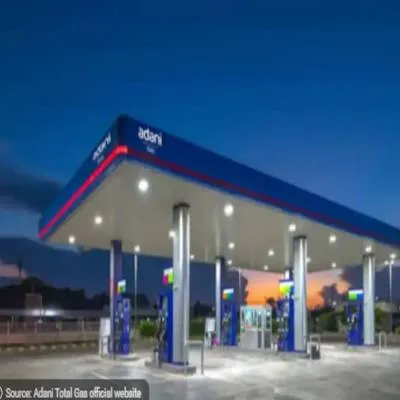
Adani Total Gas Ltd (ATGL) has reduced the price of excess natural gas supplied to certain industrial customers to Rs 82.95 per standard cubic metre (SCM) from Rs 119.90 per SCM, with the revision effective from 0600 hours on March 16, 2026. The cut follows a softening of upstream gas prices amid disruptions to supplies linked to the halt in ship movements through the Strait of Hormuz. The company presented the move as an effort to pass on reduced input costs while maintaining system stability and equitable distribution.

ATGL said the revision aims to pass on the benefit of lower upstream prices to customers while continuing to manage system integrity and fair allocation during the prevailing supply constraints. It reiterated that other terms announced earlier regarding excess gas provisions remain unchanged and that it has sought clarification from GAIL (India) Ltd on the application of the 80 per cent supply order for industrial customers. The firm noted that spot market rates were applied to consumption beyond prescribed thresholds.

Earlier in March ATGL had instructed commercial and industrial customers to curtail consumption to 40 per cent of their contracted volumes as a temporary measure. The company applied spot market rates to volumes consumed beyond this threshold and has not reduced the rates that govern that segment. Previously incremental volumes beyond the limit were charged at Rs 119 per SCM.

ATGL did not increase prices for compressed natural gas (CNG) used by vehicle owners or piped natural gas (PNG)-domestic supplied to households and those segments remain a priority for supply allocation. About 70 per cent of ATGL's gas volumes are sourced domestically and serve CNG and PNG-domestic customers, while the remaining roughly 30 per cent is met through imported liquefied natural gas (LNG) for commercial and industrial users. The government has reprioritised allocations to protect household and transport supplies and the company said it is making all possible efforts to ensure uninterrupted deliveries and to protect consumer interests across segments.

Adani Total Gas Ltd (ATGL) has reduced the price of excess natural gas supplied to certain industrial customers to Rs 82.95 per standard cubic metre (SCM) from Rs 119.90 per SCM, with the revision effective from 0600 hours on March 16, 2026. The cut follows a softening of upstream gas prices amid disruptions to supplies linked to the halt in ship movements through the Strait of Hormuz. The company presented the move as an effort to pass on reduced input costs while maintaining system stability and equitable distribution. ATGL said the revision aims to pass on the benefit of lower upstream prices to customers while continuing to manage system integrity and fair allocation during the prevailing supply constraints. It reiterated that other terms announced earlier regarding excess gas provisions remain unchanged and that it has sought clarification from GAIL (India) Ltd on the application of the 80 per cent supply order for industrial customers. The firm noted that spot market rates were applied to consumption beyond prescribed thresholds. Earlier in March ATGL had instructed commercial and industrial customers to curtail consumption to 40 per cent of their contracted volumes as a temporary measure. The company applied spot market rates to volumes consumed beyond this threshold and has not reduced the rates that govern that segment. Previously incremental volumes beyond the limit were charged at Rs 119 per SCM. ATGL did not increase prices for compressed natural gas (CNG) used by vehicle owners or piped natural gas (PNG)-domestic supplied to households and those segments remain a priority for supply allocation. About 70 per cent of ATGL's gas volumes are sourced domestically and serve CNG and PNG-domestic customers, while the remaining roughly 30 per cent is met through imported liquefied natural gas (LNG) for commercial and industrial users. The government has reprioritised allocations to protect household and transport supplies and the company said it is making all possible efforts to ensure uninterrupted deliveries and to protect consumer interests across segments.

Next Story
Infrastructure Transport

RAHSTA calls for Smarter, Sustainable Highway Growth

India’s roads and highways sector is entering a defining phase — one that demands stronger collaboration, smarter technologies, sustainable materials, and a renewed focus on quality and long-term asset performance. Against this backdrop, RAHSTA 2026 is set to emerge as one of the country’s most important platforms for the roads and highways ecosystem.Ahead of the RAHSTA 2026, scheduled on July 8–9, 2026 at Jio World Convention Centre, two high-impact industry roundtables were successfully organised — the first in Mumbai on March 11, 2026, and the second in Pune on April 29, 2026. The..

Next Story
Infrastructure Transport

MMRDA Removes 1.14 lakh m of Metro Barricades

In a bid to ease congestion and improve urban mobility during monsoon, MMRDA has undertaken one of the largest coordinated barricade removal and monsoon preparedness drives across its ongoing metro and infrastructure projects.With substantial progress achieved in viaduct and structural works across multiple metro corridors, barricades from completed stretches beneath metro viaducts are being systematically removed, restoring maximum possible road space before the monsoon. Wider carriageways across key arterial roads are expected to improve traffic flow, reduce congestion, support better rainwa..

Next Story
Infrastructure Transport

Pune Division to Remove All Diamond Crossings by Year-End

The Pune railway division has announced plans to remove all 16 diamond crossings by the end of 2026 as part of a major yard remodelling project following the derailment of a Vande Bharat Express at Pune Junction on April 27. Railway authorities said the replacements aim to improve safety and streamline train operations across the busy station. The decision followed a Central Railway finding that the accident involved a non-standard diamond crossing and highlighted the need for replacement. Regular maintenance of existing crossings will continue until the replacement work is completed. Official..

Advertisement

Subscribe to Our Newsletter

Get daily newsletters around different themes from Construction world.

STAY CONNECTED

Advertisement

Advertisement

Advertisement

-->