J&K army installs soalr lights in LOC border village, Dabbi
POWER & RENEWABLE ENERGY

J&K army installs soalr lights in LOC border village, Dabbi

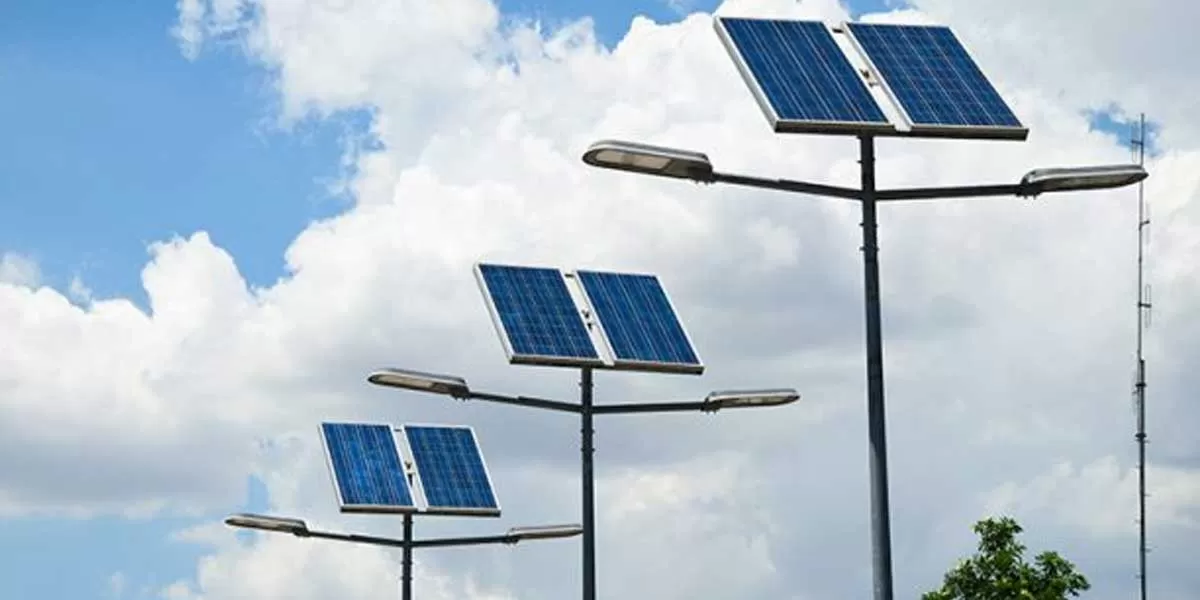
Dabbi village in Jammu and Kashmir, near the Line of Control, now has solar-powered lights installed by the army. This project, called 'Sadhbhavana' or goodwill, was finished quickly to help villagers who've suffered from cross-border shelling for years and had no street lights. The army's aim was to improve life in Dabbi, so they put up solar lights where people gather, like near the mosque, shrine, school, and animal sheds. Now, 19 households and 129 villagers have reliable street lights, making it safer to move around at night. This also created community spaces and brought people closer.

The villagers praised the army for the initiative and said the solar lights had not only illuminated their village but also lit up their lives. "It was very difficult for the people to move around during night hours, especially when it was raining. We are very thankful to the army for installing solar lights and illuminating the village to make it easy for the people to attend prayers without any trouble," Imam Mohd Sarfaraz told PTI.

"Key areas for placing of solar lights were identified in consultation with locals which included visiting houses in the village, transportation of apparatus of solar lights, batteries to remote locations including the farthest house of the village at 400 meters from the LoC and also spreading awareness of the use of sustainable energy at the village level," he said. He said the initiative also places a strong emphasis on environmental sustainability by leveraging the potential of solar energy to address reliable lighting.

(Source: ET Energy)

Dabbi village in Jammu and Kashmir, near the Line of Control, now has solar-powered lights installed by the army. This project, called 'Sadhbhavana' or goodwill, was finished quickly to help villagers who've suffered from cross-border shelling for years and had no street lights. The army's aim was to improve life in Dabbi, so they put up solar lights where people gather, like near the mosque, shrine, school, and animal sheds. Now, 19 households and 129 villagers have reliable street lights, making it safer to move around at night. This also created community spaces and brought people closer. The villagers praised the army for the initiative and said the solar lights had not only illuminated their village but also lit up their lives. It was very difficult for the people to move around during night hours, especially when it was raining. We are very thankful to the army for installing solar lights and illuminating the village to make it easy for the people to attend prayers without any trouble, Imam Mohd Sarfaraz told PTI. Key areas for placing of solar lights were identified in consultation with locals which included visiting houses in the village, transportation of apparatus of solar lights, batteries to remote locations including the farthest house of the village at 400 meters from the LoC and also spreading awareness of the use of sustainable energy at the village level, he said. He said the initiative also places a strong emphasis on environmental sustainability by leveraging the potential of solar energy to address reliable lighting. (Source: ET Energy)

Next Story
Infrastructure Urban

Implementation Status of Jal Jeevan Mission

Since August 2019 the Government has implemented Jal Jeevan Mission to provide assured potable water through household tap connections in rural India. At the start of the mission only 32.3 million (mn) rural households, representing 16.7 per cent, were reported to have tap water connections. States and union territories have reported that 125.8 mn additional rural households have since been provided with tap connections. As a result, of about 193.6 mn rural households roughly 158.2 mn, or 81.71 per cent, are reported to have tap water supply at home.\n\nThe State, district and village level st..

Next Story
Infrastructure Urban

Jal Jeevan Mission Reaches Eighty One Per Cent Rural Coverage

The Government reported substantial progress under the Jal Jeevan Mission, launched in August 2019 to provide tap water to every rural household. At launch only 32.3 million (mn) rural households had tap connections and states and Union territories reported provision of 125.8 mn additional households by March 2026. Consequently, out of about 193.6 mn rural households around 158.2 mn, or 81.71 per cent, are reported to have tap water at home. The Finance Minister announced extension of the mission until 2028 in the 2025-26 budget speech. The Swachh Bharat Mission Grameen, launched in October 20..

Next Story
Infrastructure Urban

Empowering Local Governance for Sustainable Rural Water Supply

The Ministry of Jal Shakti has aligned the Jal Jeevan Mission (JJM) with the 73rd Amendment to strengthen village level planning and community ownership of water supply. Gram Panchayats, village water and sanitation committees and Pani Samitis are to plan, implement, manage and maintain piped water systems, with gram sabha processes formalising handover and oversight. Implementation support agencies including non government organisations, community based organisations and self help groups have been empanelled to train local committees and promote women participation. Under JJM, the department ..

Advertisement

Subscribe to Our Newsletter

Get daily newsletters around different themes from Construction world.

STAY CONNECTED

Advertisement

Advertisement

Advertisement