Jaipur Rooftop Solar Project to Save Rs. 61.2 mn Annually
POWER & RENEWABLE ENERGY

Jaipur Rooftop Solar Project to Save Rs. 61.2 mn Annually

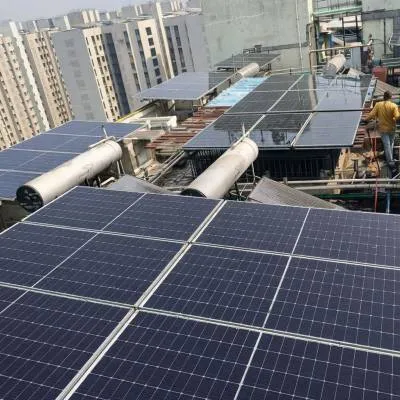
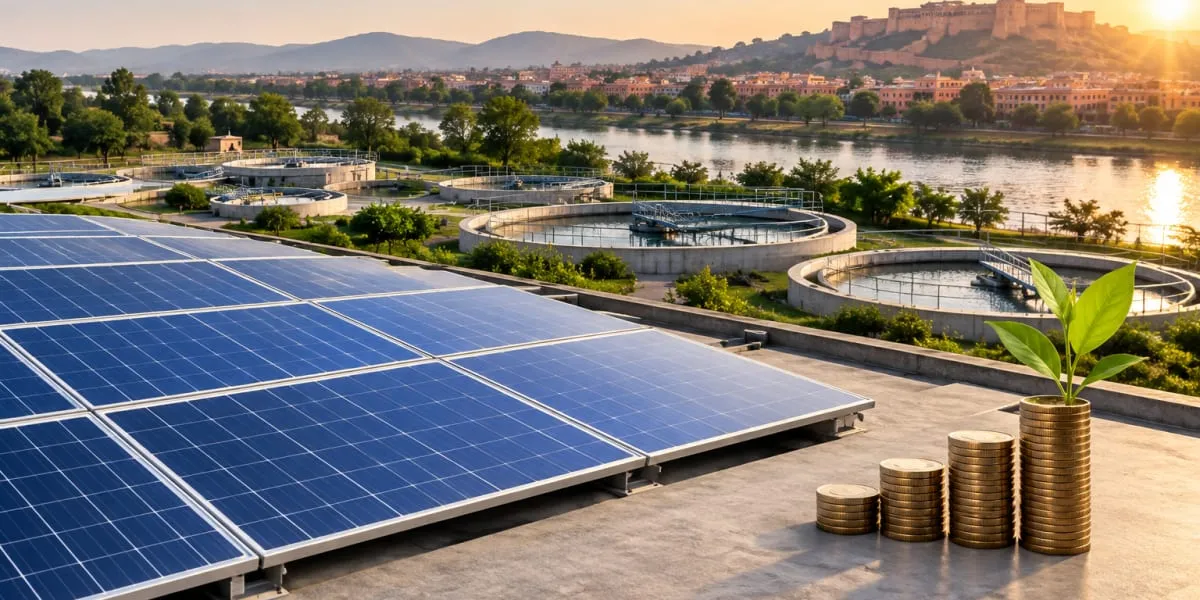
The Jaipur Development Authority (JDA) plans to install 5 MW of rooftop solar capacity at six sewage treatment plants and two gardens along the Dravyavati River, with the project estimated to generate about 720,000 units of electricity a year. The renewable energy installations are expected to reduce the authority’s annual power costs by around Rs. 61.2 mn.

The project is being implemented through Rajasthan Renewable Energy Corporation (RRECL), according to JDA Commissioner Siddharth Mahajan. It will supply power to sewage treatment plants and gardens linked to the river corridor, reducing the electricity that the authority purchases from the grid. Officials estimate generation at about 20,000 units a day, or approximately 600,000 units a month, based on an average tariff of Rs. 8.50 per unit.

The six sewage treatment plants are among the main electricity-consuming public assets covered by the initiative. The two gardens will also receive solar installations, enabling the facilities to meet a significant share of their requirements through renewable energy. The agreement provides for the systems to be operated and maintained for 25 years, allowing the JDA to continue using the generated power beyond the payment period.

The authority estimates that the plants will cut carbon dioxide emissions by about 5,227 tonnes annually. Over the 25-year operating period, the projected reduction is approximately 131,000 tonnes. Mahajan said the initiative would support the JDA’s focus on green energy, energy conservation and environmental protection while lowering its long-term expenditure on electricity.

The project could also provide a model for managing recurring energy costs at urban infrastructure assets. Sewage treatment plants require continuous power for treatment and pumping, while public gardens use electricity for lighting, water supply and maintenance. Generating power at or near these facilities may allow the authority to use existing public assets for renewable energy production. If the project performs as planned, the JDA may extend rooftop solar installations to other assets under its maintenance across Jaipur. Details of any future locations, capacity and implementation schedule have not been provided.

The Jaipur Development Authority (JDA) plans to install 5 MW of rooftop solar capacity at six sewage treatment plants and two gardens along the Dravyavati River, with the project estimated to generate about 720,000 units of electricity a year. The renewable energy installations are expected to reduce the authority’s annual power costs by around Rs. 61.2 mn. The project is being implemented through Rajasthan Renewable Energy Corporation (RRECL), according to JDA Commissioner Siddharth Mahajan. It will supply power to sewage treatment plants and gardens linked to the river corridor, reducing the electricity that the authority purchases from the grid. Officials estimate generation at about 20,000 units a day, or approximately 600,000 units a month, based on an average tariff of Rs. 8.50 per unit. The six sewage treatment plants are among the main electricity-consuming public assets covered by the initiative. The two gardens will also receive solar installations, enabling the facilities to meet a significant share of their requirements through renewable energy. The agreement provides for the systems to be operated and maintained for 25 years, allowing the JDA to continue using the generated power beyond the payment period. The authority estimates that the plants will cut carbon dioxide emissions by about 5,227 tonnes annually. Over the 25-year operating period, the projected reduction is approximately 131,000 tonnes. Mahajan said the initiative would support the JDA’s focus on green energy, energy conservation and environmental protection while lowering its long-term expenditure on electricity. The project could also provide a model for managing recurring energy costs at urban infrastructure assets. Sewage treatment plants require continuous power for treatment and pumping, while public gardens use electricity for lighting, water supply and maintenance. Generating power at or near these facilities may allow the authority to use existing public assets for renewable energy production. If the project performs as planned, the JDA may extend rooftop solar installations to other assets under its maintenance across Jaipur. Details of any future locations, capacity and implementation schedule have not been provided.

Related Stories

Gold Stories

Next Story
Real Estate

Landmark Group plans Rs 150 billion NCR expansion

Landmark Group has announced expansion plans across two real estate projects in the National Capital Region (NCR), with a combined estimated sales potential of Rs 150 billion. The projects include Landmark One, a 2.1 million sq ft corporate office development on Golf Course Extension Road in Gurugram, and a proposed integrated hospitality, commercial and residential development on Dwarka Expressway.Landmark One has an estimated sales value of Rs 40 billion. The project involves an estimated construction investment of Rs 10 billion, apart from the underlying land, currently valued at around Rs ..
Next Story
Real Estate

RMZ entities secure 5-Star ratings in GRESB 2026

RMZ has been recognised as a Global and Regional Sector Leader in the 2026 Global Real Estate Sustainability Benchmark (GRESB) Real Estate Development Assessment, with three of its entities scoring 99.6 out of 100. RMZ Nexus LLP, Millenia Realtors Private Limited and Infralogix LLP secured 5-Star ratings in their respective categories across the Office and Industrial sectors.In the 2026 Development Benchmark, RMZ Nexus LLP and Millenia Realtors Private Limited were named Sector Leaders in the Office and Office Non-Listed categories in Asia. Infralogix LLP received the distinction in the Indust..

Next Story
Products

Schneider Electric deploys smart building systems at Jupiter Hospitals

Schneider Electric has partnered with Jupiter Hospitals to deploy connected building technologies aimed at improving energy efficiency, patient comfort and operational performance across its hospital campus. The deployment of its EcoStruxure Building Operation platform and SpaceLogic thermostats is helping the hospital achieve energy savings of up to 28 per cent, according to the company.With heating, ventilation and air-conditioning (HVAC) systems accounting for nearly 60 per cent of the hospital's total energy consumption, improving efficiency while maintaining the conditions required for pa..

Advertisement

Subscribe to Our Newsletter

Get daily newsletters around different themes from Construction world.

STAY CONNECTED

Advertisement

SPECIAL OFFER
QR Code