KMRL aims 100% solar, explores potential for solar parks
POWER & RENEWABLE ENERGY

KMRL aims 100% solar, explores potential for solar parks

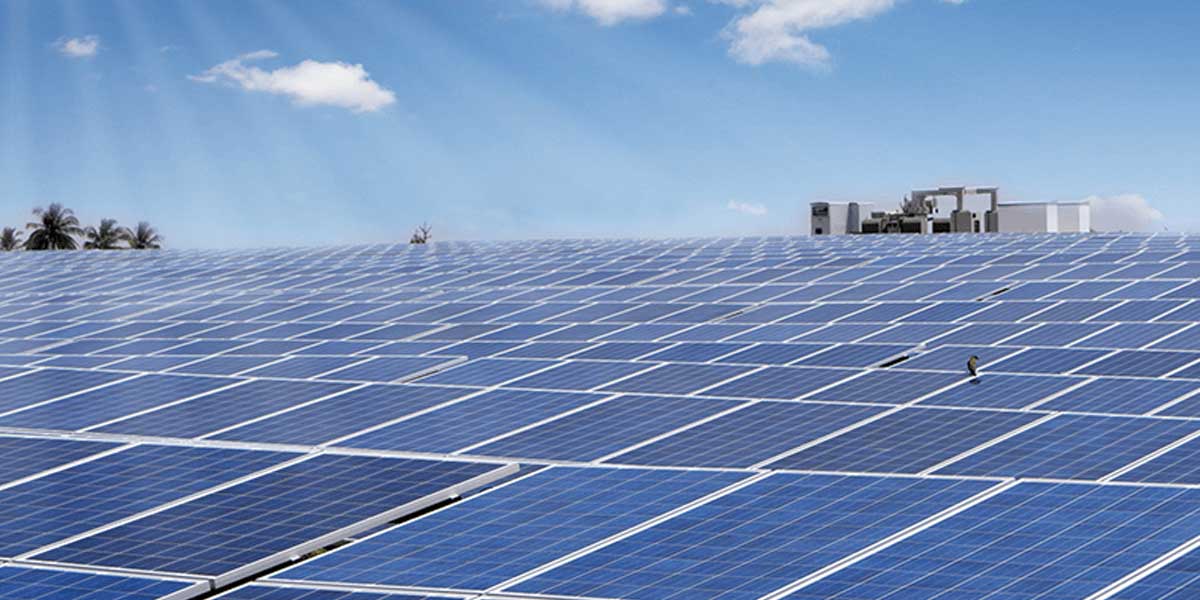
The Kochi Metro Rail Limited (KRML) is mulling employing solar power to meet its power requirements. KRML’s managing director, Loknath Behera, that it has plans to set up solar parks in Alappuzha and Kasaragod.

“The idea is to produce 100 per cent power using solar energy. Around 45-50 acres of land in Kasaragod will be utilised to build a solar park,” Behera said. The proposal is under the government’s consideration, and he hopes that it will be approved soon.

“A similar park will also be set up in Alappuzha to generate electricity solely for the operations of Kochi Water Metro,” Behera added.

The move is part of the company’s step towards reducing operational costs to zero by the next financial year. At present, the solar park at KMRL’s Muttom yard contributes 56 per cent of its energy requirement. With the commissioning of new solar parks, KMRL hopes to meet all its power requirements.

“We have plans to generate over 13 megawatts of power from the upcoming solar park at Kasaragod. The discussions regarding the Alappuzha solar plant are in their initial stage,” said an official. The total solar energy generated by KMRL’s solar plants from April 2022 to March 2023 is 1,37,04,345 KWH.

The Kochi Metro Rail Limited (KRML) is mulling employing solar power to meet its power requirements. KRML’s managing director, Loknath Behera, that it has plans to set up solar parks in Alappuzha and Kasaragod. “The idea is to produce 100 per cent power using solar energy. Around 45-50 acres of land in Kasaragod will be utilised to build a solar park,” Behera said. The proposal is under the government’s consideration, and he hopes that it will be approved soon. “A similar park will also be set up in Alappuzha to generate electricity solely for the operations of Kochi Water Metro,” Behera added. The move is part of the company’s step towards reducing operational costs to zero by the next financial year. At present, the solar park at KMRL’s Muttom yard contributes 56 per cent of its energy requirement. With the commissioning of new solar parks, KMRL hopes to meet all its power requirements. “We have plans to generate over 13 megawatts of power from the upcoming solar park at Kasaragod. The discussions regarding the Alappuzha solar plant are in their initial stage,” said an official. The total solar energy generated by KMRL’s solar plants from April 2022 to March 2023 is 1,37,04,345 KWH.

Next Story
Infrastructure Urban

Implementation Status of Jal Jeevan Mission

Since August 2019 the Government has implemented Jal Jeevan Mission to provide assured potable water through household tap connections in rural India. At the start of the mission only 32.3 million (mn) rural households, representing 16.7 per cent, were reported to have tap water connections. States and union territories have reported that 125.8 mn additional rural households have since been provided with tap connections. As a result, of about 193.6 mn rural households roughly 158.2 mn, or 81.71 per cent, are reported to have tap water supply at home.\n\nThe State, district and village level st..

Next Story
Infrastructure Urban

Jal Jeevan Mission Reaches Eighty One Per Cent Rural Coverage

The Government reported substantial progress under the Jal Jeevan Mission, launched in August 2019 to provide tap water to every rural household. At launch only 32.3 million (mn) rural households had tap connections and states and Union territories reported provision of 125.8 mn additional households by March 2026. Consequently, out of about 193.6 mn rural households around 158.2 mn, or 81.71 per cent, are reported to have tap water at home. The Finance Minister announced extension of the mission until 2028 in the 2025-26 budget speech. The Swachh Bharat Mission Grameen, launched in October 20..

Next Story
Infrastructure Urban

Empowering Local Governance for Sustainable Rural Water Supply

The Ministry of Jal Shakti has aligned the Jal Jeevan Mission (JJM) with the 73rd Amendment to strengthen village level planning and community ownership of water supply. Gram Panchayats, village water and sanitation committees and Pani Samitis are to plan, implement, manage and maintain piped water systems, with gram sabha processes formalising handover and oversight. Implementation support agencies including non government organisations, community based organisations and self help groups have been empanelled to train local committees and promote women participation. Under JJM, the department ..

Advertisement

Subscribe to Our Newsletter

Get daily newsletters around different themes from Construction world.

STAY CONNECTED

Advertisement

Advertisement

Advertisement