KPI Green Energy Secures Rs 9.79 bn Loan for 150 MW Gujarat Wind Project
POWER & RENEWABLE ENERGY

KPI Green Energy Secures Rs 9.79 bn Loan for 150 MW Gujarat Wind Project

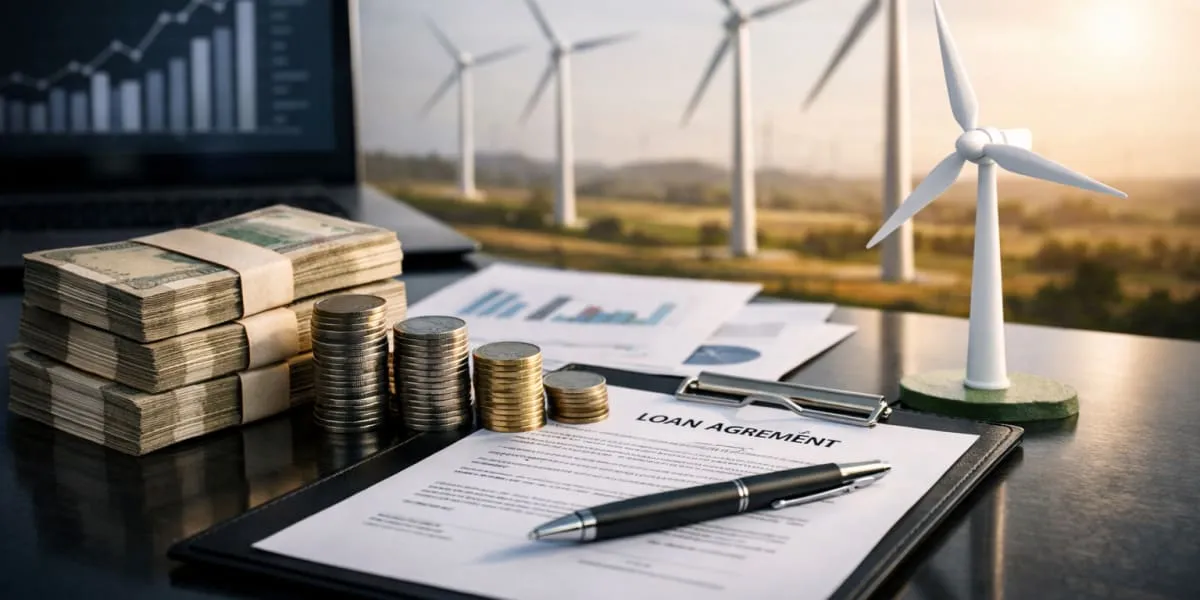
KPI Green Energy Limited has secured a sanction of Rs 9.79 billion (bn) from Canara Bank, comprising Rs 9.31 bn in a fresh rupee term loan and Rs 0.48 bn in bank guarantee support to finance the development of its 150 megawatt (MW) wind power project in Gujarat as an independent power producer.

The project, backed by 25-year long-term power purchase agreements with Gujarat Urja Vikas Nigam Limited (GUVNL), is being developed in Bharuch and Bhavnagar districts and forms part of the company's growing IPP portfolio. The funding will underwrite construction and initial operation phases.

The total project cost is estimated at Rs 12.42 bn and is proposed to be funded at a debt to equity ratio of 75:25, with the sanctioned term loan constituting the debt component of the financing. The facility carries a door-to-door tenor of 20 years and one month, including an implementation period of one year four months and a moratorium period of one year. This structure provides long-term financial support for project development and implementation.

Company leadership said the sanction represents an important milestone and reflects strong confidence in the group's execution capabilities and long-term strategy in the renewable energy sector. Access to long-term project financing was identified as a critical enabler for scaling clean energy infrastructure and the facility is expected to support timely project delivery. The investment will be used to accelerate growth of the renewable energy portfolio and to reinforce stable annuity revenues.

Upon commissioning, the projects will contribute to KP Group's 10 GW target by 2030 and will advance the group's efforts in wind, solar, hybrid energy, battery energy storage systems and green hydrogen. Established in 1994 by Dr Faruk G. Patel, the group has developed a diversified portfolio and a reputation as a partner for organisations seeking to reduce carbon footprints. The company said it remains committed to India's energy transition and to creating enduring value for stakeholders.

KPI Green Energy Limited has secured a sanction of Rs 9.79 billion (bn) from Canara Bank, comprising Rs 9.31 bn in a fresh rupee term loan and Rs 0.48 bn in bank guarantee support to finance the development of its 150 megawatt (MW) wind power project in Gujarat as an independent power producer. The project, backed by 25-year long-term power purchase agreements with Gujarat Urja Vikas Nigam Limited (GUVNL), is being developed in Bharuch and Bhavnagar districts and forms part of the company's growing IPP portfolio. The funding will underwrite construction and initial operation phases. The total project cost is estimated at Rs 12.42 bn and is proposed to be funded at a debt to equity ratio of 75:25, with the sanctioned term loan constituting the debt component of the financing. The facility carries a door-to-door tenor of 20 years and one month, including an implementation period of one year four months and a moratorium period of one year. This structure provides long-term financial support for project development and implementation. Company leadership said the sanction represents an important milestone and reflects strong confidence in the group's execution capabilities and long-term strategy in the renewable energy sector. Access to long-term project financing was identified as a critical enabler for scaling clean energy infrastructure and the facility is expected to support timely project delivery. The investment will be used to accelerate growth of the renewable energy portfolio and to reinforce stable annuity revenues. Upon commissioning, the projects will contribute to KP Group's 10 GW target by 2030 and will advance the group's efforts in wind, solar, hybrid energy, battery energy storage systems and green hydrogen. Established in 1994 by Dr Faruk G. Patel, the group has developed a diversified portfolio and a reputation as a partner for organisations seeking to reduce carbon footprints. The company said it remains committed to India's energy transition and to creating enduring value for stakeholders.

Next Story
Infrastructure Transport

AFCONS & Navayuga set world records with Missing Link Expressway

Maharashtra’s most ambitious greenfield bypass — a 13.3-km alignment carrying twin record-setting tunnels and India’s tallest cable-stayed road bridge — was thrown open to traffic on Maharashtra Day, finally completing the Mumbai–Pune Expressway after a 23-year wait. CW reports…The 650-m cable-stayed bridge over Tiger Valley at sunset — the package executed by Afcons Infrastructure Ltd carries 182-m pylons, the tallest on any Indian road bridge.On 1 May 2026, Chief Minister Devendra Fadnavis, flanked by Deputy Chief Ministers Eknath Shinde and Sunetra Pawar (representing the late..

Next Story
Infrastructure Transport

Mumbai–Pune Missing Link boosts realty prospects

The recently opened ‘missing link’ on the Mumbai–Pune Expressway is set to significantly transform connectivity between the two cities by reducing travel time and bypassing the challenging ghat section. The new alignment, featuring tunnels and viaducts, is designed to improve safety, ease congestion and ensure a smoother, faster commute for both passenger and commercial traffic.With improved travel efficiency, the corridor is expected to strengthen intercity movement, encouraging more frequent travel for work, leisure and logistics. This enhanced accessibility is likely to benefit real e..

Next Story
Infrastructure Urban

How Hormuz is Hijacking Indian Highways

At the recently held RAHSTA Round Table on 29th April in Pune, and earlier during our webinars for Cement Expo by Indian Cement Review and by FIRST Construction Council on manufacturing construction equipment for the world, one thread lay common: the industry is being subjected to a cost-push chain reaction moving from crude oil → freight/insurance → steel, cement fuel, bitumen, polymers, packaging, logistics and finally project margins. Indeed, the West Asia crisis caused by the war and the Hormuz Strait blockade, which does not directly concern us, has turned around and hit us. If the wa..

Advertisement

Subscribe to Our Newsletter

Get daily newsletters around different themes from Construction world.

STAY CONNECTED

Advertisement

Advertisement

Advertisement