+
Maharashtra Signs Rs 14.5 Trillion MoUs at Davos
POWER & RENEWABLE ENERGY

Maharashtra Signs Rs 14.5 Trillion MoUs at Davos

The Government of Maharashtra has signed 19 memorandums of understanding (MoUs) worth Rs 14.5 trillion on the first day of the World Economic Forum in Davos. The proposed investments span sectors such as green energy, food processing, steel manufacturing, IT and IT-enabled services, data centres, electric vehicles and automobiles, shipbuilding and digital infrastructure.

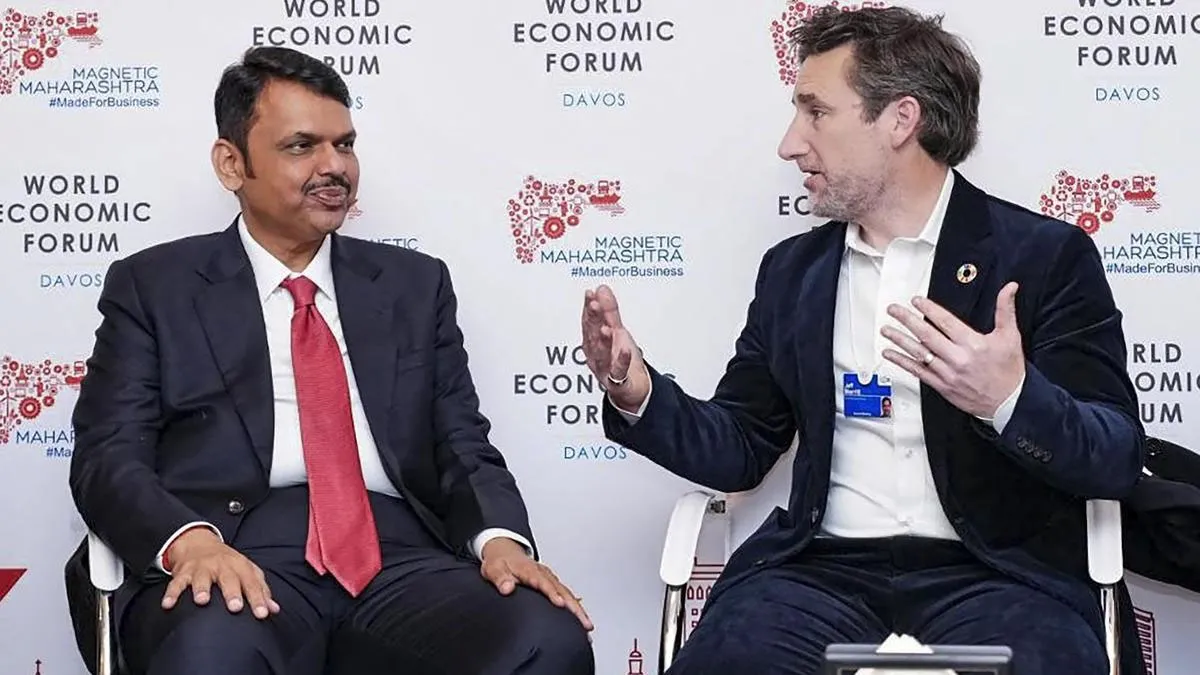
According to an official government statement, the agreements are expected to generate around 1.5 million job opportunities in the state. The MoUs were signed in the presence of Chief Minister Devendra Fadnavis.

The state government said additional MoUs are likely to be signed over the next two days in areas including artificial intelligence, quantum computing, digital infrastructure, financial technology, logistics, infrastructure, shipbuilding, electric vehicles and renewable energy, indicating a broad push to attract global investment into emerging and strategic sectors.

Meanwhile, the opposition Congress criticised the Chief Minister over one of the agreements, alleging that an MoU was signed with a company owned by a Cabinet Minister in the state government. Congress leader Jairam Ramesh questioned the rationale behind signing such an agreement in Switzerland, raising concerns about the optics of the move.

The criticism relates to an MoU worth Rs 1 trillion signed with Lodha Developers in the IT and data centre sector. The state government stated that the project is expected to create employment opportunities for around 150,000 young people.

The Chief Minister’s Office responded that similar issues had been raised earlier and clarified that MoUs are signed at Davos because foreign direct investment partners of Indian companies are often based overseas. The government emphasised that the agreements aim to strengthen Maharashtra’s investment pipeline and reinforce its position as a leading industrial and technology hub in India.

Overall, the MoUs signed at Davos underscore Maharashtra’s strategy to accelerate industrial growth, attract global capital and expand employment opportunities across high-growth sectors, aligning with its long-term economic development objectives.

The Government of Maharashtra has signed 19 memorandums of understanding (MoUs) worth Rs 14.5 trillion on the first day of the World Economic Forum in Davos. The proposed investments span sectors such as green energy, food processing, steel manufacturing, IT and IT-enabled services, data centres, electric vehicles and automobiles, shipbuilding and digital infrastructure. According to an official government statement, the agreements are expected to generate around 1.5 million job opportunities in the state. The MoUs were signed in the presence of Chief Minister Devendra Fadnavis. The state government said additional MoUs are likely to be signed over the next two days in areas including artificial intelligence, quantum computing, digital infrastructure, financial technology, logistics, infrastructure, shipbuilding, electric vehicles and renewable energy, indicating a broad push to attract global investment into emerging and strategic sectors. Meanwhile, the opposition Congress criticised the Chief Minister over one of the agreements, alleging that an MoU was signed with a company owned by a Cabinet Minister in the state government. Congress leader Jairam Ramesh questioned the rationale behind signing such an agreement in Switzerland, raising concerns about the optics of the move. The criticism relates to an MoU worth Rs 1 trillion signed with Lodha Developers in the IT and data centre sector. The state government stated that the project is expected to create employment opportunities for around 150,000 young people. The Chief Minister’s Office responded that similar issues had been raised earlier and clarified that MoUs are signed at Davos because foreign direct investment partners of Indian companies are often based overseas. The government emphasised that the agreements aim to strengthen Maharashtra’s investment pipeline and reinforce its position as a leading industrial and technology hub in India. Overall, the MoUs signed at Davos underscore Maharashtra’s strategy to accelerate industrial growth, attract global capital and expand employment opportunities across high-growth sectors, aligning with its long-term economic development objectives.

Next Story
Infrastructure Transport

Lucknow Metro East-West Corridor Consultancy Contract Awarded

The Uttar Pradesh Metro Rail Corporation has awarded the first construction-related consultancy contract for the Lucknow Metro East West Corridor to a joint venture of AYESA Ingenieria Arquitectura SAU and AYESA India Pvt Ltd. The firm was declared the lowest bidder for the Detailed Design Consultant contract for Lucknow Metro Line-2 under Phase 1B and the contract was recommended following the financial bid. The contract is valued at Rs 159.0 million (mn), covering design services for the corridor. Lucknow Metro Line-2 envisages the construction of an 11.165 kilometre corridor connecting Cha..

Next Story
Infrastructure Urban

Div Com Kashmir Urges Fast Tracking Of Jhelum Water Transport Project

The Divisional Commissioner of Kashmir has called for the fast-tracking of the Jhelum water transport project, urging district administrations and relevant agencies to accelerate planning and clearances. In a meeting convened at the divisional headquarters, the commissioner instructed officials from irrigation, public health engineering and municipal departments to prioritise the project and coordinate survey and design work. The directive emphasised removal of administrative bottlenecks and close monitoring to ensure timely mobilisation of resources and contractors. Officials were told to in..

Next Story
Infrastructure Urban

Interarch Reports Strong Q3 And Nine Month Results

Interarch Building Solutions Limited reported unaudited results for the third quarter and nine months ended 31 December 2025, recording strong revenue growth driven by execution and a robust order book. Net revenue for the third quarter rose by 43.7 per cent to Rs 5.225 billion (bn), compared with Rs 3.636 bn a year earlier, reflecting heightened demand in pre-engineered building projects. The company’s total order book as at 31 January 2026 stood at Rs 16.85 bn, supporting near-term visibility. EBITDA excluding other income for the quarter increased by 43.2 per cent to Rs 503 million (mn),..

Advertisement

Subscribe to Our Newsletter

Get daily newsletters around different themes from Construction world.

STAY CONNECTED

Advertisement

Advertisement

Advertisement

Open In App