+
MERC Proposes Rs Two Point Eight Two Per kWh Tariff for Rooftop Solar
POWER & RENEWABLE ENERGY

MERC Proposes Rs Two Point Eight Two Per kWh Tariff for Rooftop Solar

The Maharashtra Electricity Regulatory Commission has issued a draft suo motu order proposing generic renewable energy tariffs and Average Power Purchase Cost benchmarks for FY 2026–27. The draft is proposed to come into effect from April one, 2026 under the MERC (Terms and Conditions for Determination of RE Tariff) Regulations, 2019. The Commission noted that the scope for generic tariff determination is steadily shrinking as more renewable energy projects move towards competitive bidding mechanisms.

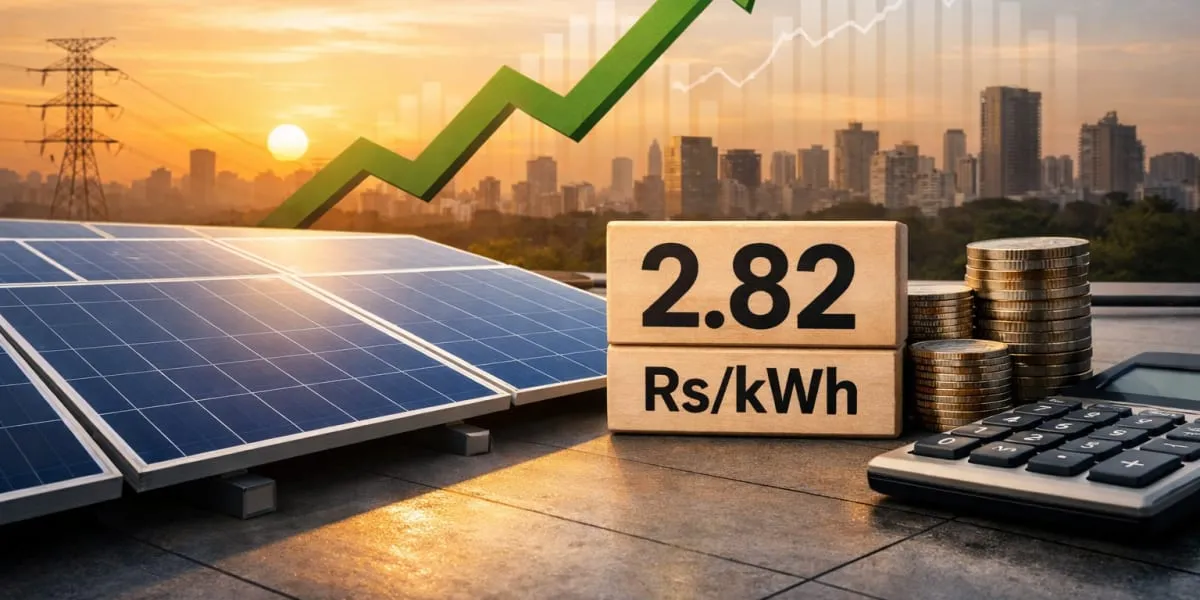
The draft proposes a generic tariff of Rs two point eight two per kWh for surplus electricity exported from rooftop photovoltaic systems under net-metering and net-billing arrangements. The Commission linked this rate to the lowest discovered tariffs under the Mukhyamantri Saur Krishi Vahini Yojana two point zero, where bids ranged between Rs two point eight two per kWh and Rs three point one zero per kWh. The regulator emphasised that rooftop systems are primarily designed for self-consumption and that excess generation injected into the grid should be compensated at the prevailing competitive market floor rather than at higher subsidised rates.

The draft makes the proposed tariff mandatory for distribution licensees and specifies that power procured under this mechanism will be eligible for meeting Solar Renewable Purchase Obligation targets. It reiterates a shift towards tariff discovery through competitive bidding under Section 63 of the Electricity Act. As a result, generic tariff determination is now largely restricted to rooftop solar surplus power and variable charges for legacy biomass plants while tariffs for utility-scale solar, wind, hybrid projects and new biomass or co-generation plants are expected to be discovered through market-based bidding.

The Commission has invited objections, comments and suggestions from stakeholders including renewable energy developers, distribution companies, the Maharashtra Energy Development Agency and consumer groups until March 20. The regulator stated that stakeholder submissions will be reviewed before issuing the final tariff order and that the new rates are expected to be applicable from April one, 2026. The draft therefore sets regulatory groundwork ahead of the upcoming fiscal year while signalling a continued move towards market-based tariff discovery.

The Maharashtra Electricity Regulatory Commission has issued a draft suo motu order proposing generic renewable energy tariffs and Average Power Purchase Cost benchmarks for FY 2026–27. The draft is proposed to come into effect from April one, 2026 under the MERC (Terms and Conditions for Determination of RE Tariff) Regulations, 2019. The Commission noted that the scope for generic tariff determination is steadily shrinking as more renewable energy projects move towards competitive bidding mechanisms. The draft proposes a generic tariff of Rs two point eight two per kWh for surplus electricity exported from rooftop photovoltaic systems under net-metering and net-billing arrangements. The Commission linked this rate to the lowest discovered tariffs under the Mukhyamantri Saur Krishi Vahini Yojana two point zero, where bids ranged between Rs two point eight two per kWh and Rs three point one zero per kWh. The regulator emphasised that rooftop systems are primarily designed for self-consumption and that excess generation injected into the grid should be compensated at the prevailing competitive market floor rather than at higher subsidised rates. The draft makes the proposed tariff mandatory for distribution licensees and specifies that power procured under this mechanism will be eligible for meeting Solar Renewable Purchase Obligation targets. It reiterates a shift towards tariff discovery through competitive bidding under Section 63 of the Electricity Act. As a result, generic tariff determination is now largely restricted to rooftop solar surplus power and variable charges for legacy biomass plants while tariffs for utility-scale solar, wind, hybrid projects and new biomass or co-generation plants are expected to be discovered through market-based bidding. The Commission has invited objections, comments and suggestions from stakeholders including renewable energy developers, distribution companies, the Maharashtra Energy Development Agency and consumer groups until March 20. The regulator stated that stakeholder submissions will be reviewed before issuing the final tariff order and that the new rates are expected to be applicable from April one, 2026. The draft therefore sets regulatory groundwork ahead of the upcoming fiscal year while signalling a continued move towards market-based tariff discovery.

Next Story
Infrastructure Urban

Implementation Status of Jal Jeevan Mission

Since August 2019 the Government has implemented Jal Jeevan Mission to provide assured potable water through household tap connections in rural India. At the start of the mission only 32.3 million (mn) rural households, representing 16.7 per cent, were reported to have tap water connections. States and union territories have reported that 125.8 mn additional rural households have since been provided with tap connections. As a result, of about 193.6 mn rural households roughly 158.2 mn, or 81.71 per cent, are reported to have tap water supply at home.\n\nThe State, district and village level st..

Next Story
Infrastructure Urban

Jal Jeevan Mission Reaches Eighty One Per Cent Rural Coverage

The Government reported substantial progress under the Jal Jeevan Mission, launched in August 2019 to provide tap water to every rural household. At launch only 32.3 million (mn) rural households had tap connections and states and Union territories reported provision of 125.8 mn additional households by March 2026. Consequently, out of about 193.6 mn rural households around 158.2 mn, or 81.71 per cent, are reported to have tap water at home. The Finance Minister announced extension of the mission until 2028 in the 2025-26 budget speech. The Swachh Bharat Mission Grameen, launched in October 20..

Next Story
Infrastructure Urban

Empowering Local Governance for Sustainable Rural Water Supply

The Ministry of Jal Shakti has aligned the Jal Jeevan Mission (JJM) with the 73rd Amendment to strengthen village level planning and community ownership of water supply. Gram Panchayats, village water and sanitation committees and Pani Samitis are to plan, implement, manage and maintain piped water systems, with gram sabha processes formalising handover and oversight. Implementation support agencies including non government organisations, community based organisations and self help groups have been empanelled to train local committees and promote women participation. Under JJM, the department ..

Advertisement

Subscribe to Our Newsletter

Get daily newsletters around different themes from Construction world.

STAY CONNECTED

Advertisement

Advertisement

Advertisement