+
MNRE Consults Stakeholders on Floating Solar Potential and Policy
POWER & RENEWABLE ENERGY

MNRE Consults Stakeholders on Floating Solar Potential and Policy

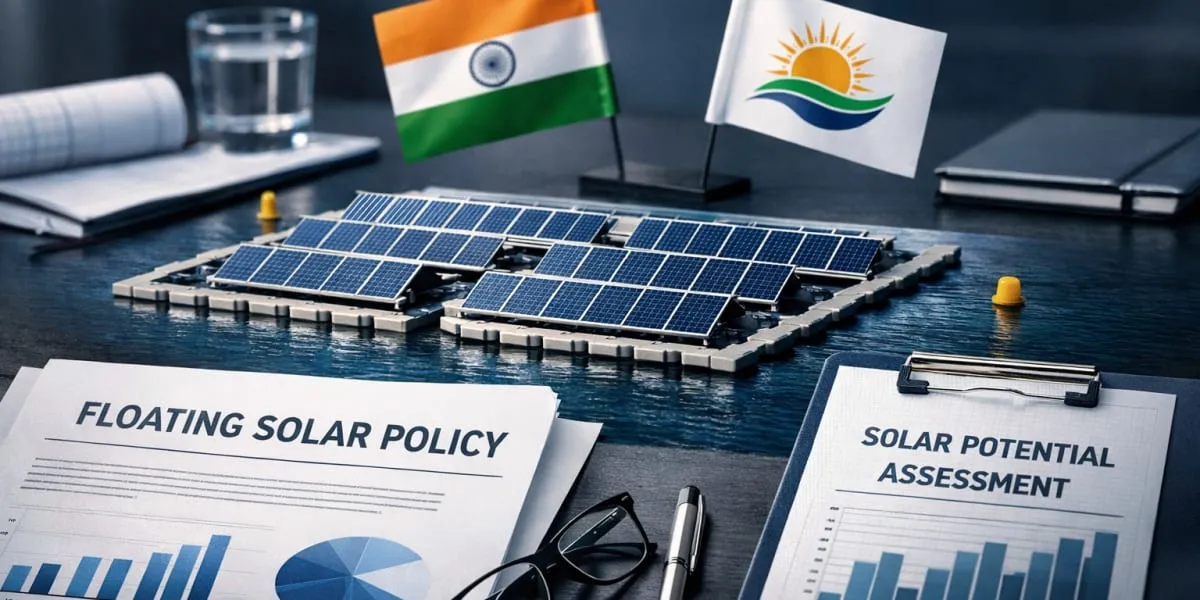
The Union Ministry of New and Renewable Energy (MNRE) organised a stakeholder consultation workshop on 20 February 2026 under the chairmanship of J.V.N. Subramanyam, Joint Secretary, MNRE, to review the draft Floating Solar PV Potential Assessment Report and a draft floating solar policy prepared by the National Institute of Solar Energy (NISE) and the Indian Institute of Technology Roorkee (IIT Roorkee). The workshop brought together officials and agency representatives to discuss methodological and policy considerations for scaling floating solar.

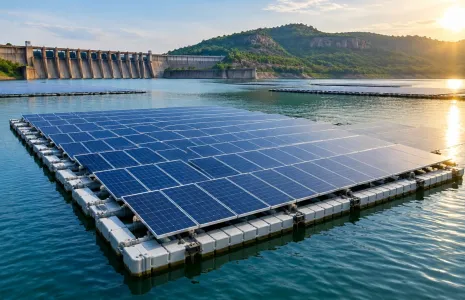
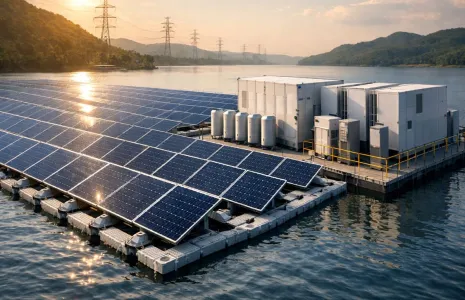
Considering prevailing land constraints for renewable energy projects, floating solar photovoltaic has emerged as an alternative avenue. However, only around 700 megawatt (MW) of floating solar projects has been commissioned in India so far, reflecting gaps in site data and an absence of a clear execution framework. The draft assessment and policy aim to address these bottlenecks by mapping potential water bodies and proposing administrative procedures.

MNRE asked that all States and union territories hold internal consultations with stakeholders at state level, including departments of Water Resources and Irrigation, Revenue, Fisheries, Forest, Agriculture, distribution and transmission utilities, public works, tourism and pollution control, and provide consolidated comments on the draft documents. The ministry highlighted the need for coordinated decision making across sectors to expedite site identification and approvals. States and UTs were encouraged to identify and prioritise water bodies suitable for floating solar deployment based on the assessment.

Discussion at the workshop considered innovative arrangements such as plug and pay models and the allotment of water bodies with requisite approvals to reduce risks for developers and investors. MNRE indicated it will undertake further consultations with the Ministry of Environment, Forest and Climate Change, the Wetland Authority and the National Dam Safety Authority to refine the policy based on state feedback. The meeting was attended by senior ministry officials, renewable energy state nodal agencies and representatives from States and UTs as well as the Solar Energy Corporation of India (SECI), NISE and IIT Roorkee.

The Union Ministry of New and Renewable Energy (MNRE) organised a stakeholder consultation workshop on 20 February 2026 under the chairmanship of J.V.N. Subramanyam, Joint Secretary, MNRE, to review the draft Floating Solar PV Potential Assessment Report and a draft floating solar policy prepared by the National Institute of Solar Energy (NISE) and the Indian Institute of Technology Roorkee (IIT Roorkee). The workshop brought together officials and agency representatives to discuss methodological and policy considerations for scaling floating solar. Considering prevailing land constraints for renewable energy projects, floating solar photovoltaic has emerged as an alternative avenue. However, only around 700 megawatt (MW) of floating solar projects has been commissioned in India so far, reflecting gaps in site data and an absence of a clear execution framework. The draft assessment and policy aim to address these bottlenecks by mapping potential water bodies and proposing administrative procedures. MNRE asked that all States and union territories hold internal consultations with stakeholders at state level, including departments of Water Resources and Irrigation, Revenue, Fisheries, Forest, Agriculture, distribution and transmission utilities, public works, tourism and pollution control, and provide consolidated comments on the draft documents. The ministry highlighted the need for coordinated decision making across sectors to expedite site identification and approvals. States and UTs were encouraged to identify and prioritise water bodies suitable for floating solar deployment based on the assessment. Discussion at the workshop considered innovative arrangements such as plug and pay models and the allotment of water bodies with requisite approvals to reduce risks for developers and investors. MNRE indicated it will undertake further consultations with the Ministry of Environment, Forest and Climate Change, the Wetland Authority and the National Dam Safety Authority to refine the policy based on state feedback. The meeting was attended by senior ministry officials, renewable energy state nodal agencies and representatives from States and UTs as well as the Solar Energy Corporation of India (SECI), NISE and IIT Roorkee.

Next Story
Equipment

Kabelschlepp India Installs Robotic VMC in Bengaluru

Kabelschlepp India, part of the Tsubaki Group, has installed a state-of-the-art Vertical Machining Center (VMC) integrated with robotic automation at its Bengaluru facility. The inauguration was held in the presence of Henning Preis, President & CEO, Kabelschlepp Group, Jörg Schulz, Vice President – Production, and Srinivas P. Kamisetty, Managing Director, Kabelschlepp India.The high-precision CNC VMC is designed for advanced milling, drilling, tapping and multi-axis machining. Equipped with a vertical spindle orientation, automatic tool changer and intelligent CNC control system, it en..

Next Story
Infrastructure Transport

Highway Delivery Reset!

Project delays and inefficiencies continue to bedevil the progress of India’s National Highways network. A multi-pronged reform agenda is needed to inject greater transparency and accountability at every stage – from planning and procurement to execution, maintenance and oversight. This article offers key recommendations and reform strategies that government stakeholders – from the Ministry of Road Transport & Highways (MoRTH) and the National Highways Authority of India (NHAI) to state agencies and oversight bodies – should pursue to put highway development on a better track.Decen..

Next Story
Infrastructure Transport

MSIDC Executes ₹37,000 Crore Road Programme

With Rs 37,000 crore worth of road projects under execution across Maharashtra, Maharashtra State Infrastructure Development Corporation (MSIDC) is driving one of the state’s largest infrastructure programmes. Dr Brijesh Dixit, Managing Director, discusses the institutional reforms, execution frameworks, financing strategies and technology adoption enabling timely, high-quality delivery, in conversation with PRATAP PADODE, Editor-in-Chief, CW.With over Rs 37,000 crore worth of road projects underway across districts – many under tight timelines – what institutional and executio..

Advertisement

Subscribe to Our Newsletter

Get daily newsletters around different themes from Construction world.

STAY CONNECTED

Advertisement

Advertisement

Advertisement

Open In App