+
CM Rekha Gupta Inaugurates DJB Projects Worth Rs 21,000 mn
WATER & WASTE

CM Rekha Gupta Inaugurates DJB Projects Worth Rs 21,000 mn

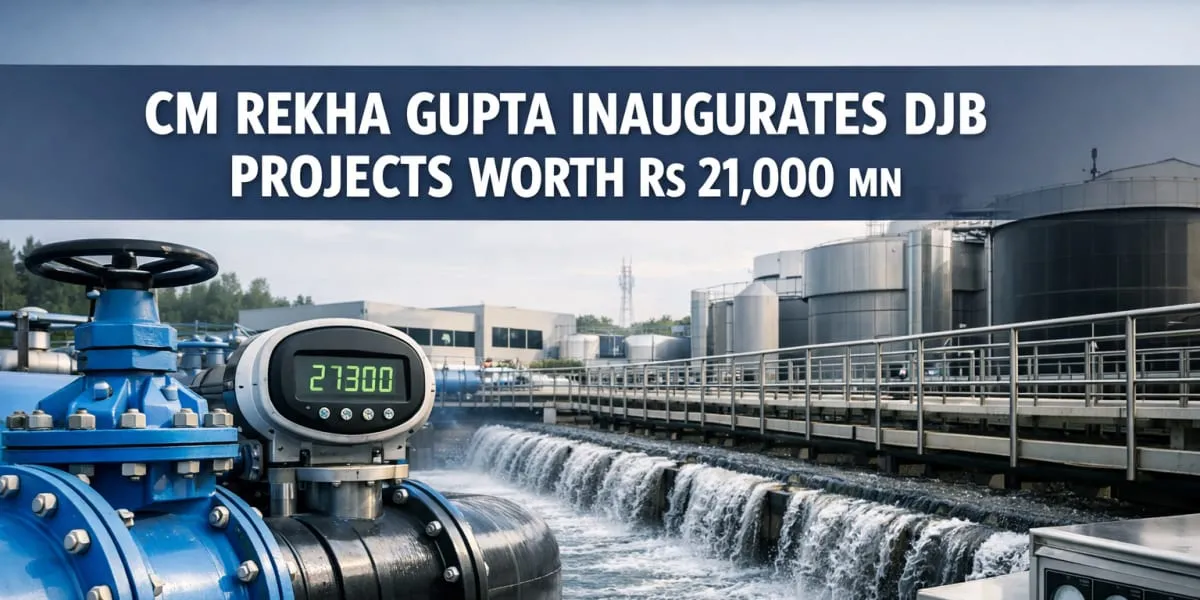
Chief Minister Rekha Gupta inaugurated projects by the Delhi Jal Board (DJB) worth Rs 21,000 million (mn). The initiatives are intended to strengthen water supply, expand sewerage networks and augment treatment capacity across the city. Officials said the projects are designed to reduce distribution losses and improve service reliability for residents.

The work covers rehabilitation of ageing pipelines, installation of modern pumping and metering equipment and upgrades to treatment plants. Implementation will involve phased construction, coordination with municipal agencies and periodic audits to ensure compliance with technical standards. Authorities noted the emphasis on reducing non revenue water and on improving operational efficiency.

Chief Minister Gupta outlined priorities for equitable distribution and for targeting underserved neighbourhoods while inaugurating the works. The DJB was directed to accelerate project timelines and to integrate digital monitoring to track progress and performance. Financial oversight measures were said to be put in place to monitor expenditure and to safeguard public funds.

Officials asserted that improved supply and treatment capacity will support public health objectives and economic activities dependent on reliable water services. Community engagement and grievance redressal mechanisms are planned to address local concerns during execution. The projects are expected to be delivered in stages with regular reporting to the state administration.

Technical components include pressure management, leakage detection and upgraded treatment processes to improve water quality. Capacity building for staff and training in operation of new equipment are integral to the programme to ensure sustainability of improvements. Environmental safeguards and adherence to pollution control norms are to be prioritised during commissioning and operation.

Stakeholders will be kept informed through periodic updates and published reports to maintain transparency. The state government indicated that such investments are part of broader efforts to modernise urban infrastructure and to meet growing demand. Monitoring will focus on service outcomes and on achieving long term resilience.

Chief Minister Rekha Gupta inaugurated projects by the Delhi Jal Board (DJB) worth Rs 21,000 million (mn). The initiatives are intended to strengthen water supply, expand sewerage networks and augment treatment capacity across the city. Officials said the projects are designed to reduce distribution losses and improve service reliability for residents. The work covers rehabilitation of ageing pipelines, installation of modern pumping and metering equipment and upgrades to treatment plants. Implementation will involve phased construction, coordination with municipal agencies and periodic audits to ensure compliance with technical standards. Authorities noted the emphasis on reducing non revenue water and on improving operational efficiency. Chief Minister Gupta outlined priorities for equitable distribution and for targeting underserved neighbourhoods while inaugurating the works. The DJB was directed to accelerate project timelines and to integrate digital monitoring to track progress and performance. Financial oversight measures were said to be put in place to monitor expenditure and to safeguard public funds. Officials asserted that improved supply and treatment capacity will support public health objectives and economic activities dependent on reliable water services. Community engagement and grievance redressal mechanisms are planned to address local concerns during execution. The projects are expected to be delivered in stages with regular reporting to the state administration. Technical components include pressure management, leakage detection and upgraded treatment processes to improve water quality. Capacity building for staff and training in operation of new equipment are integral to the programme to ensure sustainability of improvements. Environmental safeguards and adherence to pollution control norms are to be prioritised during commissioning and operation. Stakeholders will be kept informed through periodic updates and published reports to maintain transparency. The state government indicated that such investments are part of broader efforts to modernise urban infrastructure and to meet growing demand. Monitoring will focus on service outcomes and on achieving long term resilience.

Next Story
Equipment

Kabelschlepp India Installs Robotic VMC in Bengaluru

Kabelschlepp India, part of the Tsubaki Group, has installed a state-of-the-art Vertical Machining Center (VMC) integrated with robotic automation at its Bengaluru facility. The inauguration was held in the presence of Henning Preis, President & CEO, Kabelschlepp Group, Jörg Schulz, Vice President – Production, and Srinivas P. Kamisetty, Managing Director, Kabelschlepp India.The high-precision CNC VMC is designed for advanced milling, drilling, tapping and multi-axis machining. Equipped with a vertical spindle orientation, automatic tool changer and intelligent CNC control system, it en..

Next Story
Infrastructure Transport

Highway Delivery Reset!

Project delays and inefficiencies continue to bedevil the progress of India’s National Highways network. A multi-pronged reform agenda is needed to inject greater transparency and accountability at every stage – from planning and procurement to execution, maintenance and oversight. This article offers key recommendations and reform strategies that government stakeholders – from the Ministry of Road Transport & Highways (MoRTH) and the National Highways Authority of India (NHAI) to state agencies and oversight bodies – should pursue to put highway development on a better track.Decen..

Next Story
Infrastructure Transport

MSIDC Executes ₹37,000 Crore Road Programme

With Rs 37,000 crore worth of road projects under execution across Maharashtra, Maharashtra State Infrastructure Development Corporation (MSIDC) is driving one of the state’s largest infrastructure programmes. Dr Brijesh Dixit, Managing Director, discusses the institutional reforms, execution frameworks, financing strategies and technology adoption enabling timely, high-quality delivery, in conversation with PRATAP PADODE, Editor-in-Chief, CW.With over Rs 37,000 crore worth of road projects underway across districts – many under tight timelines – what institutional and executio..

Advertisement

Subscribe to Our Newsletter

Get daily newsletters around different themes from Construction world.

STAY CONNECTED

Advertisement

Advertisement

Advertisement

Open In App