MNRE Launches Start-Up Challenge For Rooftop Solar Ideas
POWER & RENEWABLE ENERGY

MNRE Launches Start-Up Challenge For Rooftop Solar Ideas

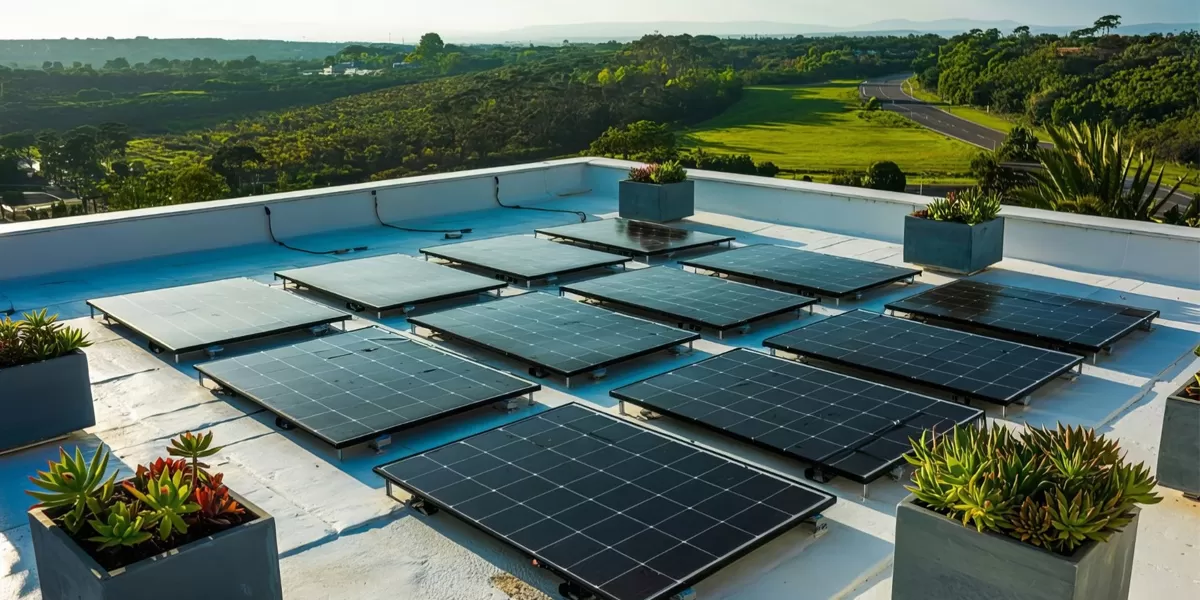
The Ministry of New and Renewable Energy (MNRE) has unveiled the Innovative Projects Start-Up Challenge, aimed at uncovering cutting-edge solutions for India’s rooftop solar and distributed-energy sectors. Announced at the National Conference on Skill Development for the Renewable Energy Workforce in New Delhi, the scheme is backed by the National Institute of Solar Energy and coordinated with Start-Up India at DPIIT.

Four innovation tracks
1. Affordability – new financing models, modular kits or recycled materials to make rooftop solar viable for low- and middle-income homes.
2. Resilience – technology that boosts climate durability, cyber-security and grid stability, especially in remote regions.
3. Inclusivity – approaches such as community solar, virtual net-metering or inclusive finance to serve under-represented groups.
4. Environmental Sustainability – eco-friendly ideas from panel recycling to land-neutral arrays or hybrid combinations with other clean sources.

Prizes and support
The challenge carries a Rs 23 million purse:
  • Rs 10 million first prize
  • Rs 5 million second prize
  • Rs 3 million third prize
  • Ten consolation awards of Rs 0.5 million each
Winners will also receive incubation, pilot-project opportunities and expert mentorship arranged by MNRE and NISE.
Applications close on 20 August 2025, with results due on 10 September 2025 via the Start-Up India portal. The initiative is expected to accelerate clean-energy adoption and nurture a new wave of home-grown technology firms.

The Ministry of New and Renewable Energy (MNRE) has unveiled the Innovative Projects Start-Up Challenge, aimed at uncovering cutting-edge solutions for India’s rooftop solar and distributed-energy sectors. Announced at the National Conference on Skill Development for the Renewable Energy Workforce in New Delhi, the scheme is backed by the National Institute of Solar Energy and coordinated with Start-Up India at DPIIT.Four innovation tracks1. Affordability – new financing models, modular kits or recycled materials to make rooftop solar viable for low- and middle-income homes.2. Resilience – technology that boosts climate durability, cyber-security and grid stability, especially in remote regions.3. Inclusivity – approaches such as community solar, virtual net-metering or inclusive finance to serve under-represented groups.4. Environmental Sustainability – eco-friendly ideas from panel recycling to land-neutral arrays or hybrid combinations with other clean sources.Prizes and supportThe challenge carries a Rs 23 million purse:Rs 10 million first prizeRs 5 million second prizeRs 3 million third prizeTen consolation awards of Rs 0.5 million eachWinners will also receive incubation, pilot-project opportunities and expert mentorship arranged by MNRE and NISE.Applications close on 20 August 2025, with results due on 10 September 2025 via the Start-Up India portal. The initiative is expected to accelerate clean-energy adoption and nurture a new wave of home-grown technology firms.

Next Story
Infrastructure Urban

India Expands Semiconductor Training To 500 Institutions

Under the Chips to Startups programme of the India Semiconductor Mission, the Union minister responsible for Railways, Information and Broadcasting, and Electronics and IT reported notable progress in talent development. He indicated that over the past four years substantial steps have been taken towards a 10-year target of training 85,000 engineers in semiconductor design. World-class EDA tools have been deployed in 315 academic institutions across the country to provide students with practical exposure to chip design. These EDA tools are supported by leading global firms and are accessible t..

Next Story
Infrastructure Urban

Delhi Institutions Support India Semiconductor Mission

The Government of India has prioritised talent development through training, upskilling and workforce development under the Chips to Startups initiative of the India Semiconductor Mission, with officials noting progress in four years towards a 10-year target of training 85,000 engineers in semiconductor design. Electronic design automation tools provided by Synopsys, Cadence, Siemens, Renesas, Ansys and AMD have been deployed in 315 academic institutions, enabling students to gain practical chip design experience. Chips have been fabricated and tested at the Semiconductor Laboratory, Mohali, a..

Next Story
Infrastructure Urban

NHA Announces Winners Of NHCX Hackathon At IIT Hyderabad

The National Health Authority (NHA) has concluded the NHCX Hackathon under the Ayushman Bharat Digital Mission (ABDM) to stimulate innovation around the National Health Claims Exchange (NHCX). The winning teams presented their solutions at the NHCX Innovation Meet held at IIT Hyderabad during a two-day event in March 2026 that also served as the hackathon grand finale. The hackathon itself ran from 22 to 28 February 2026 and aimed to accelerate paperless, transparent claims processing across India. The event was organised with a range of ecosystem partners, including the Insurance Regulatory a..

Advertisement

Subscribe to Our Newsletter

Get daily newsletters around different themes from Construction world.

STAY CONNECTED

Advertisement

Advertisement

Advertisement